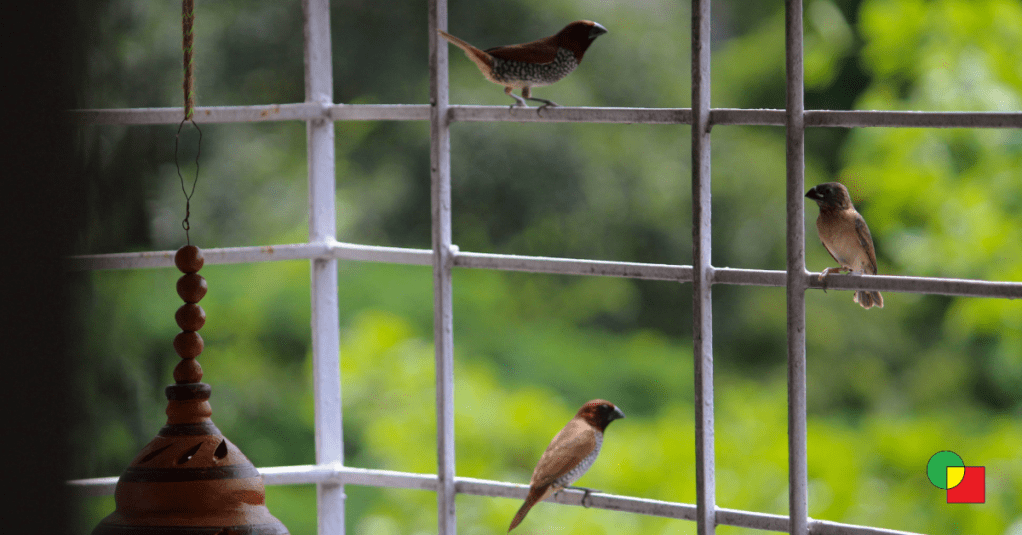
A few years ago I saw a very beautiful view. Five small killis (Birds) coming out from their nest one by one and joining their Mom and Dad waiting on the balcony grills. And then, all of them flew away together.
Before this a batch of munias, a batch of bulbul, and a batch of a sunbird type had already successfully nested in this same balcony.
The 4th Flying Squadron ( A few members missing in the pic.)
A Home in the Wires
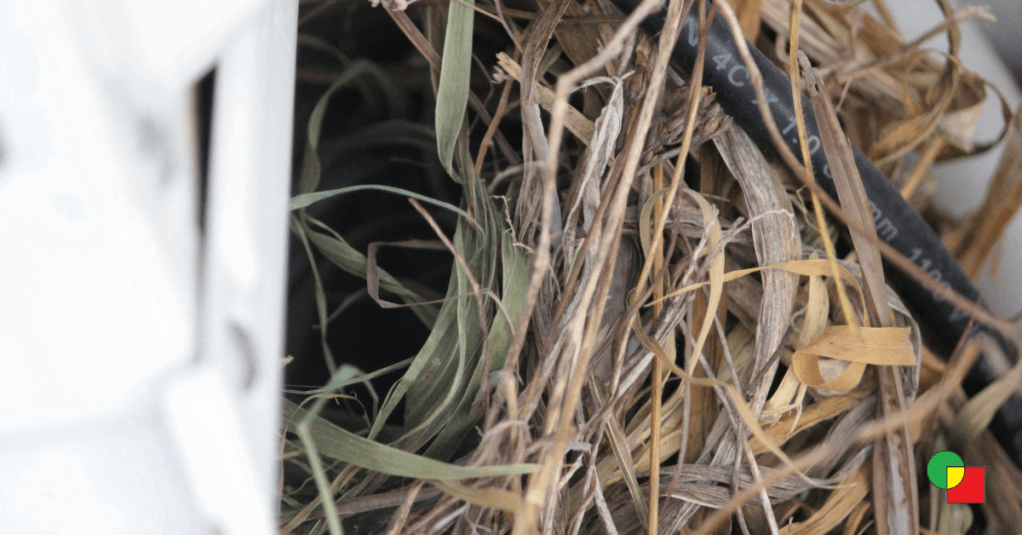
Those Kunji killis (small birds) were born right next to us, in the AC wires. Their nest was made out of the grass in our own balcony garden. The parent killis were coming regularly for hatching, and once they were born, we were waking up to their chirping. As the morning sun rises and the brightness slowly increases, their chirping also increases – maybe for breakfast- I assume. This continued for about 10 days.
The nest which produced 5 killis
Facing the Nest
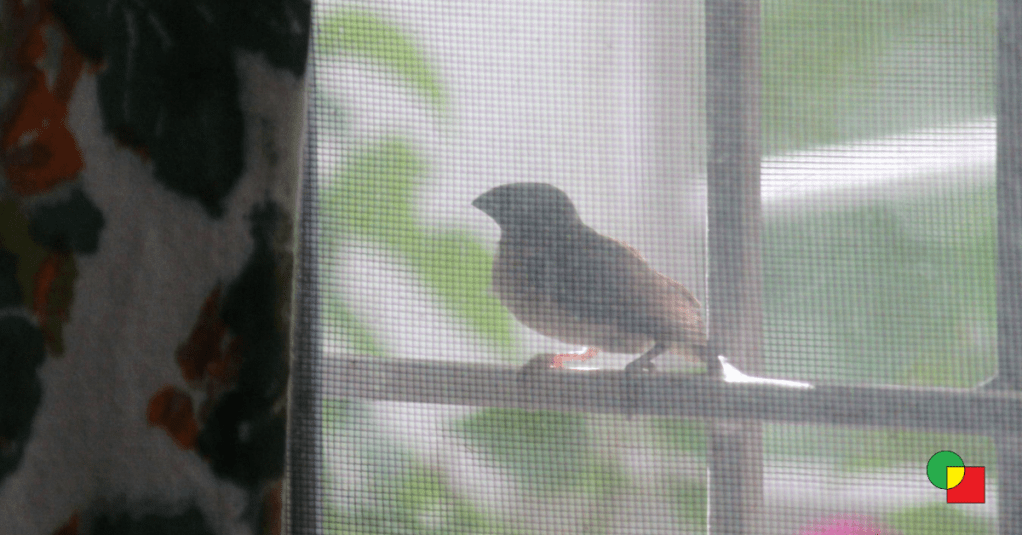
Then, one day I saw a small killi at our window… frightened, not knowing where to go, unable to let go the grill and nest. It stayed in the same position for hours. I could see its heart pounding heavily.
First sight
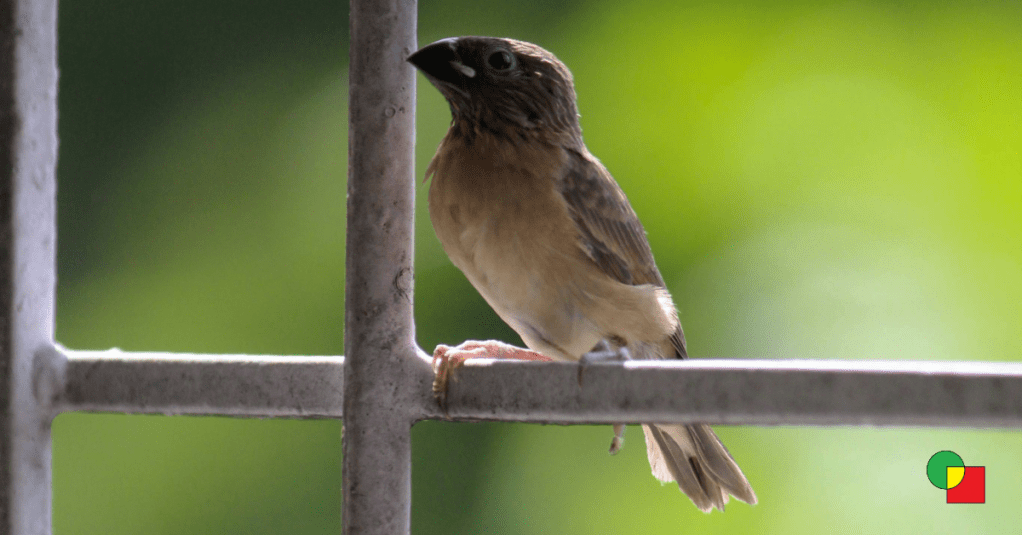
Later, it sat on the balcony grill just a meter away.
I could almost feel its heart pounding as it sat there for hours, not yet knowing it was born to fly.
But all this while, I noticed one thing: it was facing the nest all the time.
I assume, with my experience, that it may be the fear of the unknown. We all face it, but we forget it easily. Whatever we do at present, we once feared to do: our first walk, talk, writing, or expressing emotions. Learning to run, using a computer, riding a cycle, bike, or car—we all went through it.
They Never Left
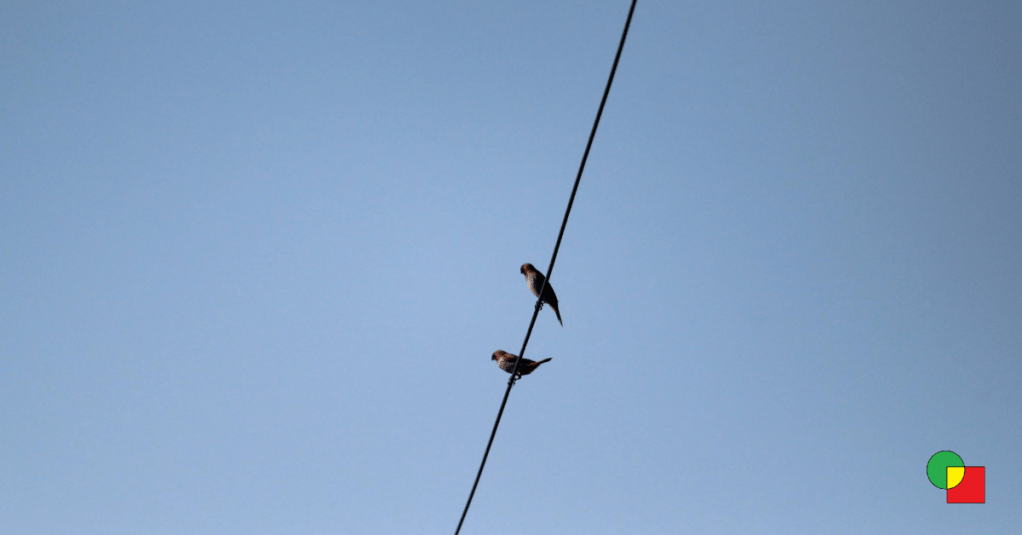
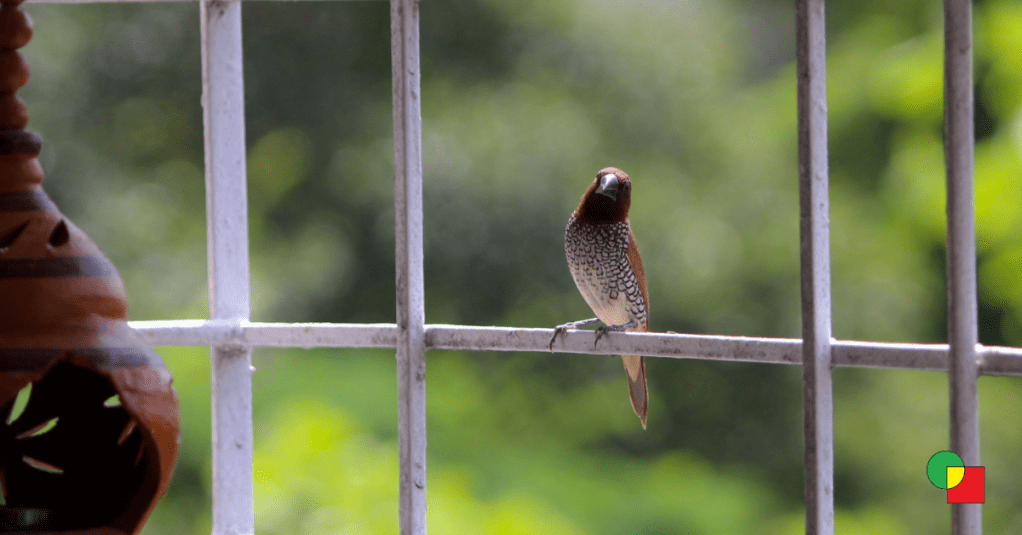
When I saw the parent killis coming often to check on the hatching and once they were born, coming with food the parents took roles. I assume the father waited and guarded at the outside grill, while the mother went inside to feed them.
The parents always stayed close to our balcony; they stayed at the top of the tree and kept a watch over us. They were tiny creatures compared to us, but they also had the same emotions as our parents. They motivated the small ones to come out.
The Watchful Parents : They never stopped keeping a watch over their tiny squadron and bring food.
Two Weeks and Two Decades
This reminds me of our parents and how they cared for us. For these killis, it was just two weeks. For me, I can easily say it was close to two decades… I was dependent on my parents. Such sightings help to remind us how small, dependent, and frightened we once were.
The Flight I Didn’t Photograph
At the end, the parents and the five killis flew from the balcony together. I never imagined there would be this many killis from such a small nest! I saw it and felt relaxed; I didn’t even bother to take a picture. The memory of that flight is still with me, and that is the reason I am writing this piece. But they never returned back to their nest.
We All Start Like This
We often forget that everything we do today, we once feared to do. Whether it’s a bird’s first flight or our first decade of life, we all start small, dependent, and frightened.
It took two weeks for the killis to fly, and two decades for me. We all start with that same pounding heart.
This blog isn’t a complete answer to that question. Instead, consider it an attempt to unravel the small questions, the wonders, and the curiosities I’ve carried with me for a long time. So this is not a conclusion, but rather a trail of questions and some answers from my perspective.
Before I dive into the big topic of India’s diverse temples, it wouldn’t feel right to start without the ones I frequented while growing up.
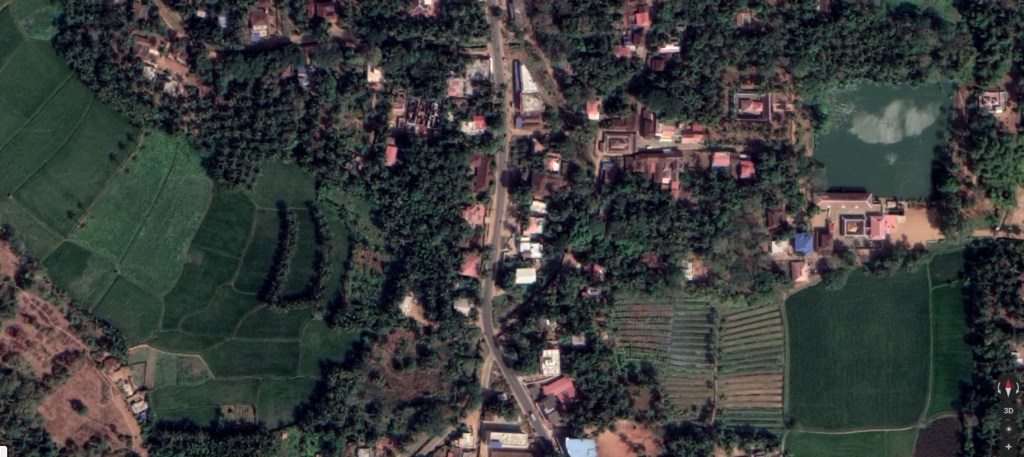
Kottayi: Where my questions began
Many of our core thoughts originate in childhood. I spent most of mine in Kottayi, Palakkad, and since my mom is an avid believer, I saw these temples, rituals, and beliefs through her eyes.
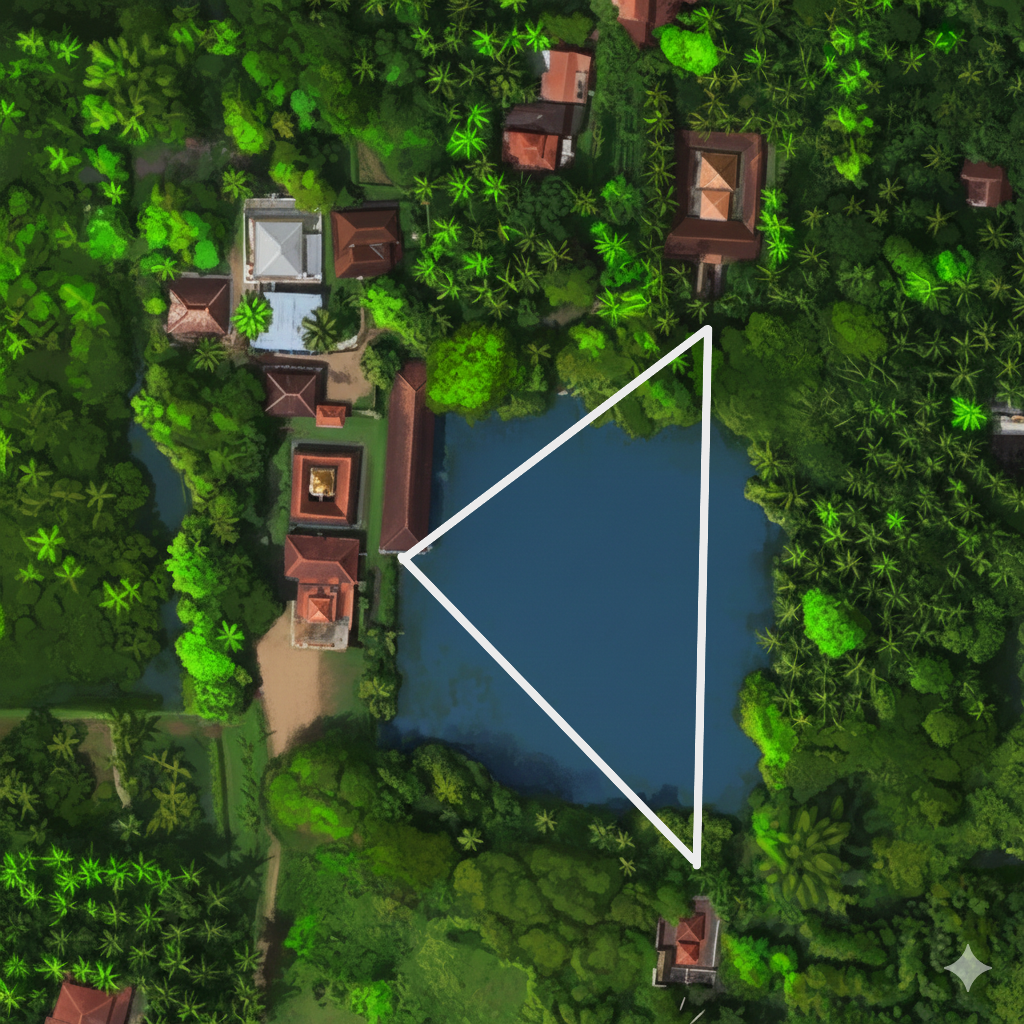
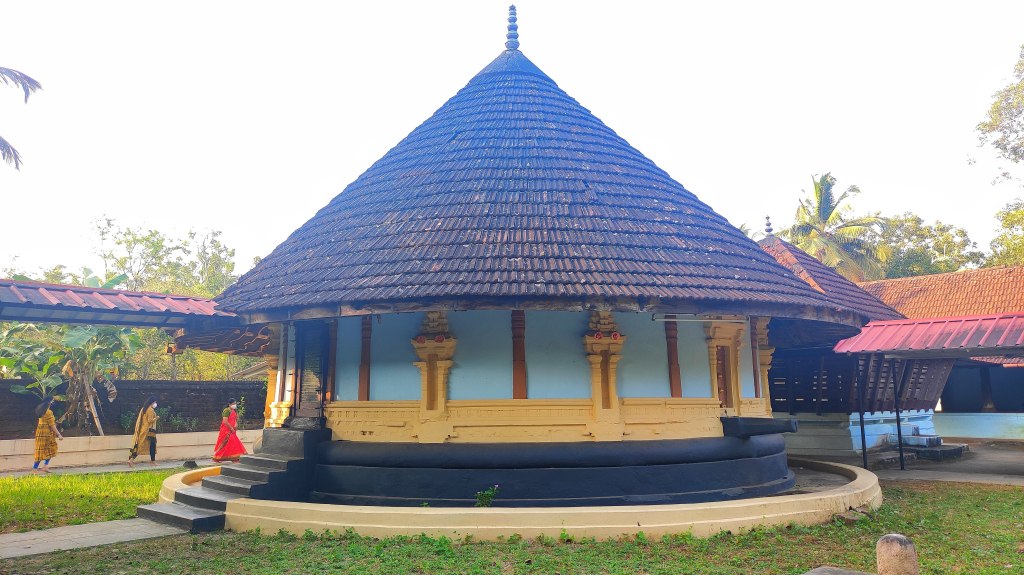
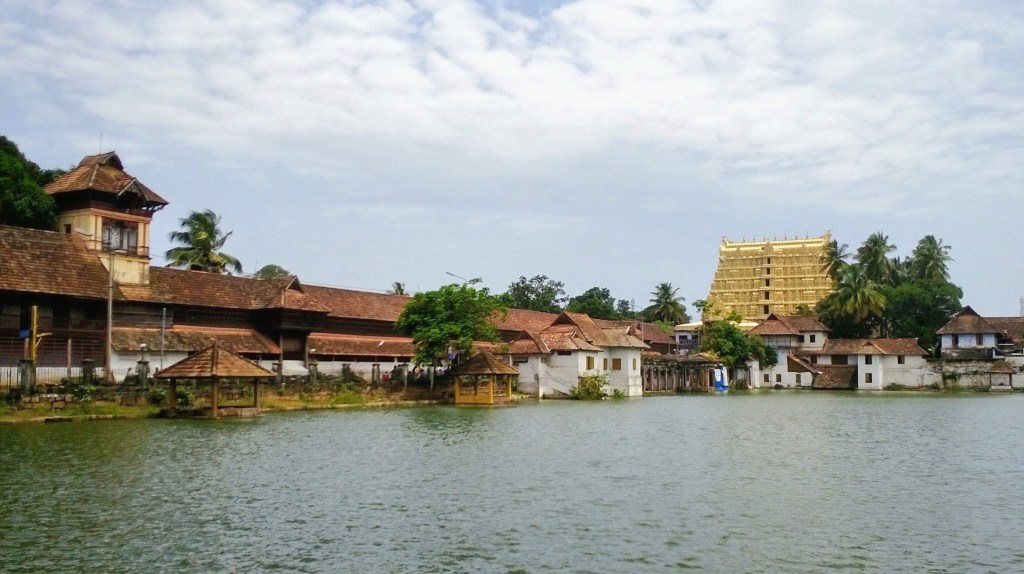
I wonder about the origin, structures, what’s inside the pond (Chembrakulam) and temples. Even now I wonder, Is there a fourth Temple? Why do some temples are having rectangle or circle as base structure? Why there is a big structure outside of some temples with varying heights.
The Kottayi core, The Trio Temples (Ayyapan kavu, Shiva Temple, Krishna temple) around a big temple pond.
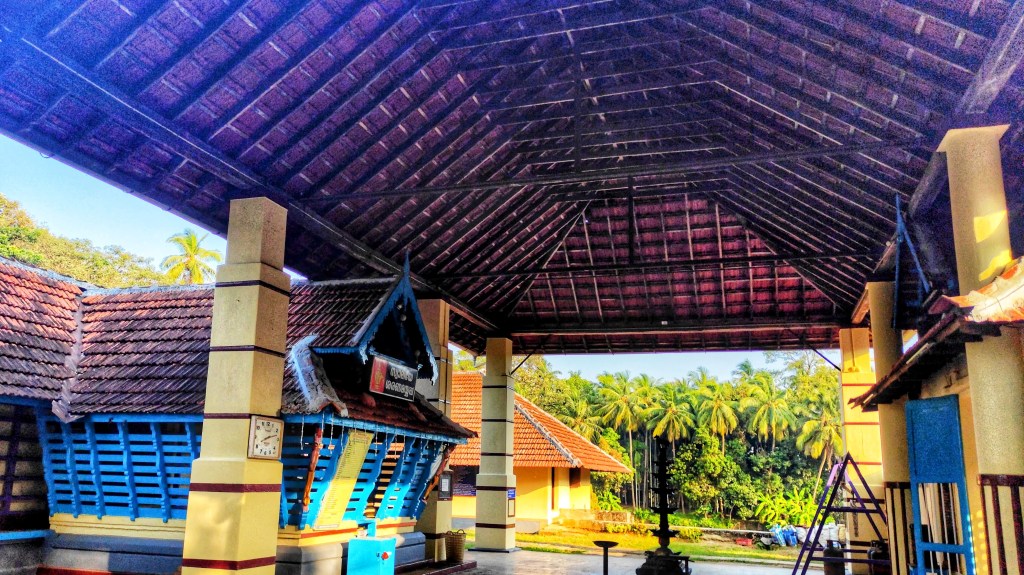
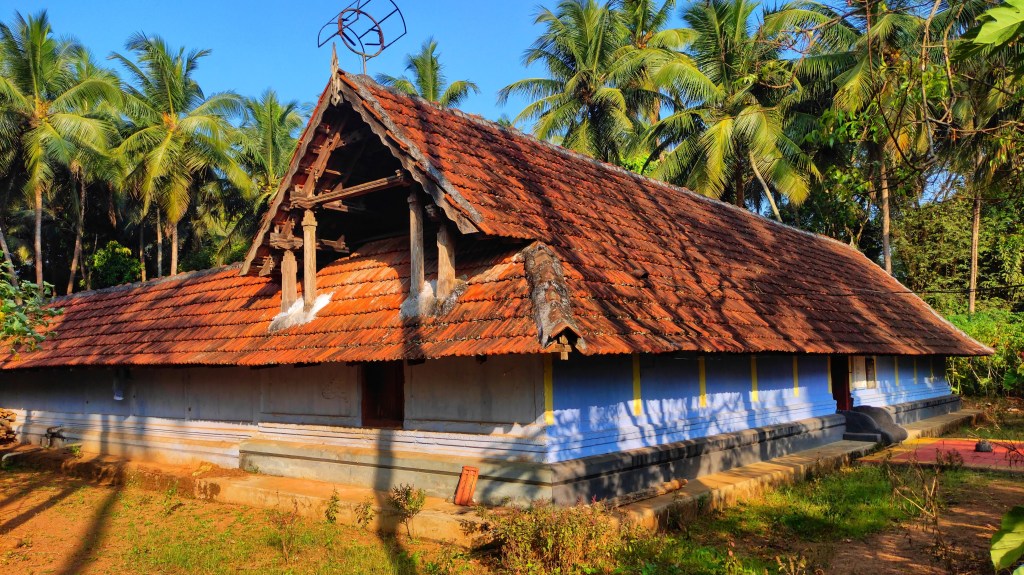
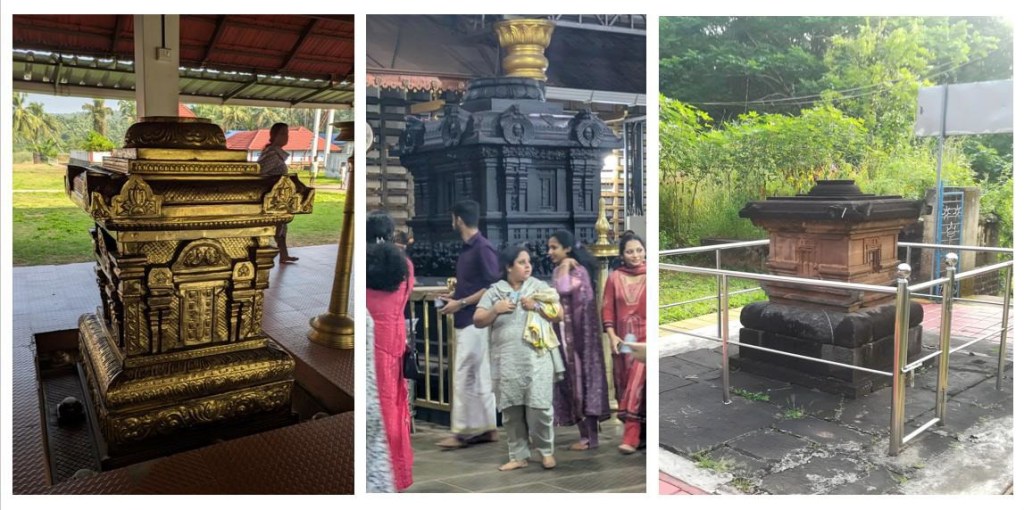
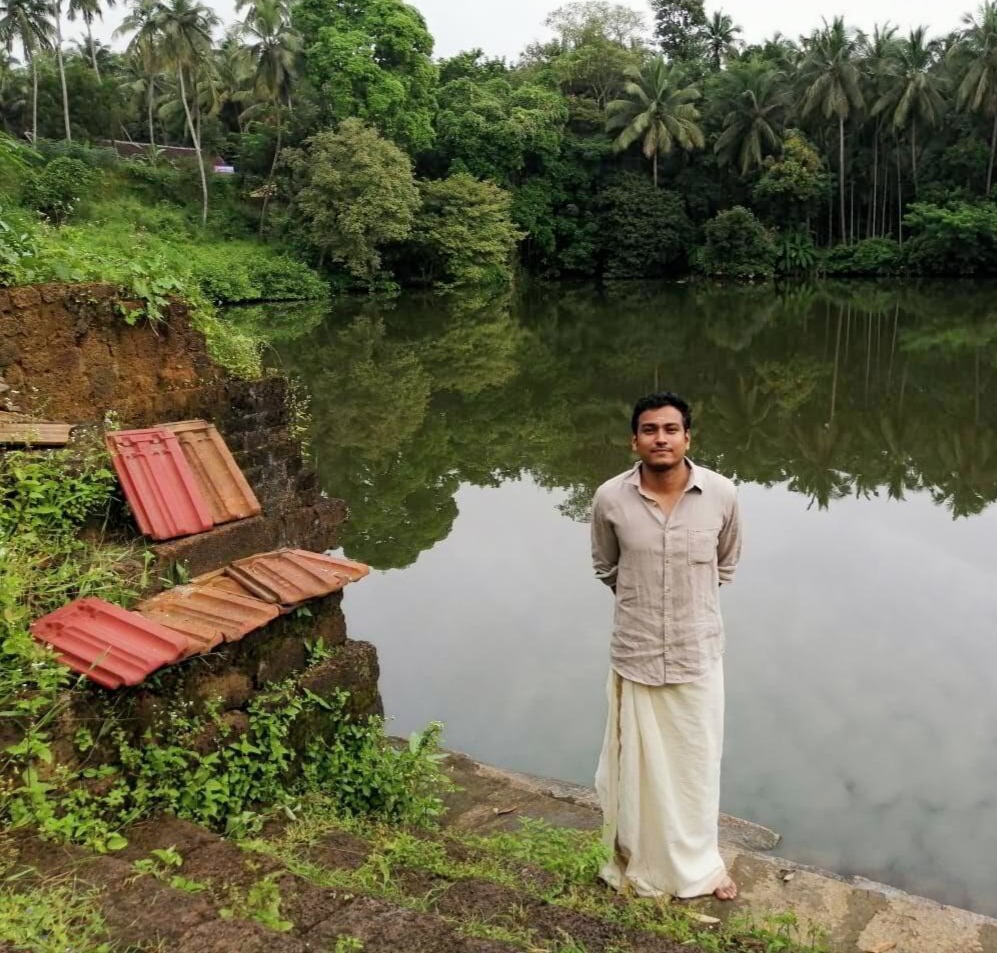
Ayyapan Kavu , inside view. “Kavu” primarily refers to sacred groves in Kerala, which are rich in biodiversity and associated with local deities, representing a deep cultural and ecological connection to nature, especially serpent gods (Naga).Krishna Temple, Narasimha Murthy Shiva temple, not part of this trio. But just a km from there.These structures are from Tirur, Kannur, Palakkad. This structure in front of the temple deities, are called Valliya Ballikallu. The Temple Pond and the greenery around. And me just blocking the view.
Etymology – What we really mean when we say “Temple”
To truly understand these structures, I explored the names we give them. Today, we use “Temple” as an umbrella word, but the word itself has a curious history. It originates from the Latin templum, referring to a consecrated, cleared space for worship.
I’m sure in India “temples ” were here even before Latin Language existed.
But as I looked at our local languages, I found layers of meaning that feel much more intimate and connected:
Ambalam(Malayalam/Tamil): While it means an open field or courtyard, a deeper meaning suggests a “stage of consciousness” – a wide-open space where the mind meets the divine.
Mandir(Sanskrit/Hindi): Derived from Mand (to be happy or celebrate) and Ira (earth or place). It is literally a place on earth to celebrate the joy of existence.
Kovil or Koil (Tamil): A combination of Ko (King or Divine) and il (Home). It treats the deity as the living, breathing ruler of the village, and the temple as their home.
Prasada: We often think of this as the food we receive, but in architecture, the entire temple structure is the Prasada. It means “Clarity” – the building itself is a tool designed to settle and clear the mind.
Kavu: The ancient “Sacred Grove.” Rooted in the idea of “protection”, it is the temple that wasn’t built, but preserved – a sanctuary where nature and the elements remain untouched.
And if you have visited them, you will understand why the name is spot-on.
Why we need a Temple?
In India, across every state and spanning millennia, there are temples. The public, Kings and the wealthy spent huge sums willingly (or perhaps unwillingly) to build them. I’m not interested in the specific customs, rituals that are been followed at present. I doubt If we have missed something over the generations – about the actual purpose of a temple.
Dogs, cats, birds, and fish don’t need temples; they simply live and die. Is it because humans—with our memory and intelligence—want to pass something down to the next generation? If these buildings might be a form of science, a way to transmit information across time. But did we actually receive the message?
When I asked people around me why they visit, one thing was clear: they go for peace of mind. They seek a calm state. Irrespective of religion or region, this seems to be the universal purpose.
What I am fascinated is its architecture. The mathematical precision, geometry, energy, geography, hidden messages .
Sensory Design: How the mind experiences
How one experiences a temple is deeply personal.
I’ve realized that old temples are almost always located in geographically significant places: near rivers, atop mountains, deep in jungles, or by the sea. Some say these are “energy zones,” though I am still unqualified to experience that at present.
We usually go to the temple in the morning or evening (sandhya), at that time the beauty of nature, people, temples are magnified.
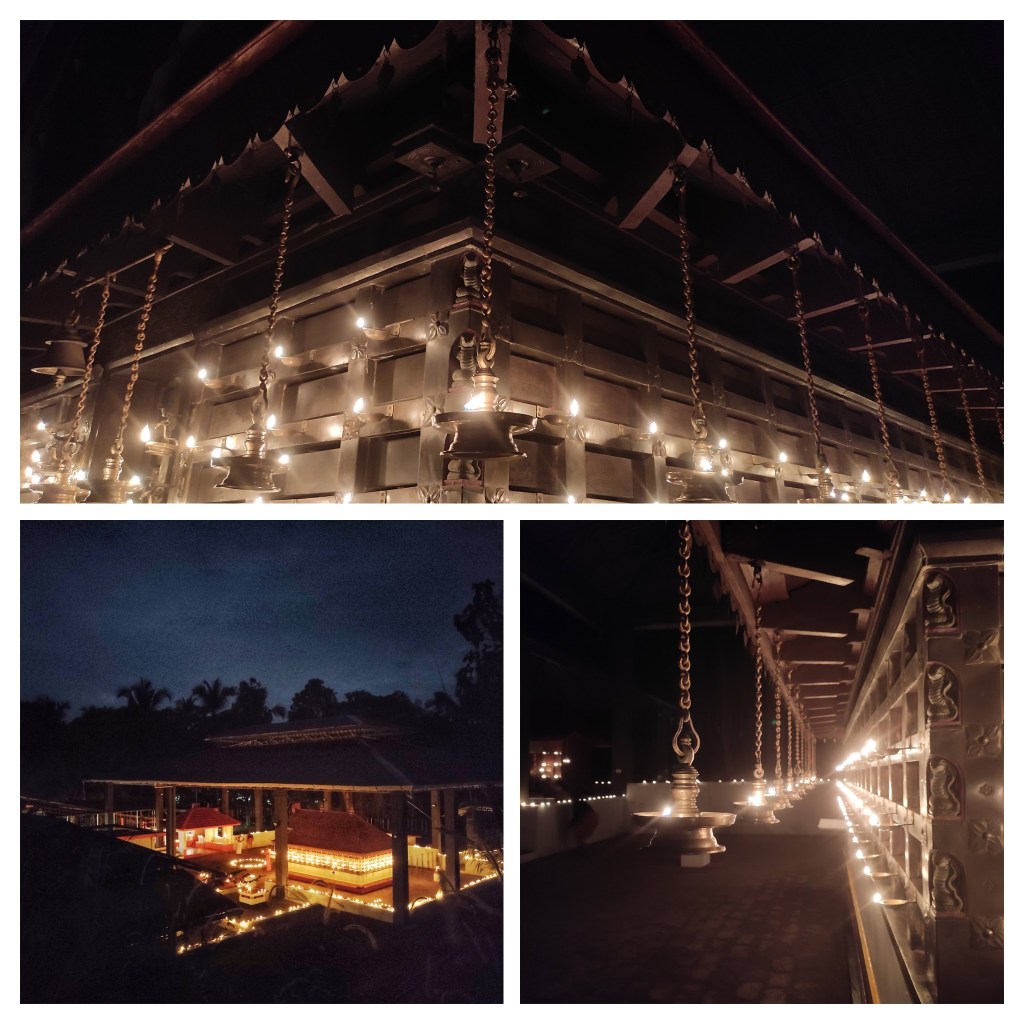
A temple at Kannur, Kerala at evening
In the temples of Kerala, I’ve observed a specific “conditioning” of the mind. The massive walls block out external noise. In the darkness of the sanctum, your senses are narrowed down to a few things: the flickering light, the scent of chandanam (sandalwood), tulsi, and flowers, the resonance of the bells. Outside, smell of camphor, nallenna (sesame/gingelly oil), ghee when the lamps are lit up. The visual beauty of the chutambalam(Outer enclosure) , when the array of thousands of lamps (Vilakku) are lit can’t be described, one has to experience it.
Amidst all these, the sound of stillness.
In the Temples of North or Western or Eastern India, based on what I have seen, the experience is more “democratic“. People can go right up to the idols and perform their own offerings. Here they sing bhajans together in a different, more vocal version of that same conditioning.
You can be alone or in a crowd, both are meditative, we lose identity of the self..
Evolution assumptions – The Shift: From nature worship
I wonder when the first version of temple existed- Is it when the human evolution reached a stage where it moved beyond the animal wisdom and started to settle at one place, started agriculture and stopped the nomadic way of life. Was a temple originally a place for worship, or was it a community hub to share art, craft, and information?
What could be the first form of worship – The pancha bhoothas – Fire, Air, Earth, Water, Space. I guess there was no need for a temple or architecture, they were happy with formless nature around, which they feared and valued.
Maybe much later the human-formed deities/idols came into existence. Before that the previous generation worshiped Forest, Trees, Rivers, Beaches, Mountains, Sun, Moon, Planets, stars.
Then there are as avatars, as vehicles of Gods : Fish, Monkeys, Elephant, Boar, Bull, Cow, Lion, Tiger, Cats, Rat, Crocodile-Makara , Birds ( Eagle, Peacock, Swan, Owl) and of course Snakes.
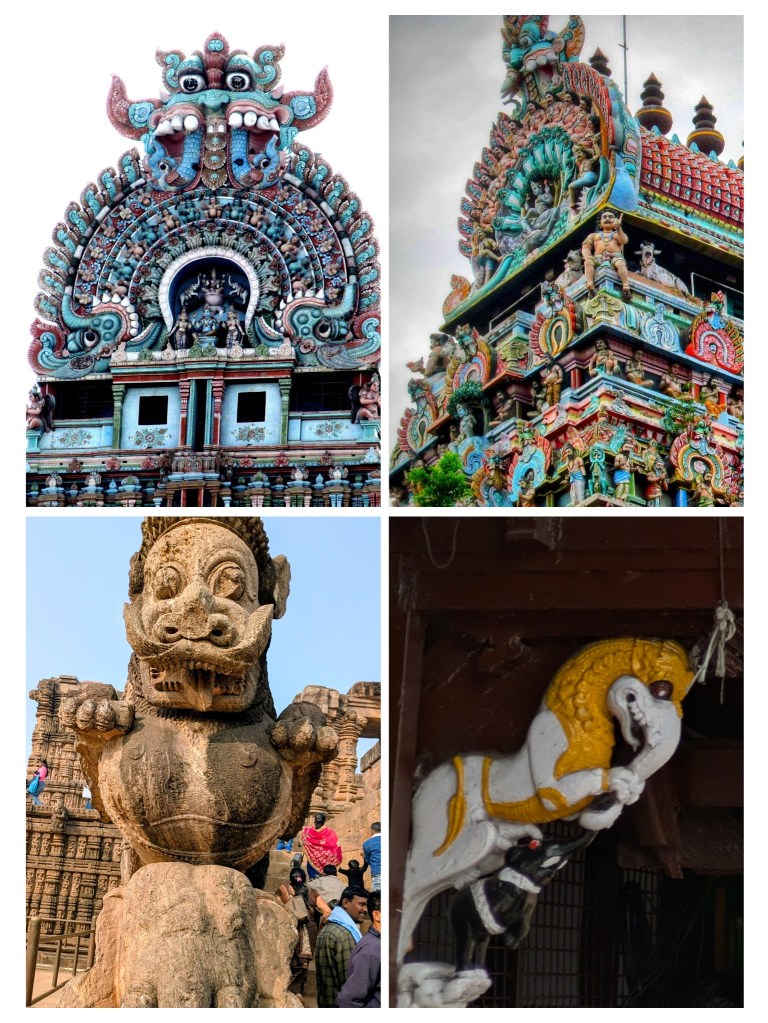
Then there are hybrid animals depicted in the temple stone/wooden carvings like Vyali, Bhairavan, Gaja-Simha, Naga-yakshi. But they act as protectors around the temple.
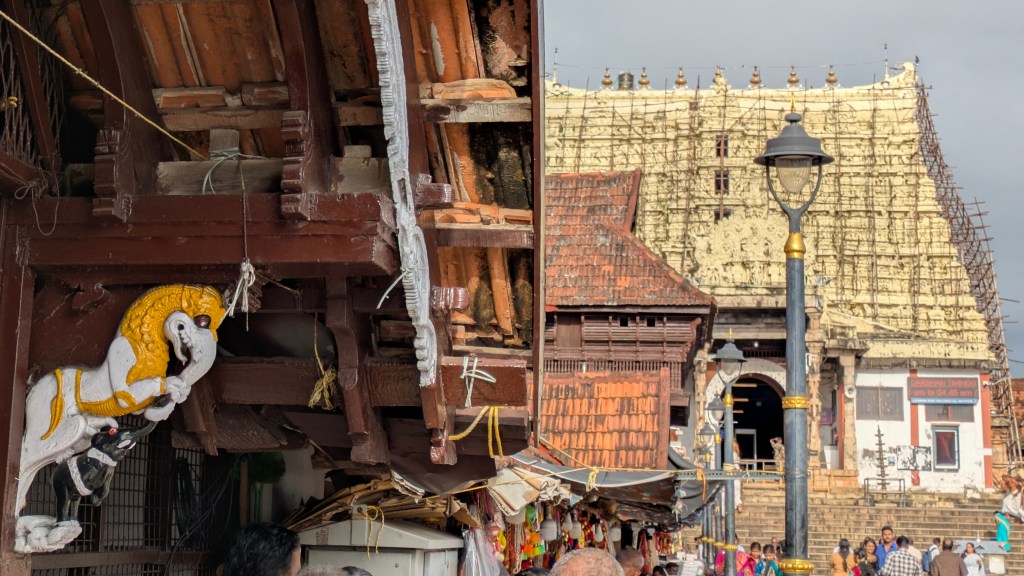
The top 2 images are from Tamilnadu Temples, The bottom left from Odissa, and the bottom right from the Padmanabha swamy temple compound.
This is where my questions become uncomfortable – even for me. A thought came , a what-if moment. Is it like when someone in power took what was once simple nature worship and turned it into a complex system of rituals and ‘science.’ By doing this, they effectively locked the common person/tribals out of the inner circle. Or indeed there was a science behind all these ?
“Nobody listened to Buddha; that is why there is Buddhism.”
– J. Krishnamurti
Back to Kottayi for a moment
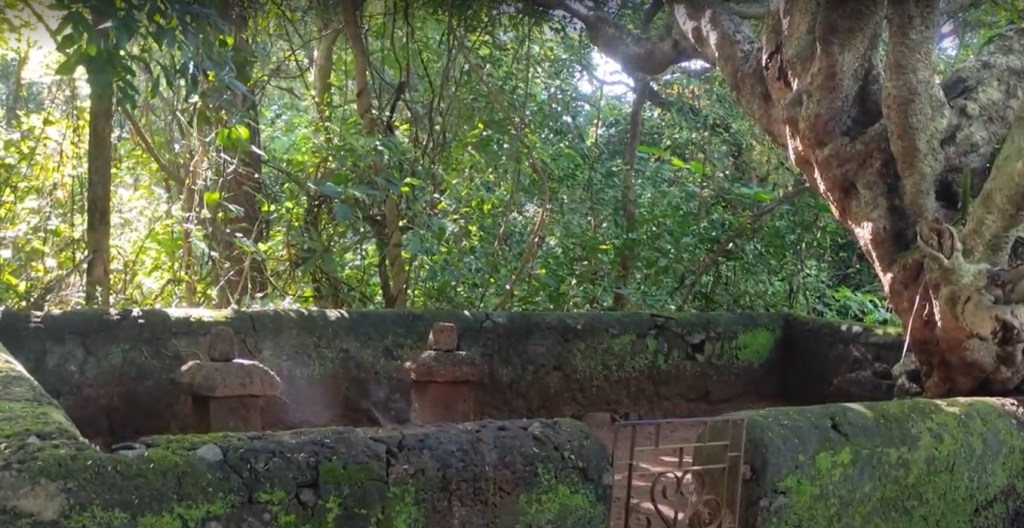
I tried to search for the history of my childhood region, Kottayi and the Ayyappan Kavu. The information was minimal, only going back a few centuries. But the elders speak of at least 3-4 Pambin Kavus (Snake Groves) in the area. I remember visiting them as a child; I was horrified to go there even in broad daylight.
A Pambin kavu, with a cleared area for worship. This is the new version, quite less scary than the old times.
The local legend says someone found a stone from a Pambin Puttu (snake mound) and began worshiping it, eventually building a temple. Perhaps this is just a way of saying that what was once a dense, wild forest was slowly converted into a human settlement. I often wonder what that land looked like five centuries ago.
A Southward Journey Through Temples
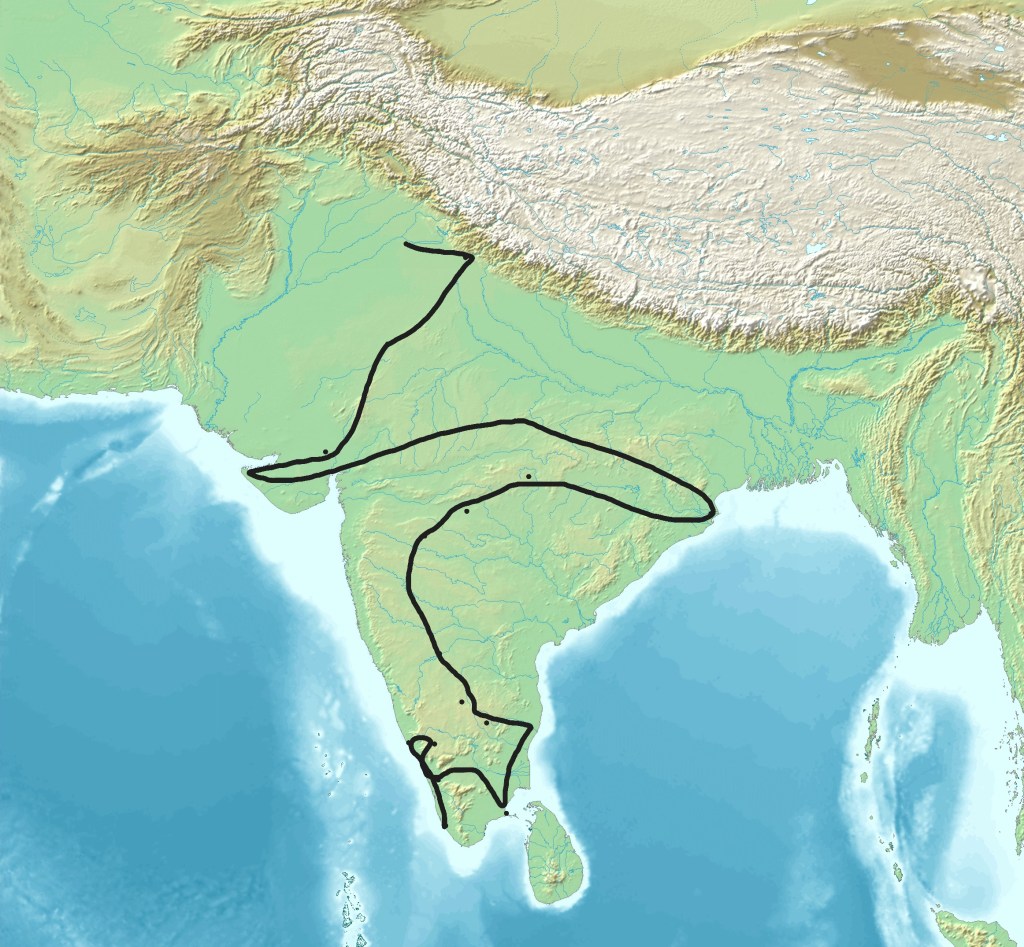
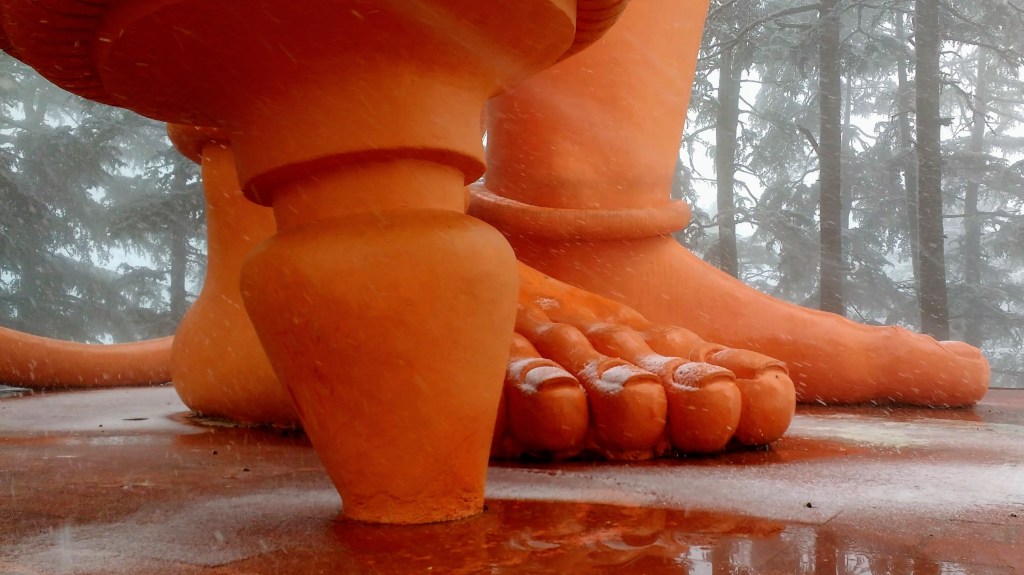
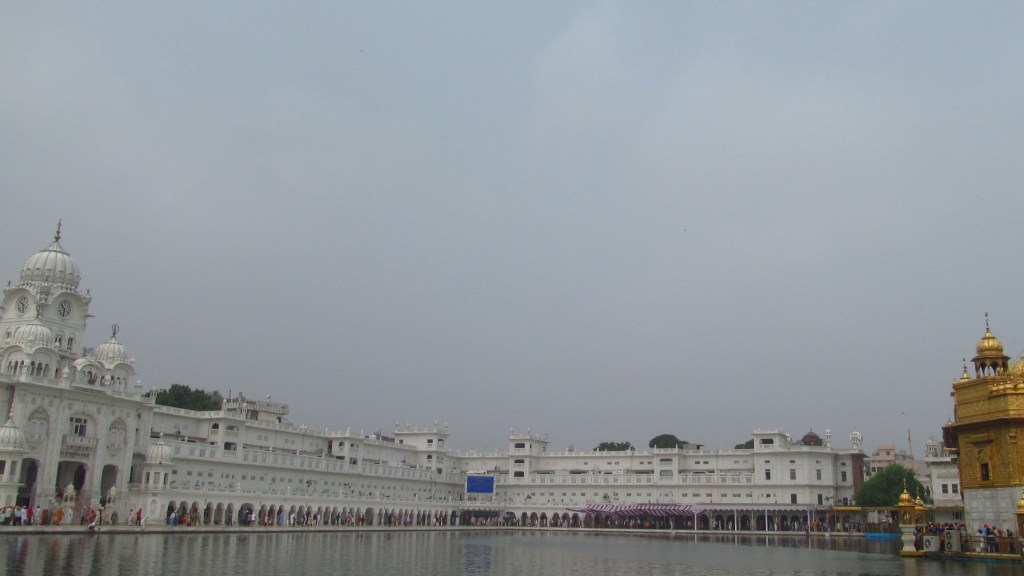
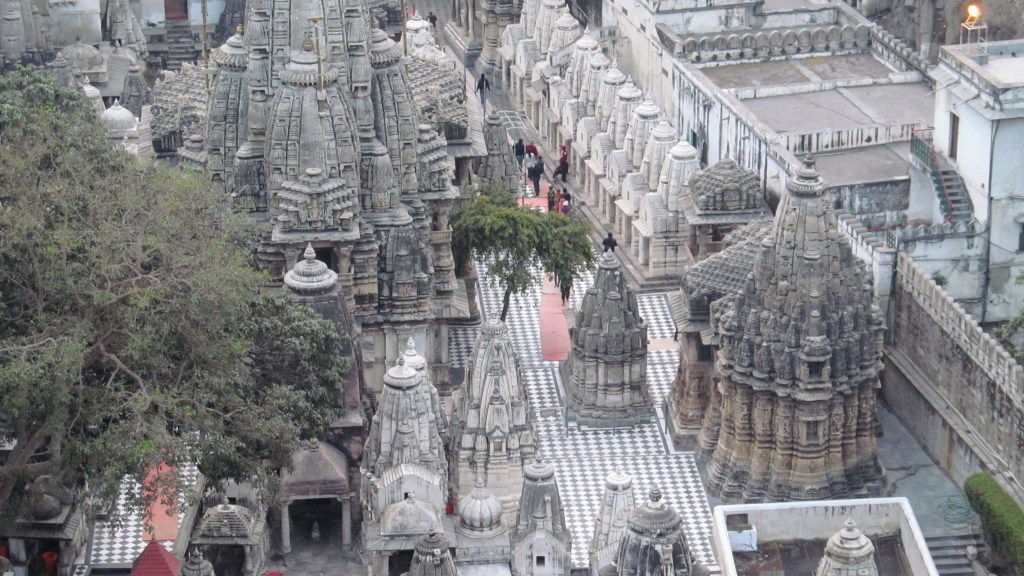
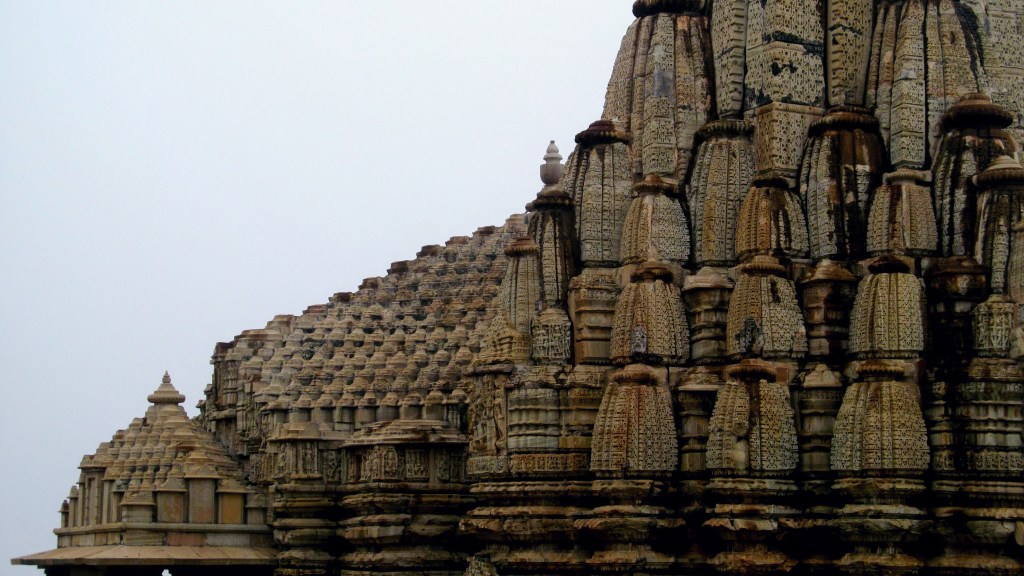
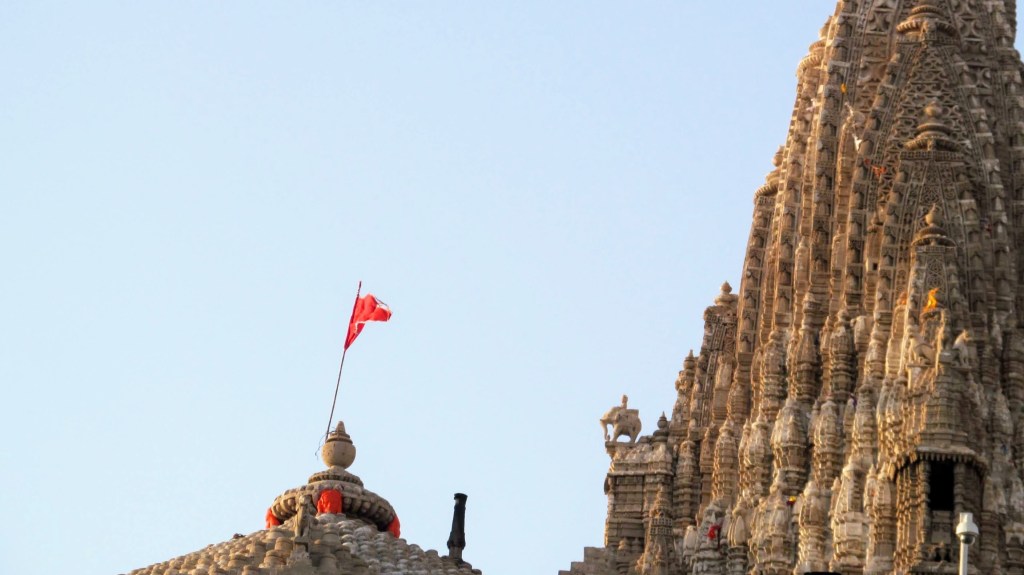
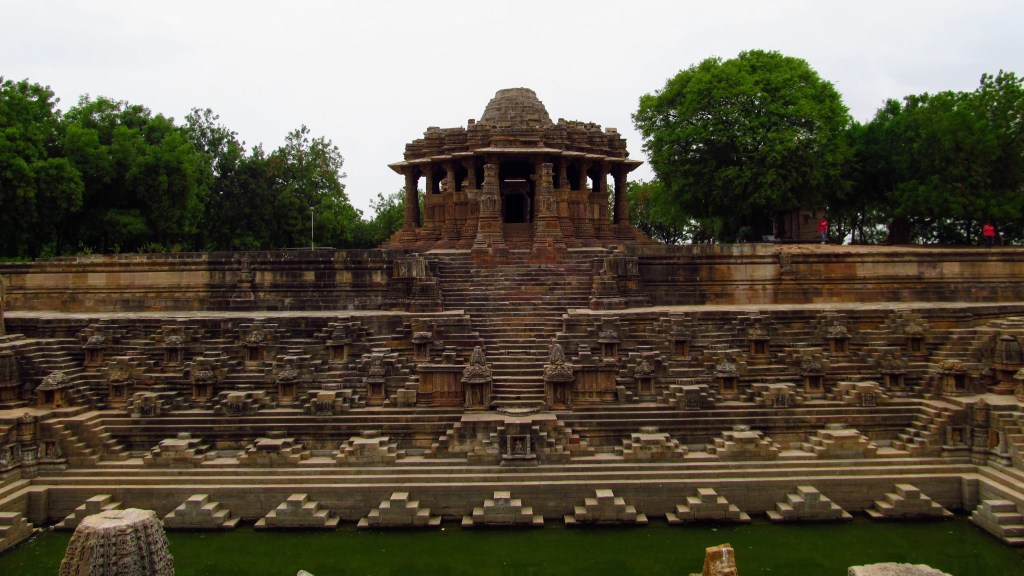
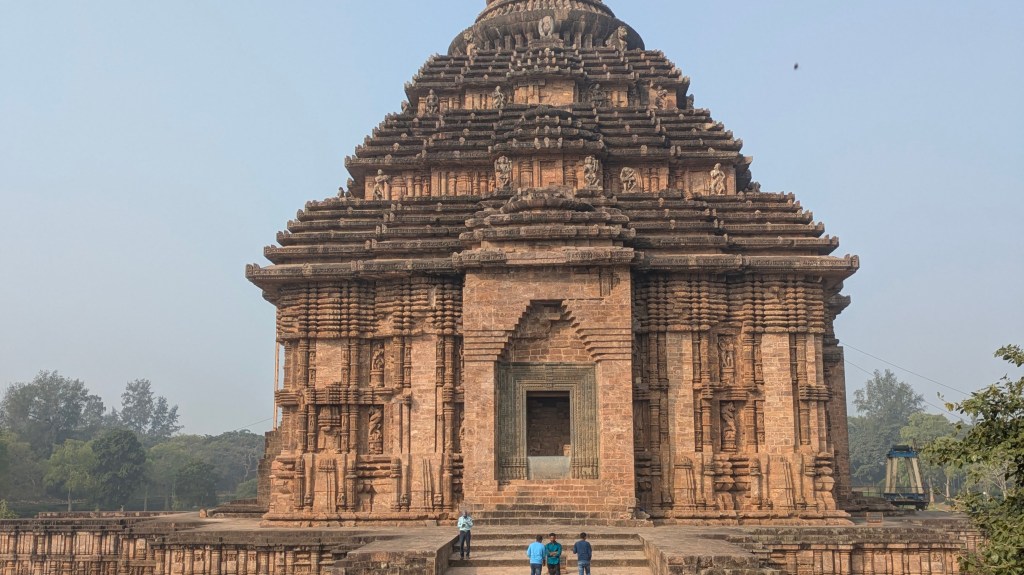
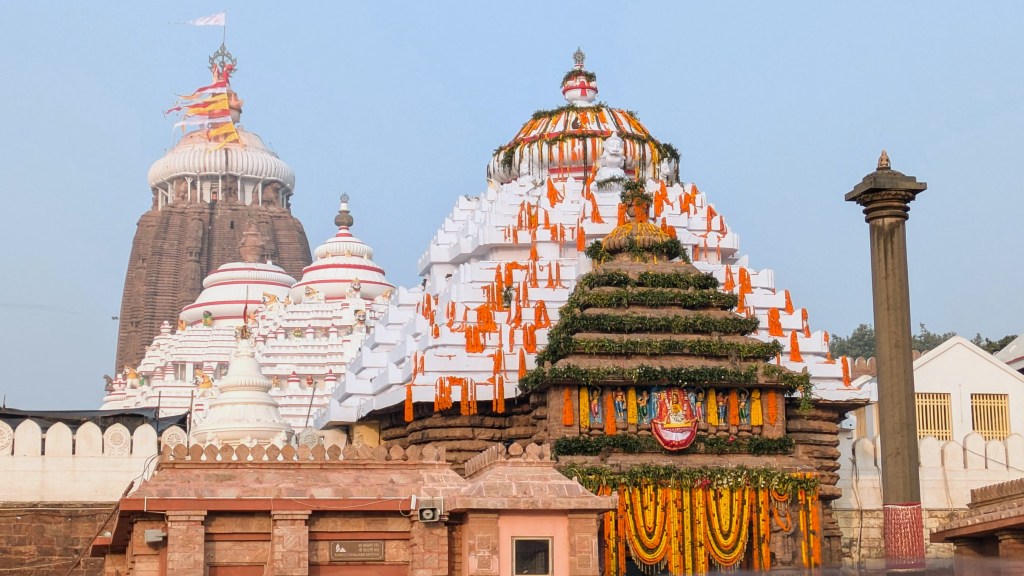
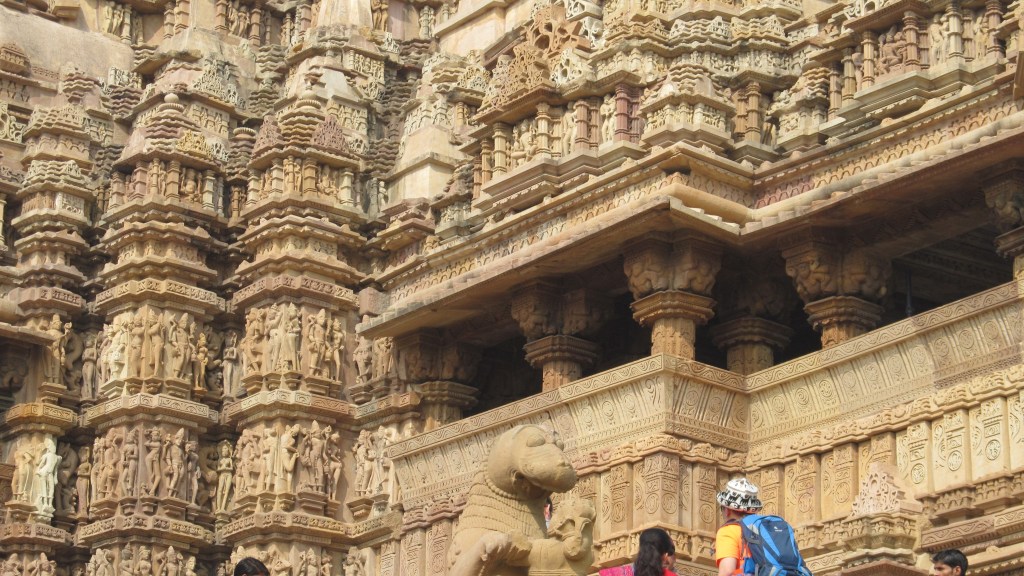
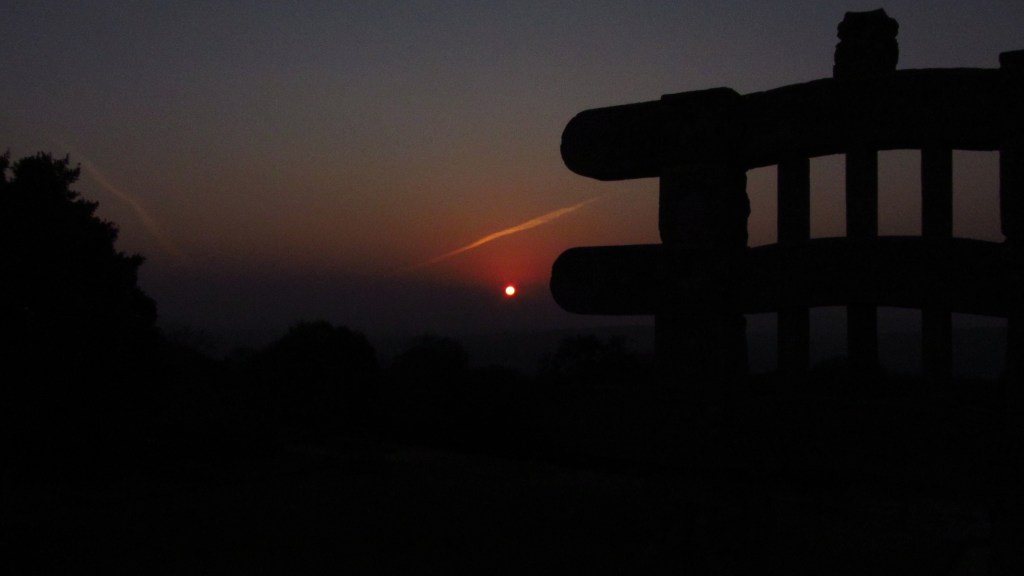
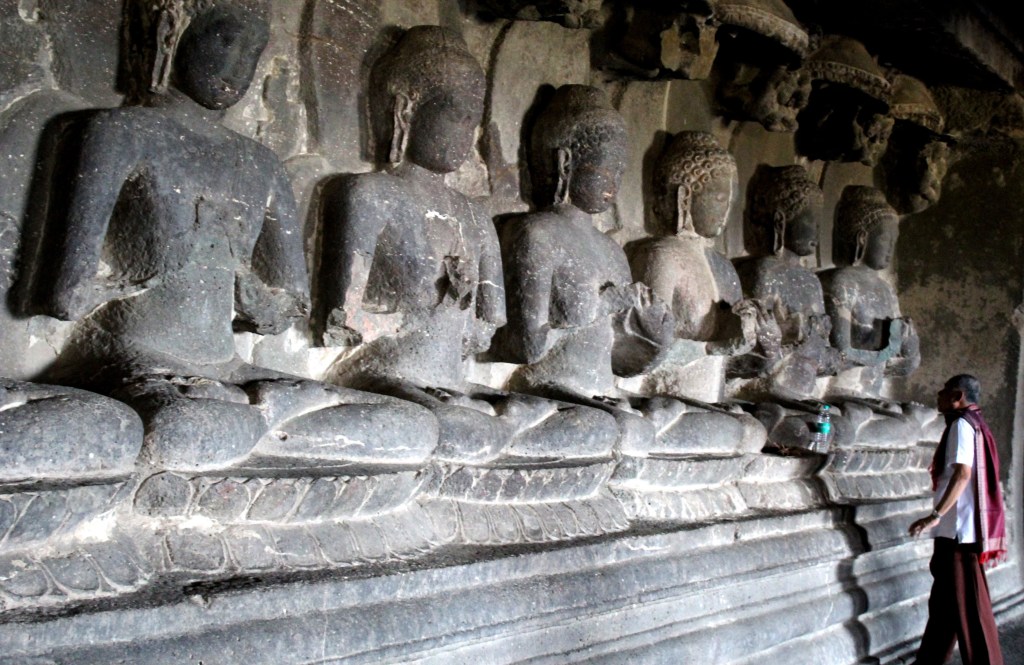
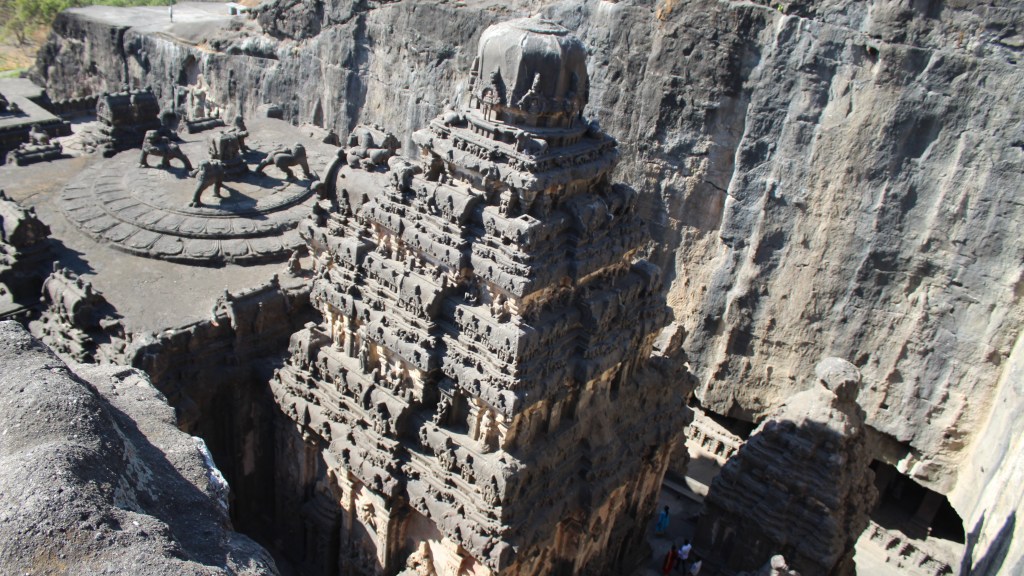
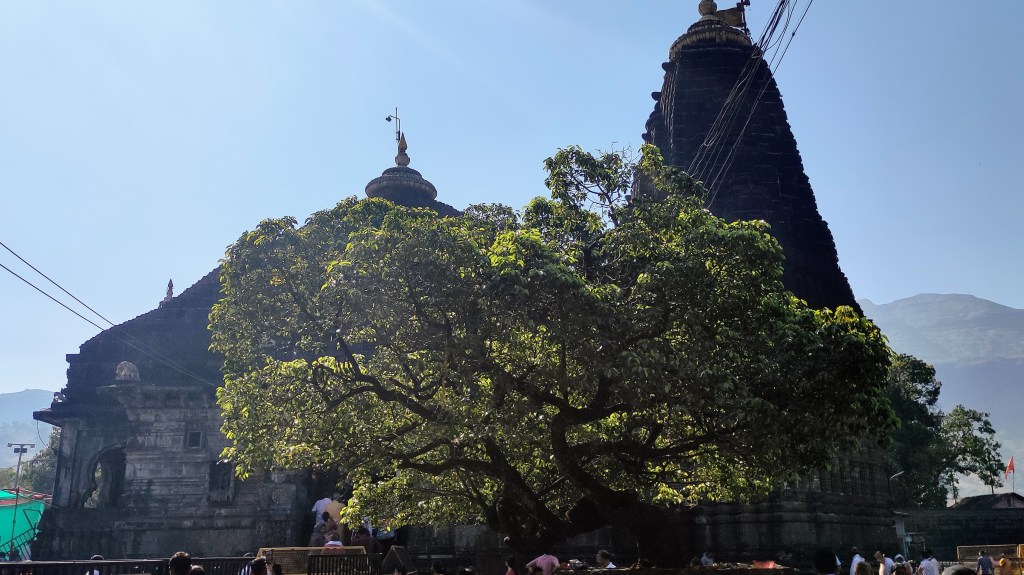
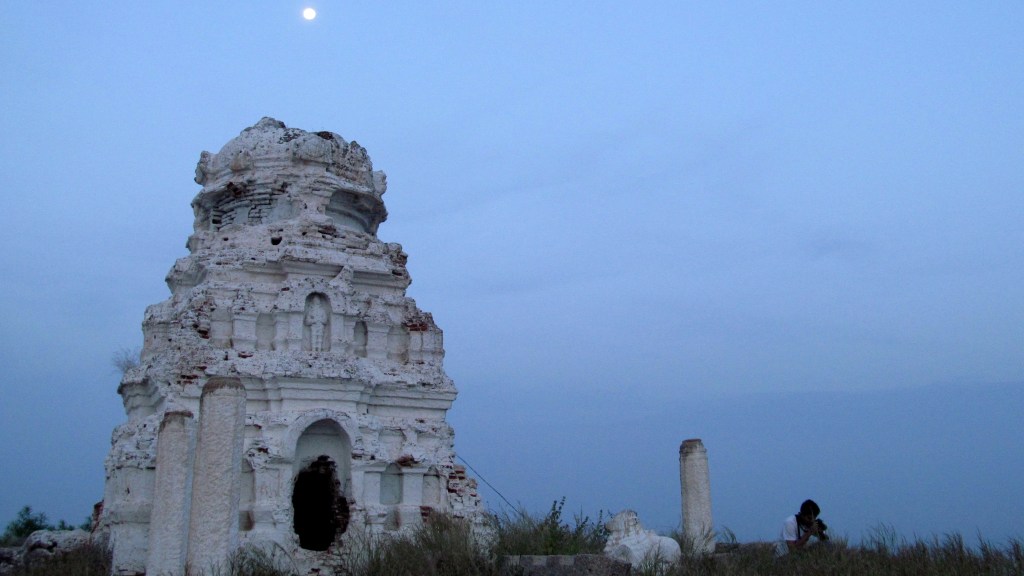
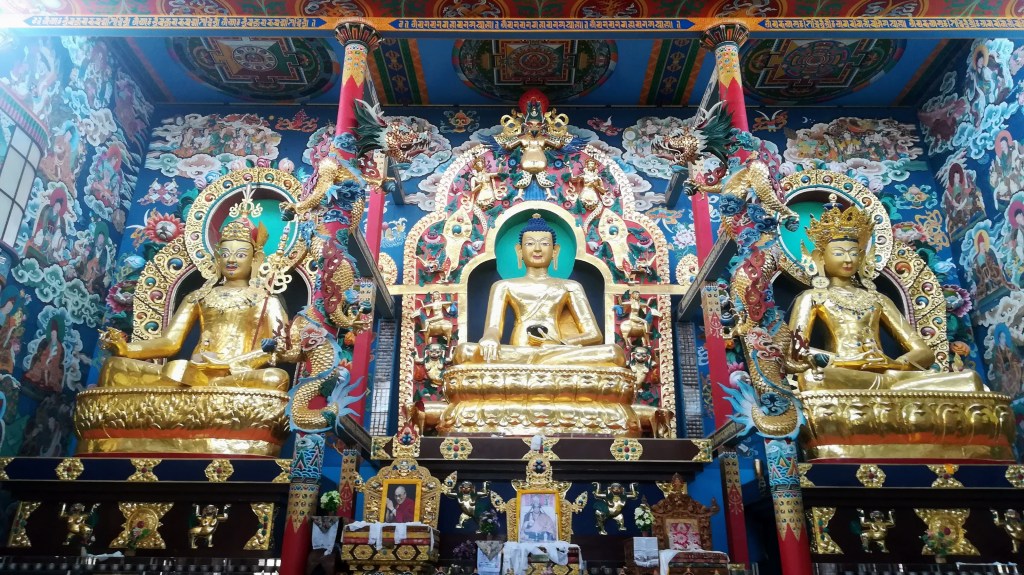
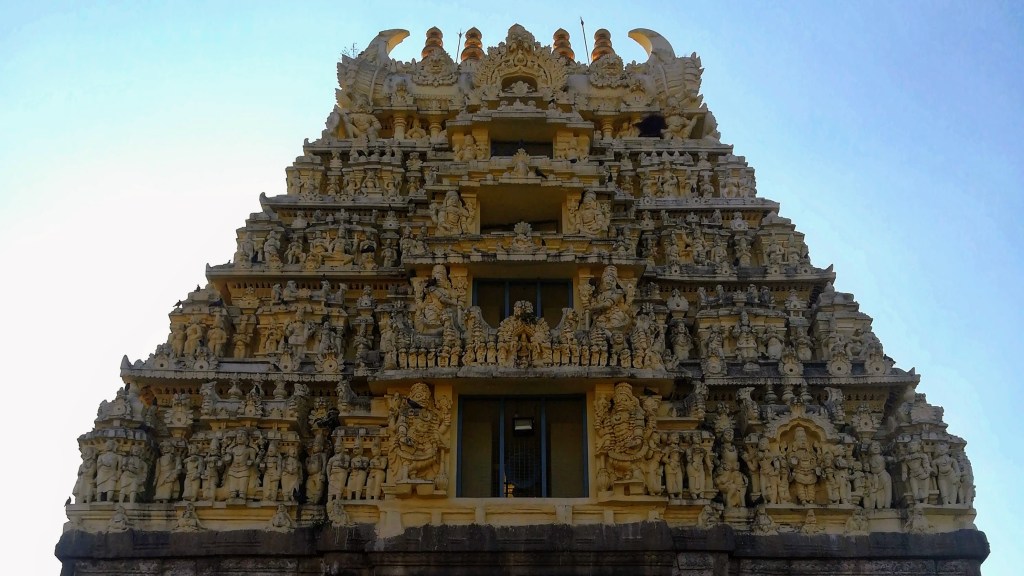
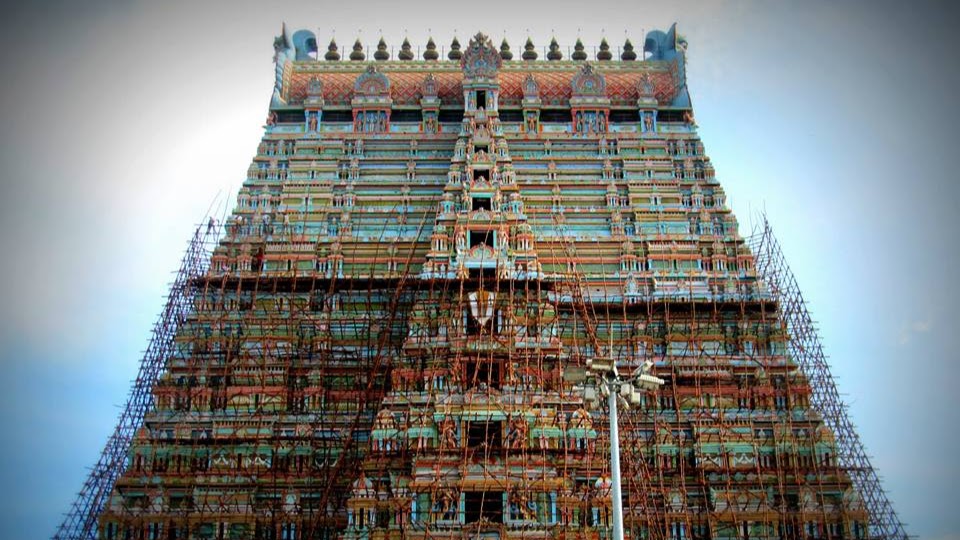
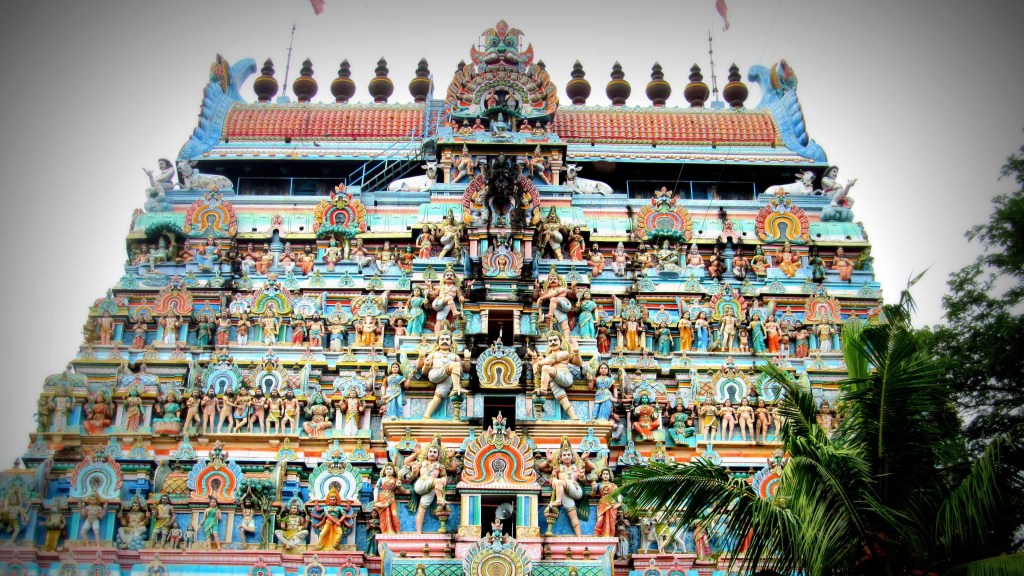
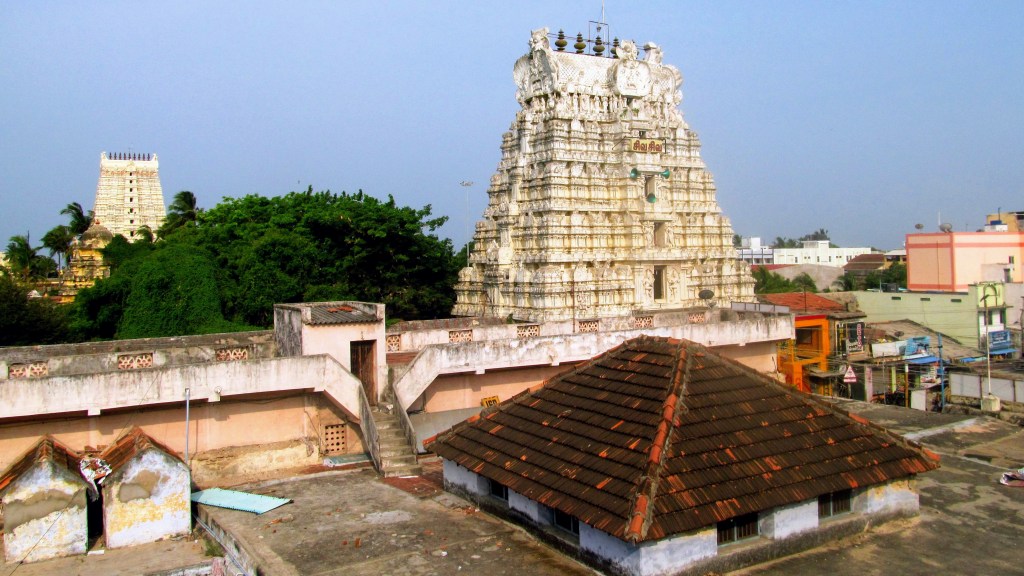
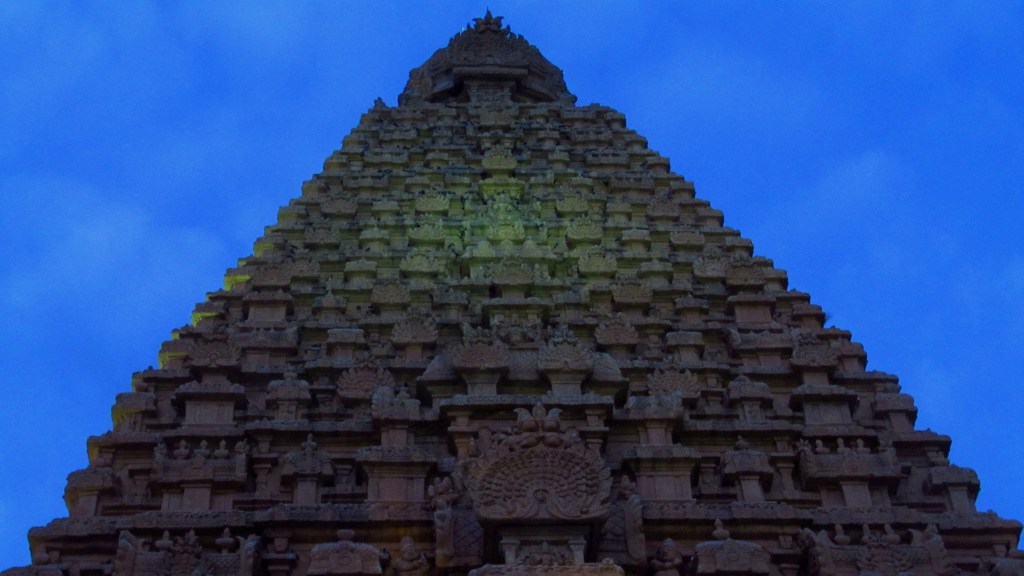
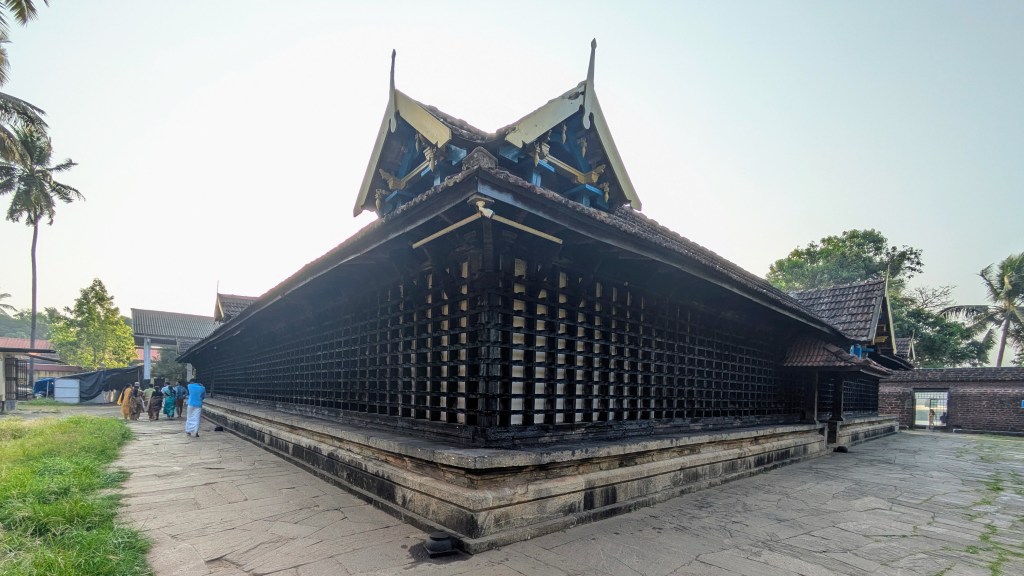
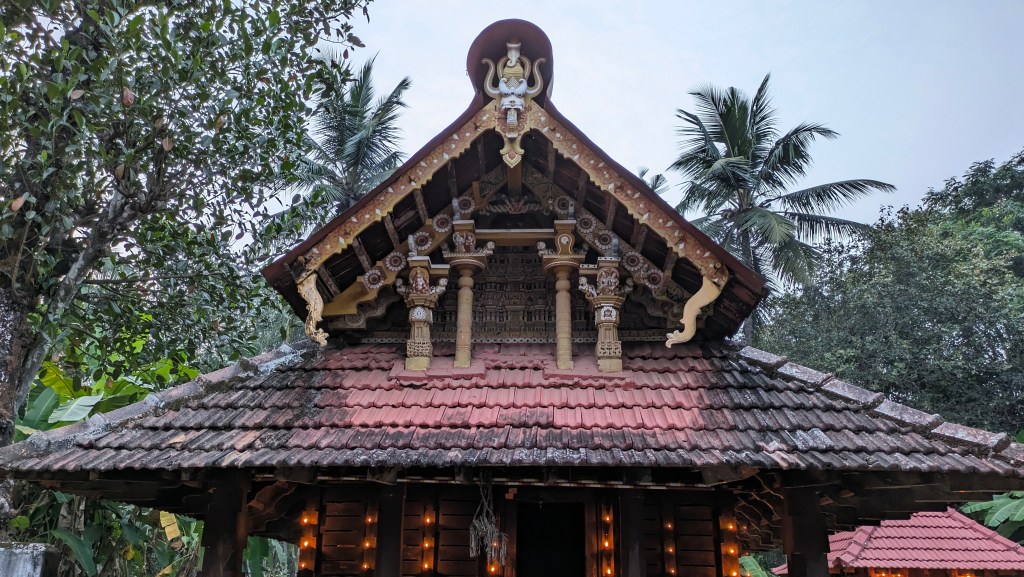
These images weren’t taken on a single journey. They come from years of travel, scattered across time. I’ve placed them here deliberately from north to south to let geography, material, and mood reveal themselves.
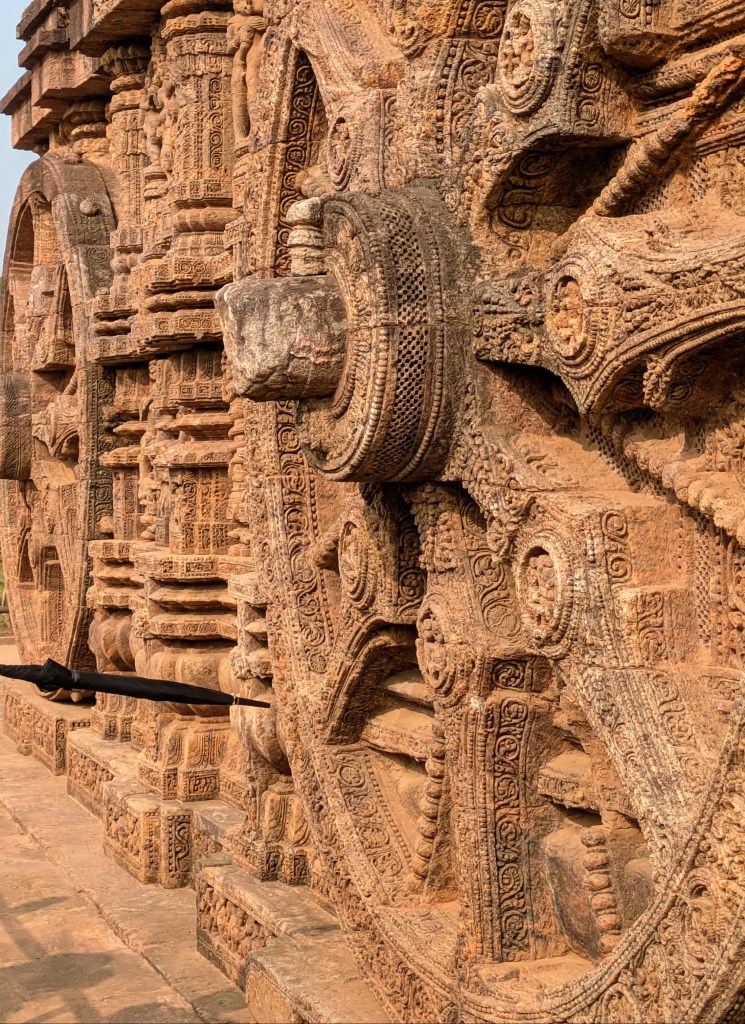
After arranging these temples by geography—from the North down to the South—the sheer variation in material, scale, and state is striking. Some are active centers of ritual; others are silent, non-operational monuments. We see different stones and weights, with some structures emphasizing openness and others shifting toward heavy enclosure. Looking at them together, I’m left with a question: beyond their current use or state of repair, was there a shared intent in their design? Could the way they manipulate space, light, and geometry be a deliberate attempt to alter a human’s state of mind?
Is it possible that these temples are not merely monuments to a deity, but a form of ancient ‘technology’ we’ve forgotten how to operate? I wonder if they were designed to be more than just buildings, perhaps they are instruments tuned to a frequency we no longer hear.
What if the stillness one feel isn’t just a product of own mind, but something engineered into the very structure? And looking further, I have to ask: why do so many of these structures seem to watch the sky? Is it a coincidence that their alignments often mirror the movements of the sun, the moon, and the stars, or were they built as synchronization tools—linking our small human systems to the vast rhythm of the cosmos?
If the ancient statement Tat Tvam Asi—that what you seek is what you already are—is the true destination, then could the temple be a mirror? Not a place to reach outward, but a device designed to turn our attention inward, until the boundary between the individual, the architecture, and the universal energy begins to blur?
In next blog, I want to explore these next questions: Do the Meru pyramid and the Sri Chakra act as a code for this connection between the earth and the stars? Is there a link between the geometry of the stone and the geometry of the self.” And is there a similarity between all the temples of India?
By the time you’ve run a few races, you realize it’s not about the medals. It’s about those moments when you think you’ve reached your limit… and then somehow, you keep going.
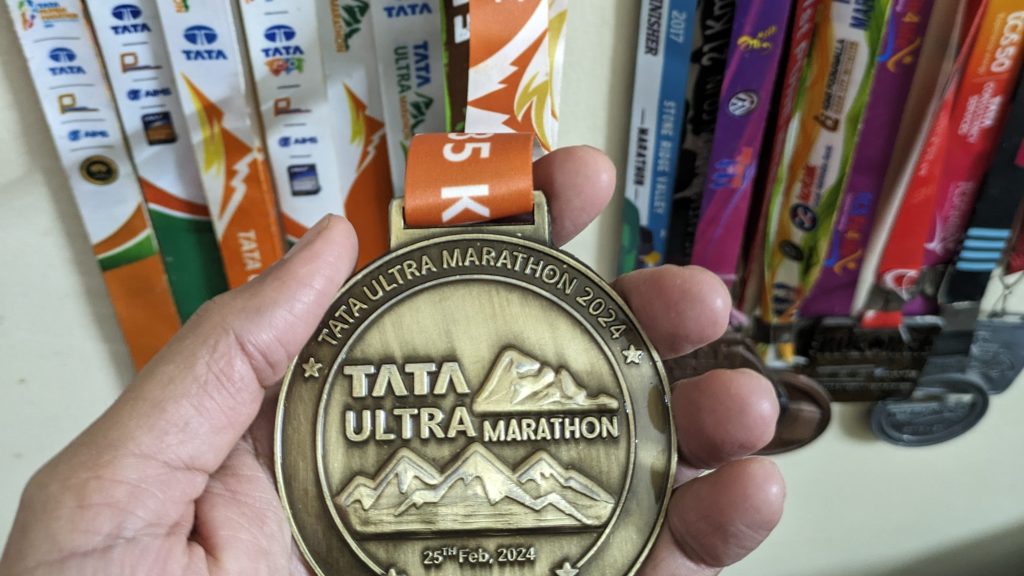
A week after completing my first Tata Ultra 35 km ( Part 2 of my journey), I did something impulsive, signed up for my first 50 km ultra-marathon.
The Double Challenge
I didn’t know then that this race would collide with a career milestone, turning into one of the toughest, most unforgettable 48 hours of my life — and a turning point in how I see running, work, and myself.
Matheran – Rain, Waterfalls, Forest vibes
Apart from the run, what excited me was the fact that I was going Matheran for the first time. Matheran, a small hill station, is also a vehicle free zone with lush forest cover, waterfalls and monsoon fog. Perfect for a trail run in monsoon.
The best part?
Preetha (my sister) and Sidhant were with me in this journey. They also registered for their first 10 km run here. I felt relieved knowing they’d be there if anything went wrong.
The race was far from Hinjewadi, involving train changes and long travel. We reached a day before to collect the BIBs and take rest at the misty Matheran.
Race Day – First half
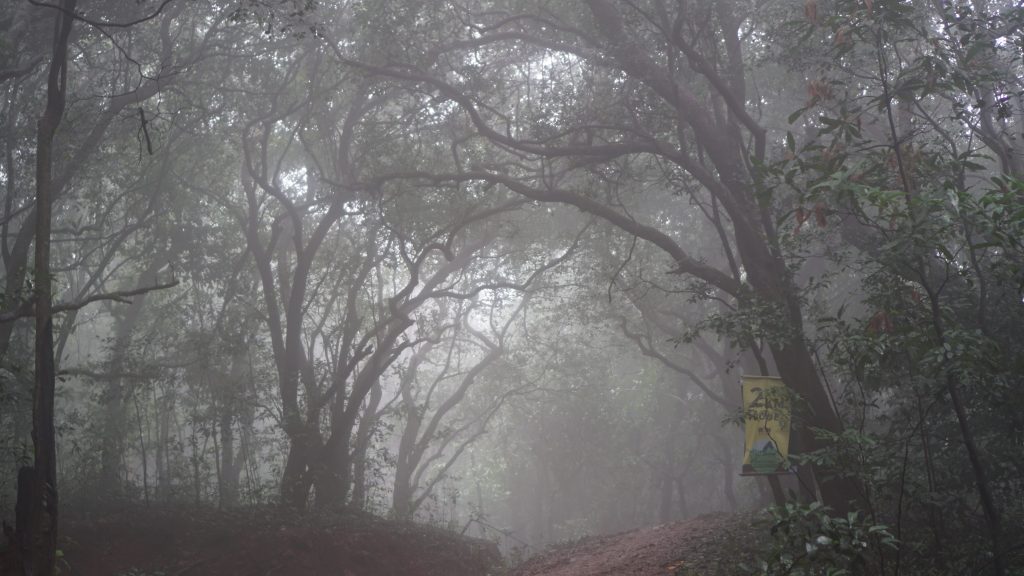
The race started early, around 6:00 AM, once the light was sufficient. The route was of 25 km and I needed to cover it twice to complete. The weather was pleasant, fog, drizzle, rain, waterfalls, it was the best trail running experience.
The first part was good, as it was like sightseeing and experiencing the freshness of the hills ! And as I am very much accustomed to half-marathons , I knew that will be okay till 25 km !
The first 20 km was okay – slow and steady. But then… trouble began.
The fall
The trail running shoes I wore were slightly loose and it became heavy after it soaked up the rain and muddy water along the way.
Around the 23 km mark, as I approached a milestone point and then came the trouble – the monkeys. One monkey got too close, probably wanted my water bottle. I panicked and threw the bottle away so that the monkey wouldn’t come near me.
That spike in heart rate ruined my rhythm. My legs already tired after running for some time with the heavy shoes, didn’t lift the way I wanted when I tried to jump over a stone. I saw everything in a slow motion, I tripped and fell with a thud.
It took me a while to assess what happened and the injuries. I slowed down a bit and headed back to our base camp where it marks the half way and to have well deserving breakfast.
My body was shocked after the fall. Breakfast helped me restore me a bit. It cooled my legs & body, settled my head.
Meanwhile Preetha and Sidhant were there waiting, after their first 10km run, I was happy that they did conquer their limits.
Restart & the 37.5 km Decision
The break was extended, I wasted sometime. Then Sidhant joined me for some parts of the second half and took a few good pictures. We kept moving. Since the body was cooled down, I had to restart again. And it began raining heavily too by then.
I again divided the next 25 km in my mind, into half . Also there was a cut-off time at 37.5 km , If I don’t cross it on time, the organizers can stop me.
I was tired, my toes were hurting, but somehow… I reached just in time. I saw many runners giving up at that point. Some volunteers even discouraged people from continuing and they agreed !
The organizers even tried to discourage me. Also one more luring point, the cut-off point was close to where we were staying, a temptation to quit.
I asked myself: Why am I enduring this pain?
I already did 37.5 Km, my longest so far. I was afraid of how my body will react in the next kilometers and kilometers to run. I need to go back to Pune, catch an early morning flight to Chennai. It seemed quitting was the easy and best option ! All this were going in my mind in that 1 km stretch.
Then I asked myself: Why should I give up now?
And I continued.
The Brutal Last Quarter
The next 12.5 km were brutal. Barely a few runners behind me, most had quit or crossed the cut-off and stopped. But a few of us kept each other going, strangers who cheered, walked beside , or simply nodded as they passed. In those moments, a single word of encouragement means a lot.
I realized I can be this happy seeing water or salt or potatoes on the way! As time was going, water stations had dried up. Food stalls closed.
One fellow runner who was going to run Ooty ultra next was running beside me for sometime. He had his toe injured. I can relate very well as even my toe was hurting very much with each step. Now our legs were soaked in water for almost 7 hours. We motivated each other.
And with all the energy I tried to accelerate, now I know, I will be able to complete.
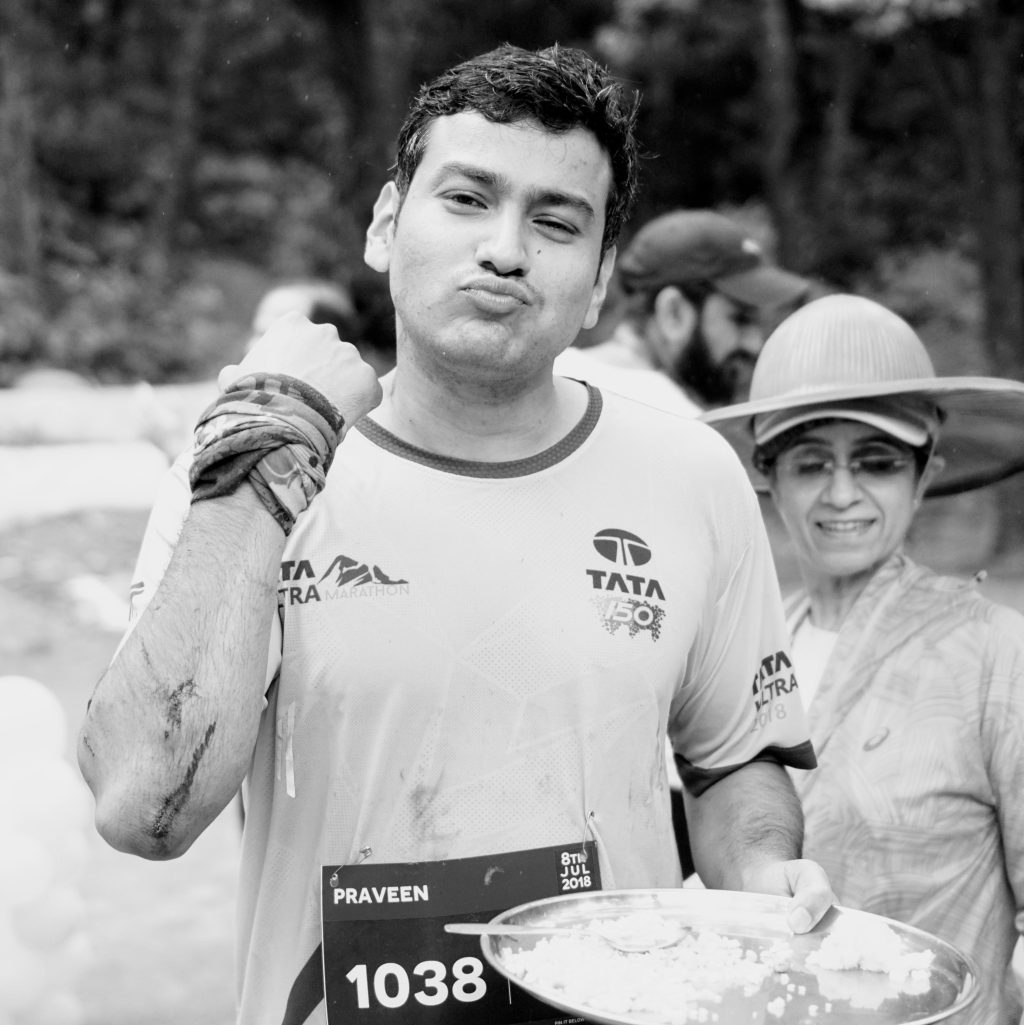
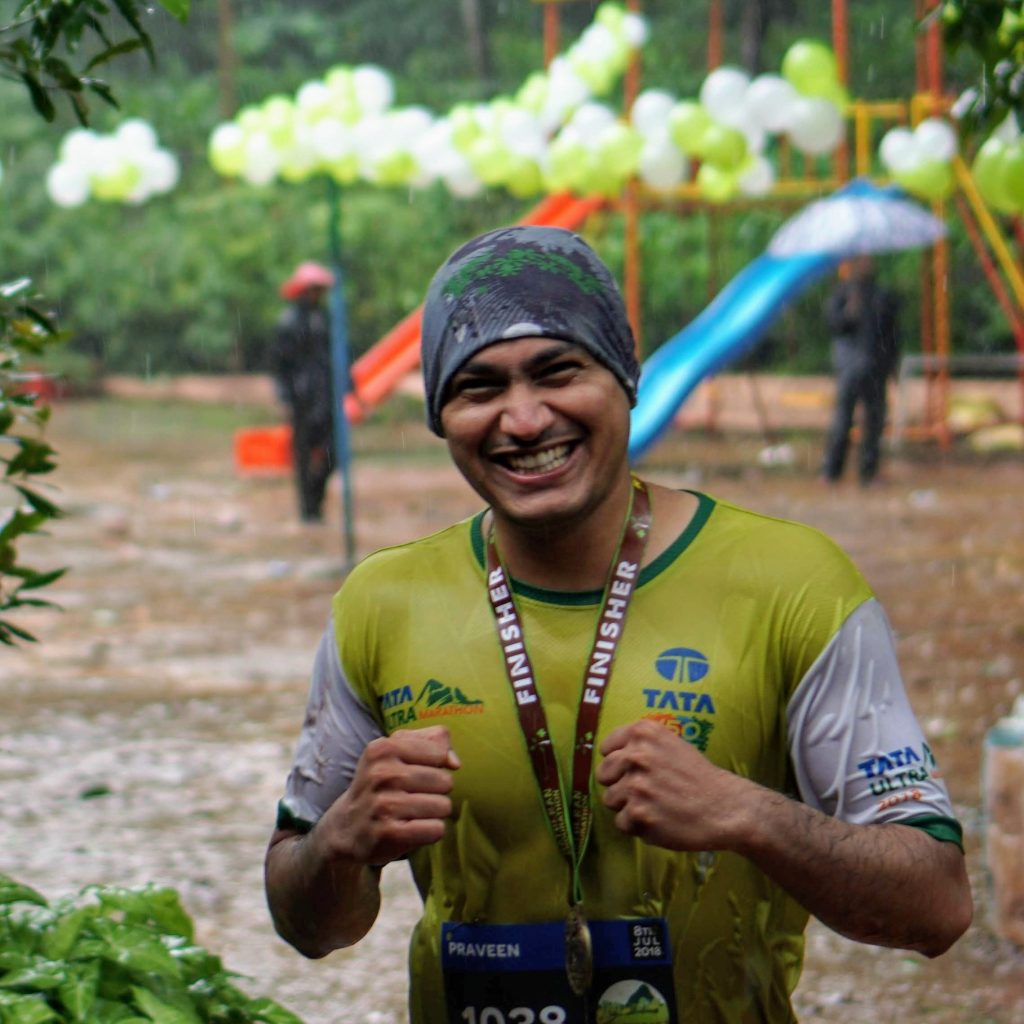
Finally, I crossed the finish line, before the 8-hour cut-off and I wasn’t last.
I realized something :
In such marathons, We are not racing with others. We are racing and conquering our self, our limits, our pain. The situation will be different for each one of us.
And one more realization : I hadn’t given it my all yet. I still had more left in me.
Post Race Marathon: Trains, Flights & Hackathon
After finishing the race, we still had to walk nearly 2 km slope just to find transport. We stood in crowded local trains, exhausted, switched multiple trains, then took a long cab ride home.
Reached home around mid-night. I took a quick shower, slept for a few hours… then woke up at 3 AM, got ready, and headed to the airport.
I flew to Chennai, got into a cab, went to the venue, and gave my Hackathon presentation. I honestly don’t remember the return , how I got home at night, but I clearly remember standing in the Chennai airport, knowing I had made it through something far bigger than just a run.
This whole episode : race + travel + presentation was a milestone.
It taught me: I can endure. I am capable of much more than I think.
When life feels tough, I just remember this day. And remind myself : I can do it again.
If I make a list of things I’m truly proud of so far in my life this 50 km run at Matheran – this would be right up there to compete to the top 4 spot. Looking back, 2018 was my grittiest year. I pushed for the hardest runs, almost as if the longer and tougher they were, the quieter everything else became.
Next phase : Running Buddies of TCS
Indeed it was a new phase for me. I got a new set of people at TCS.
This was the phase when I found my best running buddies – Rahul, Shekar, Lalit.
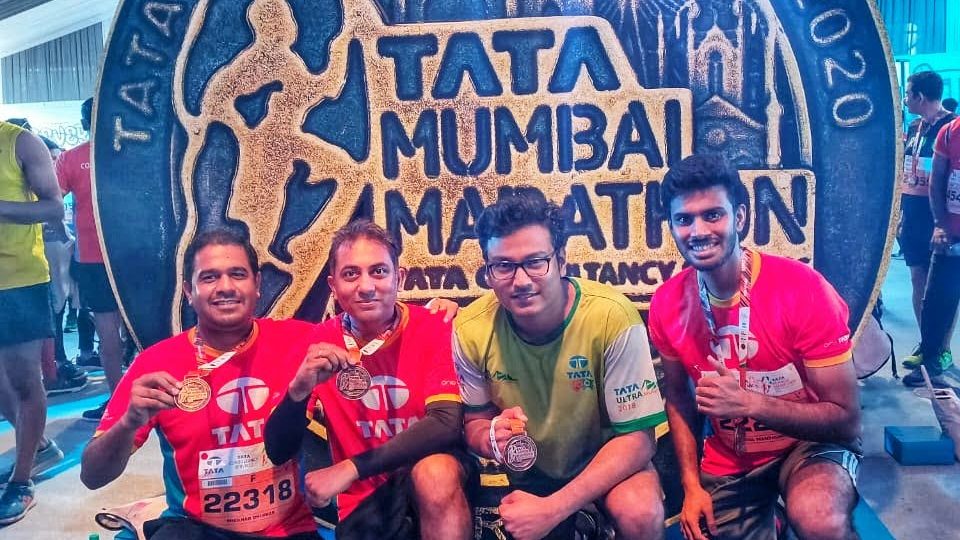
We participated in many runs including Tata Mumbai marathons, Tata ultras and more.
Running became easier — because now, I had company. I still remember our Republic Day runs, and other memorable early morning runs to Kasarsai Lake.
The COVID Pause
After the last TUM 35 km in Feb 2020, everything halted.
No marathons for the next four years. I did a few 10 km runs just to prove I still could. My old running buddies were far away. I had gotten used to running with company , going solo again felt tough.
Now I was working with Michelin and unlike at Tata group, there were no running events organized. Time passed. Age went up. And I started facing issues from the past again: My right ankle and knee had pain. I had a shoulder lock. Still, I kept trying with walks but something was missing. Yoga helped over the past year especially for stretching my tight leg muscles.
Then, one fine day, I just decided : I’m registering for TUM 2024 -35 km.
TUM 2024 : The Comeback
I had very little practice this time (As I was mentioning in the start of Part 1). At most, I had done 10 km runs, and that too a few of them weeks before the event. I also bought new shoes (Asics Kayano 20), which made a huge difference.
The race was on Sunday, We had planned to travel to Lonavla on Saturday morning.
But on Friday night, I got fever and chills. It was a challenge: My hydration was off. My energy levels were low. And most importantly… I hadn’t done this distance in 4 years and also I am 4 years older !
My wife, Anu was concerned as fever and my blackouts were very much correlated. Since the stay was already booked, I convinced her to go there anyway. We collected my BIB. I rested and we had a dal kichdi , a go to dinner before race day. Before going bed, I had to agree, if fever came back, I will quit.
But I woke up around 1:30 AM, got ready, and showed up. I completed the 35 km run. Four years older, less practice, but somehow… still the same grit.
Next Challenge
Make my life partner my running partner too ! She was in her school days a state level sprinter, something I wished. She ran fast. I run far. But someday I hope we run 10 Km or 21 Km together, just to share a rhythm in running too.
To anyone running their first 10 km or marathon:
Believe in the process. Start slow.
Remember, You Run with your mind, Not just your legs.
Along the way, 3 Books that inspired me:
Why I kept Running (& Writing) ?
For me writing this felt like running my longest marathons. At first, it’s just steps and words. Then comes the point where you want to stop. But you don’t.
And somewhere between the start and the finish, you find pieces of yourself you didn’t know were there. That’s why I run. That’s why I wrote this.
Like a long run alone without mobile or other distractions, through the Hinjewadi hills, watching sunrise, just hearing my breath and footsteps along with the chirping of birds. That’s were I know myself.
I ended the last part mentioning Jupiter — and its return that often signals a change.Jupiter takes around 12 years to complete its orbit, and looking back, I can clearly see those cycles play out in my life.
Around 2001–2003, during 8th and 9th standard, I became physically fit, my academics shifted up a couple of gears. Then came 2013–2015 — another cycle. A shift not just in what I did, but who I was becoming.
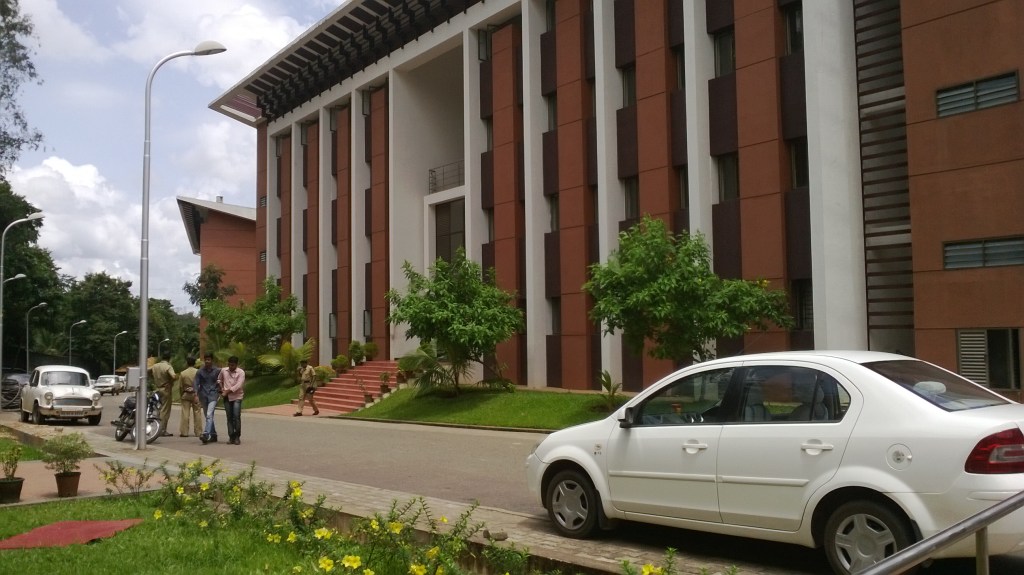
In 2013, by God’s grace, I got a call from IIST (Indian Institute of Space Science & Technology) — confirming my M.Tech seat in Machine Learning. The institute had close ties to ISRO and shared a campus with LPSC. For the first time, they opened admissions to students from non-ISRO backgrounds — and I was lucky to be one of them.
That moment was the beginning of a new chapter. A shift in identity. And maybe, Jupiter was playing its part again.
IIST Chapter:
IIST Campus, Thiruvananthapuram
From a working professional back to a student — surrounded by younger students on campus. And one advantage of doing a master’s after a job, is most of my seniors at college are juniors to me age wise. Having a decent bank balance along with a stipend gave me a rare kind of freedom as a student.
That’s where running became my identity. I wasn’t the fastest runner, nor did I have the fittest body. But I ran — almost daily. And I was good, even compared to the younger ones.
One morning, a security guard gave me a piece of advice that I still follow — ‘Keep your mouth closed while running, and breathe through your nose. I have followed it ever since, and I pass it on to others now.
My First 10 km run :
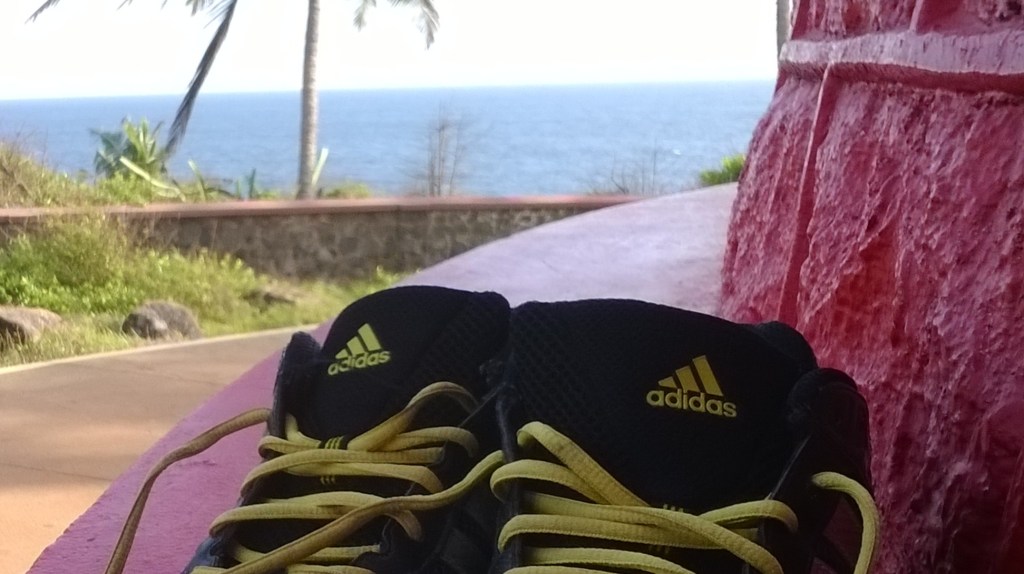
First running shoes
In the first year, there was an event called TrivandRUN. I decided to run 10 km for it — a big leap for me. I wanted to show off a bit in college — maybe for personal reasons and I motivated many others to join. We ended up arranging a college bus to go to Trivandrum city in the early morning ! Out of excitement — and being new to distance running — I overtrained the day before. My leg muscles cramped or got injured.
The race started early in the morning. But just 500 meters in, I felt intense pain in my shins. I had never experienced this kind of leg pain before. All my batchmates — who didn’t run regularly and were just testing it out — went past me. And I was walking, in pain. I desperately searched for a pain relief spray — but couldn’t find one nearby. Till around the 5 km mark ,I endured the pain — and I finally got the spray.
How I ran the next 5 km is the reason why I am still running.
The way I sped up, crossed one by one. While I was in the flow, they were losing energy. Then I finished the race with a strong sprint at the end— and that’s when I realized: I had just warmed up.I could have run another round if I wanted to. And thanks to the organization of the event, I didn’t get a medal.
Later, college sports events came up — and I really wanted to win a medal. But unfortunately, I had to leave for an internship at Philips in Bangalore, exactly a week before the event. And I accepted, a running medal from school or college may not be possible in this life.
Bangalore & Delhi Chapter :
Bangalore was even better for the running enthusiast in me. There were running events, and the weather was perfect. At that time, Sailesh and Pavan were my ‘occasional’ running buddies. And Manyatha tech park to Hebbal was my go-to route.
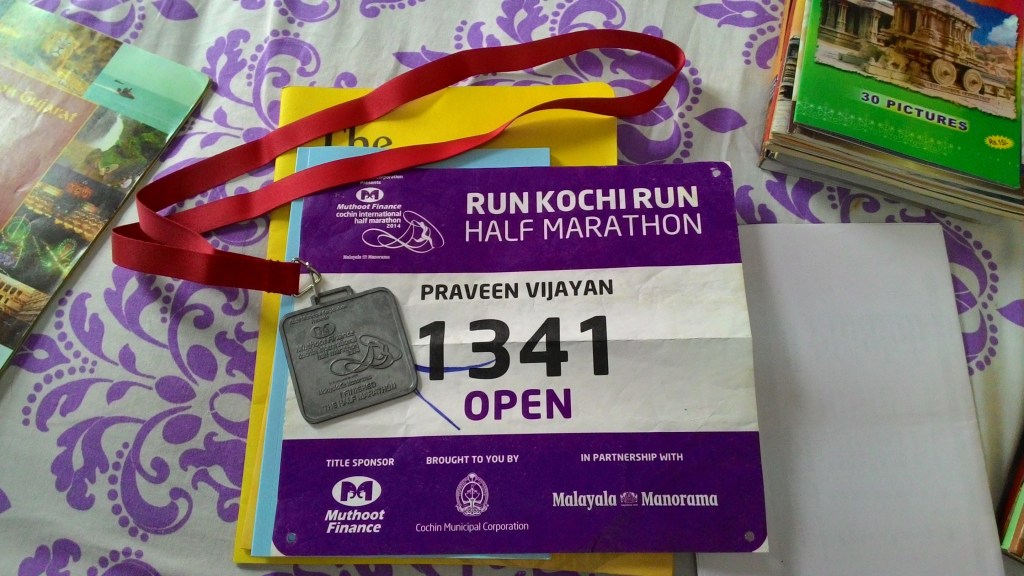
But my first official half marathon was at the Kochi International Marathon. It was humid — as Kochi usually is. I just wanted to complete it somehow. That’s it. I managed to finish my first 21 km in around 2 and half hours and got my first medal !
First Half-marathon & First Medal
Then I moved to Delhi. We were a group of four – Sailesh, Sundar, Sanoob- working together, traveling together! I didn’t register for any marathons that year, but we went through the capital roads around India Gate. Many solo runs around Sarita vihar. And exploration runs to the Lotus Temple, Humayun’s tomb, Tughlaqabad Fort, Yamuna River banks.
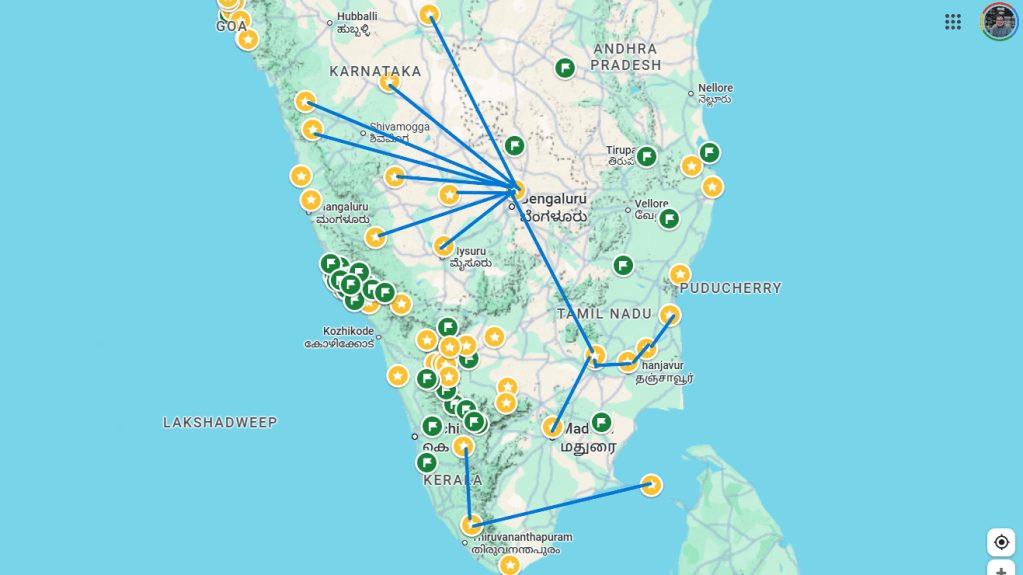
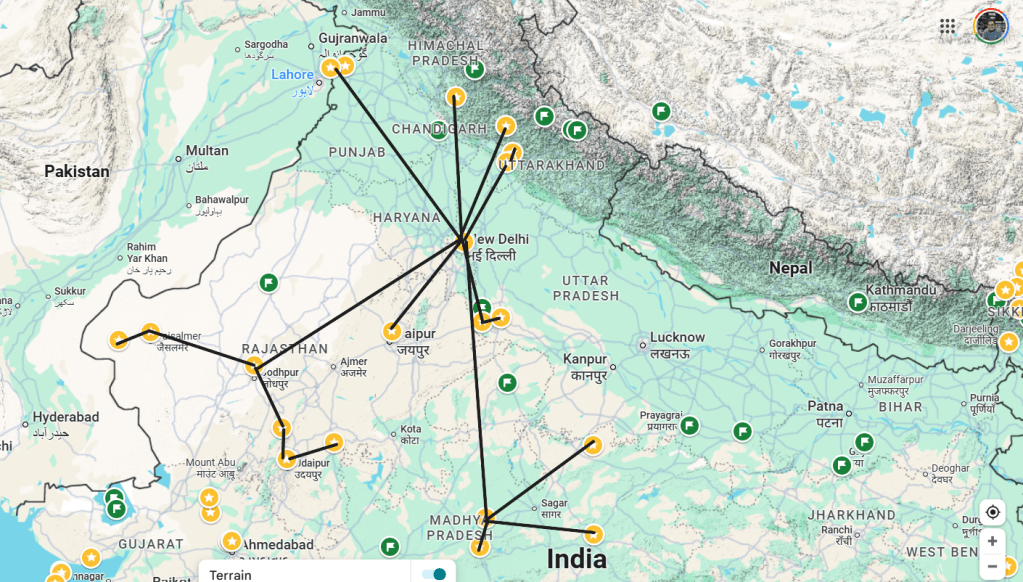
Bangalore Travel Circuit Delhi Travel Circuit
Those two years made me a runner or not— but they definitely made me a traveller. Using Bangalore and Delhi as base camps, we roamed far, backpacks always ready.
Pune Chapter :
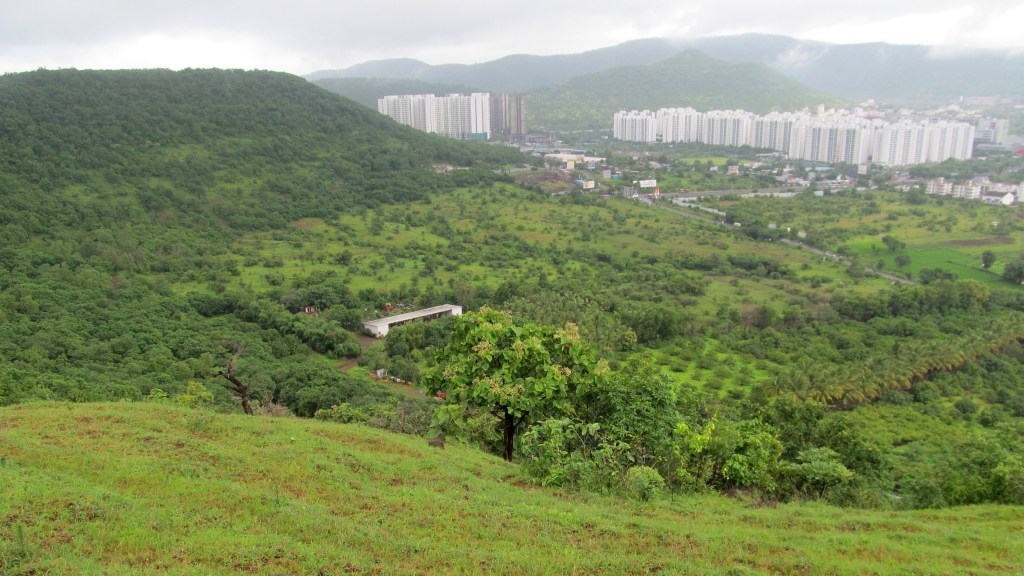
View from the Hinjewadi Ph 3 hills( monsoon), I lived in one of those white buildings.
I came to Pune in an August and I remember the day well, I was welcomed by the drizzles in Hinjewadi.Hinjewadi felt more like Lonavla than Pune itself. Lots of hills nearby. Pleasant weather. Running uphill for sunrises were usual.
Next Running wave:
One of the most memorable was the Pune International Marathon. It was another endurance story — this time with a health scare thrown in.
On afternoons, I used to feel very drowsy, I initially thought I was becoming lazy. Eventually, on doctor’s advice I took a blood test — and discovered that my Vitamin B12 levels had dropped close to 100. One reason might’ve been that over the last 8–9 years, I had turned eggetarian — and in the last 3-6 months, I’d stopped eggs also completely.
Pune International marathon , overcame my fears
Even with the fear of blackouts, I ran and finished that race. I remember crossing the finish line with tears of satisfaction in my eyes.
Another time, I did another half marathon through Stone Ridge Valley through the parikrama route near Triambakeshwar in Nashik.
Stone Ridge Valley, Trimbakeshwar , Nashik
Then came the Pune Running Beyond Myself (PRBM-2017) event. I finished in 2:01 hours — my personal best till date.
I was part of the Tata group, and it was a privilege to run Tata sponsored events. After many 10K & Half marathons now came the next step at the right time. Then came the Tata Mumbai Marathon in January — another half marathon and with it, I hit a sense of stagnation. It is the best marathon I have ran, mainly because of the supportive and encouraging crowd !
1st Tata Mumbai half-marathon
I could run 21 km comfortably anytime. Rajat was the occasional running buddy at that time. But something in me was ready for more.
Breaking Barrier : Tata ultra 35km
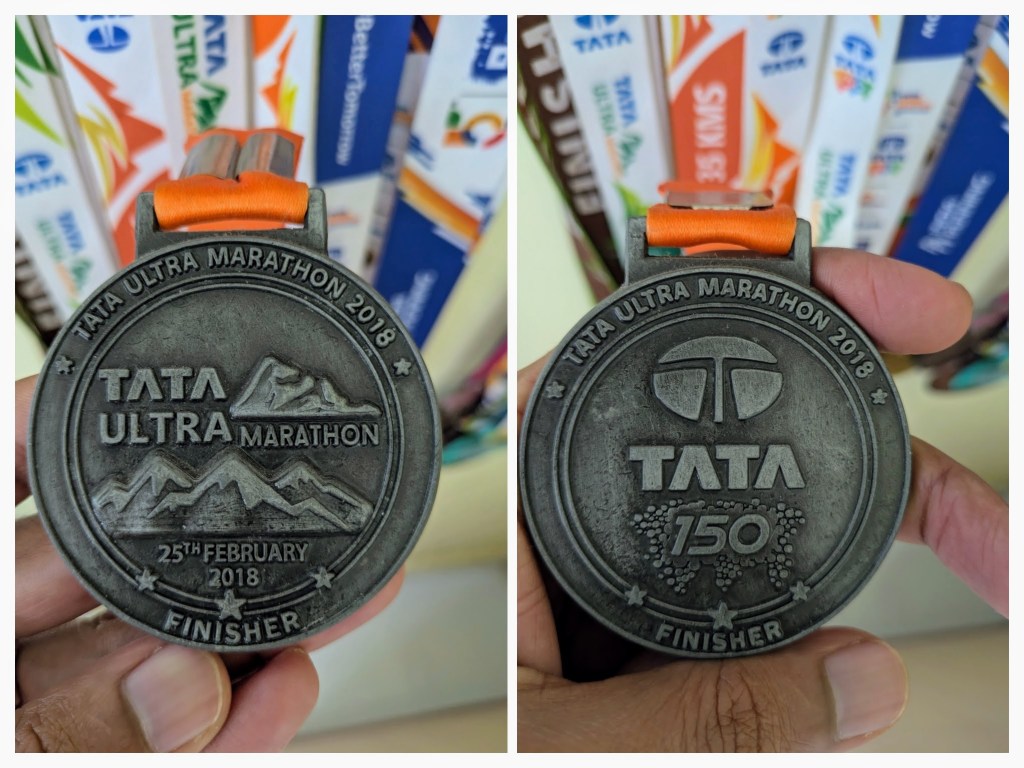
It was first edition of Tata ultra as it was also 150th year of Tata Group.
Some pain you don’t choose. But this one — 35 km, uphill, uneven, unrelenting — I chose. I was ready to endure more pain.
Since it was the the very first edition, less participants were there. The route was starting from the Lonavla junction, via the tiger hills, NDA , tung fort and ending near Tikona fort base.
As I don’t have any pics, its chatgpt generated. Its beautiful to see sun slowly raising in front of you.
The race started around 2-3 am with a head light. The terrain was definitely challenging, just after 5km into the race, I got the steepest climb I have ever run. It was cold at night as the chilly winds were doing their business. I could see the stars clearly. And as the sun beginning to warm up, I have finished the half way mark. Now I am able see the beautiful route!
I felt strong till 30 km — then came the extra troubles. 35 km was tough given the terrain, but I managed it in 4:44 hours.
In most of these runs, I had pain in my legs at the start — just like during my first 10km. But now I know: this too shall pass. I can endure it. After most runs I used to get cramps. I didn’t do any proper stretching at those times. Marathons were slowly getting mainstream within my circle.
And just a week later, I thought — let’s push further. Maybe I was ready to endure more challenge & pain. And in one such moment, I registered for 50Km run ! Why would I do that !
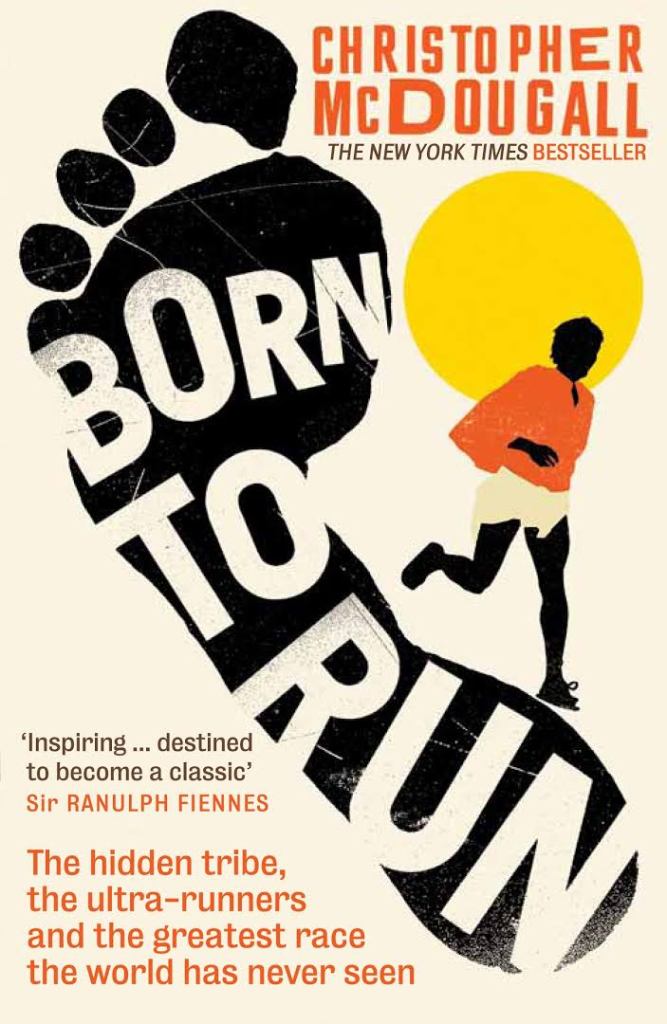
One book helped me in this journey, Born to Run by Chistopher McDugall . In fact, I kissed my feet after reading that book — how blessed we are, yet we so often forget to value it.
I feel, Books don’t motivate you alone, you find the right books when you need motivation.
That 50 km run — and a next day Hackathon finale at another city deserves its own chapter. And maybe, that’s what this blog series was really leading to. That one story, that I really want to tell you all, I’ll save for Part 3.
This story began with running. But was it really about running? It was about what moved me — especially when I felt stuck. What reminded me — even in pain, even in silence — that I could still go further.
I don’t know what your version of this looks like. It may not involve shoes or medals. But if there’s something you’ve been putting off — a habit, a conversation, a change, a hobby …
I wrote this title first in my diary— it was ready, four years ago. But now… I’m not even sure I deserve to use it.
After my last Tata Ultra 35 km run in February 2020, I haven’t done a long run! I’ve managed just a handful of 10 km runs — mostly to prove to myself that I still can.
Right now, I’m feeling feverish, with a blocked nose. If this worsens… can I still run? And not just any run — for Tata Ultra 2024 — just two days away.
The route winds through the beautiful, yet punishing terrain of Lonavla. It starts around 2 AM when it’s cold— and I have a history of blackouts when I have fever.
I walked into my room and looked at my medal hanger. Fourteen medals from 21+ km runs, and five from 10-km runs. All from years ago. Proof that I had done it once. Maybe I can still do it.
Now the title feels off, since I really didn’t keep running in these past four years. Something I used to do — almost every day — just stopped.
If I want to give excuses, here goes:
First, I can blame COVID — two full years, gone.
Then came knee pain, ankle pain, and a locked neck and shoulder.
And last year? I focused on flexibility. My legs always had tight muscles — yoga helped a lot.
But beyond that… I want to look deeper.
I want to ask myself honestly : Why did I start running? Why did I keep running? What made me stop? And… What is still pushing me now?
Indeed a good thought to have just before the run that is trying to intimidate me.
“ Do you remember your 1st run ? “
The very first memory of me running
One of my earliest memories of running begins in primary school, in the army quarters of Allahabad. When the afternoon bell rang — just after the national anthem — I would dash straight home.
I still remember those streets, and me racing back home with other kids. And the joy of reaching back to Amma (My mother) after a long school day — that was its own finish line.
My first medal : at St. Paul’s , Kottayi
At school, I played a lot of games that involved running. One incident I remember very clearly — I was running at full speed with an imaginary steering wheel in my hand, turned sharply near a parked school van, and boom! Accident with another child.
I paused for a moment. I was about to run again — but I saw a few older children and teachers rushing toward me. When I looked down, my cream school uniform had large patches of red along with my red tie.
They took me to a nearby clinic immediately. I got some stitches right above my right eye.
Maybe that’s my first medal, that I still carry on my face.
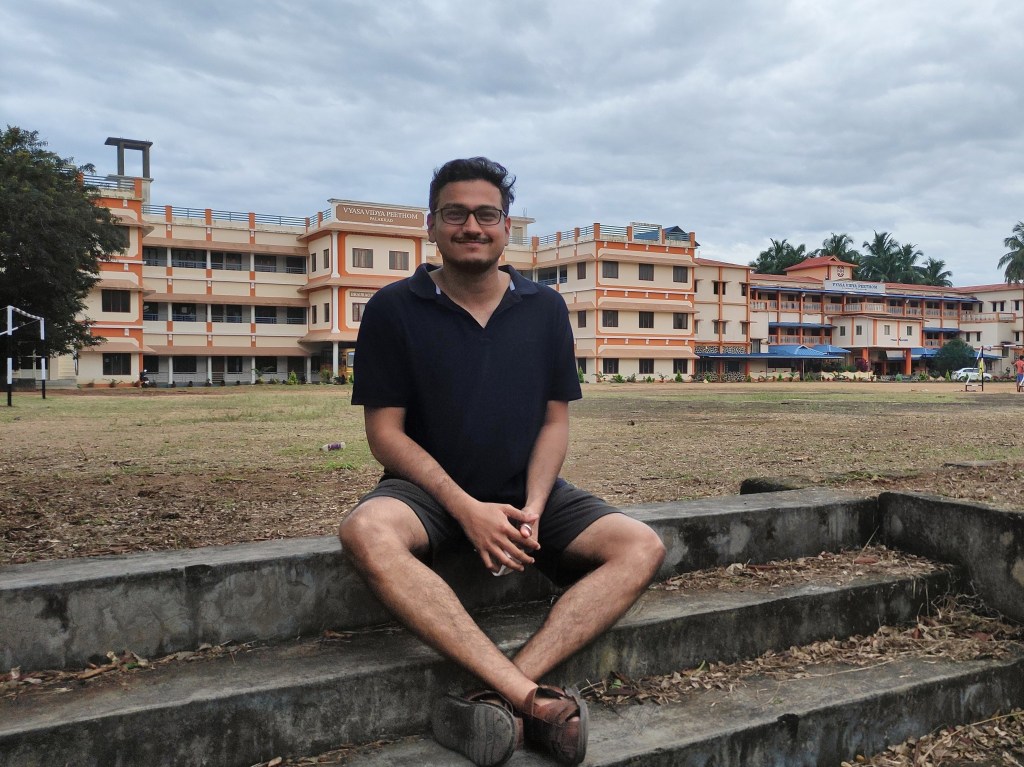
Vyasa Chapter — 5th to 12th standard
I always wanted to participate in running races. But at home I had bigger “hurdles” than one saw on the track.
There was a reason why Amma didn’t let me participate in school sports. I had mild asthma as a child — especially during 3rd to 6th standard — and I had put on a lot of weight. She herself was a distinguished asthma patient, and didn’t want me to suffer the way she does. Also, Achan (my father)wasn’t with us then — she was my sole protector.
One more thing — Amma also stopped me from going out alone because of my sudden blackouts. We consulted cardiologists, neurologists, and did many tests. But they never figured out the exact reason why I fainted until recently in 2023.
So Amma had full responsibility and control over me.
She was even afraid to board a bus alone — how could she send me to school sports events in public transport?
But things changed. Later, after the 7-8th standard, I lost weight and gained height. I played football at school, cricket at home — and I didn’t face any breathing problems at all.
Around the 8th or 9th standard, I once participated in a running race — 200m or 400m. In one of the trials, I came third, despite my shoe slipping off during the race.
I had qualified for the heats the next day… but Amma didn’t let me go to school that day!
I always admired my friends Pradeep, Kailash who could sprint and the other ones who did cross-country from school to Melamuri. But I never did it myself at school time. Years later, during COVID, I finally ran those same routes — to silence the regret.
But Amma ensured that I crossed the academic hurdles in my schooling life, without which I won’t be the person that I am today.
Vadakara Chapter
After getting into my then dream of Engineering through a merit seat, Hostel life began at Kurunthodi in Vadakara.
Until 11th, I was fairly well-built, thanks to Achan’s push-up masterclass. Then came 12th board studies and entrance exam preps — and I put on some weight.
As part of ragging, one senior — who himself had a bigger tummy — pointed at mine! That’s when I realised I had one too. From that point onward, I got more involved in workouts, games, and gym. We also played a lot of cricket and volleyball.
We walked a lot — none of us had a bike. Running was uncommon — maybe I wanted some company. Now, to the main topic: my first group run, probably in the 2nd or 3rd year of college.
I was the most excited — I planned and organized everything. One fine evening, we decided to wake up early the next morning and run to college hill. Rajeesh, Nikhil, Naveen, Shyjith, Rahul— they all joined. At that time, I didn’t even have sports shoes — most of us ran in slippers.
We might have ran just 2 kms, but as we reached the intersection before the climb started, I vomited. Maybe because I ran on an empty stomach. Nikhil stayed back with me. Everyone laughed — not to mock me, but in that harmless, hostel-fun way. But that first run meant something.
“In Vadakara, I felt like I was becoming myself, cut off from home. But it was in Ahmedabad that I truly started discovering who I am…”
Ahmedabad Chapter — The Slow Start
I wanted to spend time with Achan. That was clear to me by the time I finished B.Tech.
And I didn’t want to follow the usual IT route everyone was taking. Before the end of 4th year, Achan said, “Come to Ahmedabad. We’ll figure it out.” And honestly, it turned out to be a great time.
I was clueless about my career and didn’t know what I wanted to do next. But those 8–10 transformative months in Ahmedabad helped me become who I am today. I explored whether I should do an MBA, as Achan had suggested. I started reading mainly to improve my vocab. But the very first book “The Alchemist” flipped something inside me — a real ‘UNO reverse’ moment. I didn’t want an MBA – I wanted to work in ISRO ! Those books reshaped the way I thought about life. I started going on long walks and having deep conversations with myself.
In one such walk, I walked over 10 km in a single stretch.
Life moved on. I got a job at Adani Gas — where Achan was also working. I got a first-hand taste of the corporate world. I started to drift — and rethink my choices. Achan pushed for an MBA — from his experience, that felt like the obvious step. But I was more inclined toward research, even though it wasn’t a popular or “glamorous” career path back then. Along with my job, I prepared for JEST/GATE to get into Masters/PhD.
But Amma always supported me — whatever I chose. She didn’t have much exposure to these paths, but her intuition and emotional understanding were great. She trusted both me and the gods she prayed to.
This phase of confusion and tension led me to running. Sometimes before or after work, I would run — or at least walk long stretches. Alongside, I did push-ups and pull-ups. That running or walking time was my self-talk time. I had questions, doubts, frustration.
Running helped clear my mind. It became my form of meditation.
End of Part 1 : Not the End, Just a Pause
I didn’t write this to glorify medals or distances. I wrote it to understand why I even began — and why I still feel the urge to challenge myself.
The answer isn’t simple. But maybe it’s hidden somewhere here — in these scattered memories, across places and years.
In one of my earlier blogs, I had explored the connection to astrology. Interestingly, the next phase of my journey — at IIST — unfolds alongside a new Jupiter cycle.
And they say, when Jupiter returns, we meet our next version.
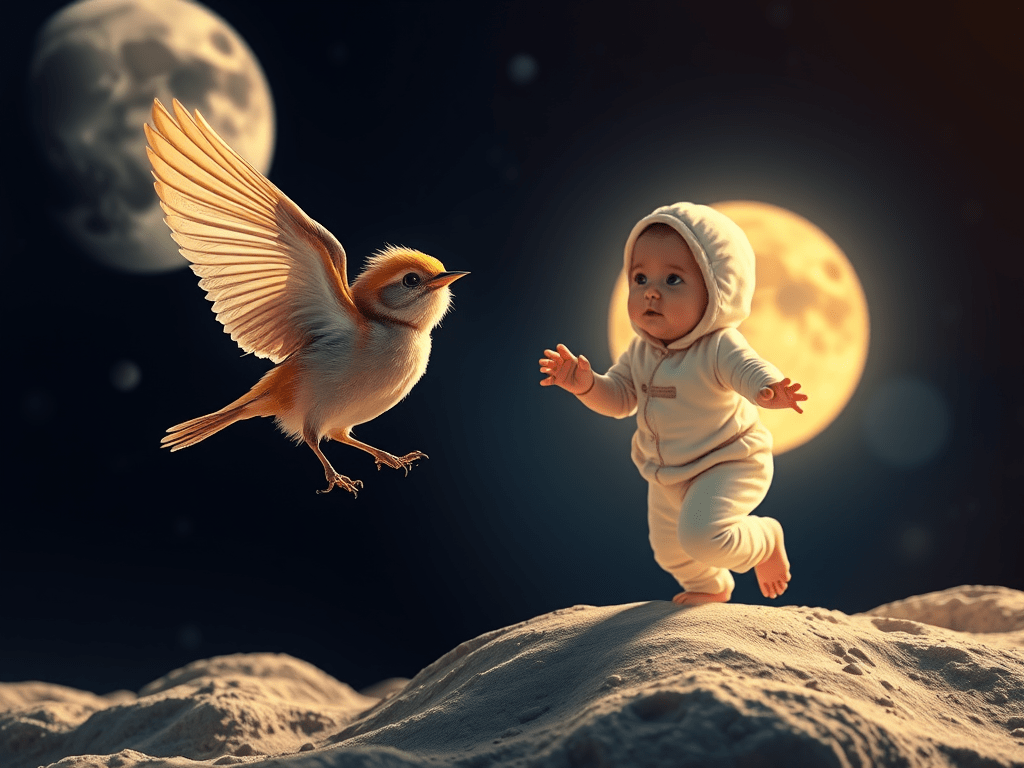
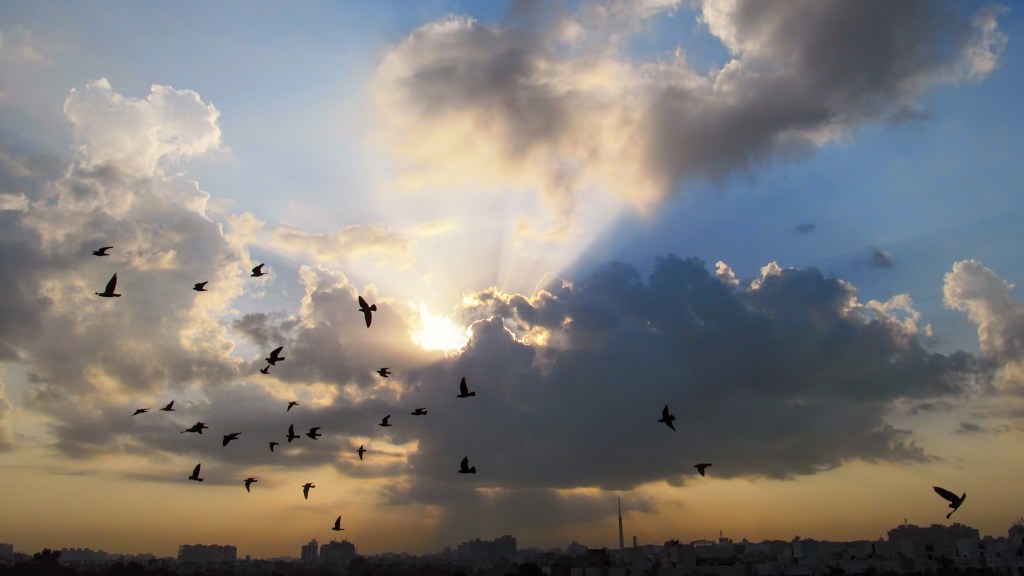
As children, many of us imagined what it would be like to fly. “What if I could fly?” we wondered. I know I did. Even now, I am still curious. Why, in this vast world, are they the only ones who can truly take to the skies?
Early Childhood memories
A beautiful green patch of Kottayi
My childhood was in a small village in Palakkad called “Kottayi”. I consider my self lucky to be born in this small beautiful patch of the western ghats of India.
As a millennial kid, my world wasn’t dominated by screens. TV had only a handful of channels, mostly broadcasting news or other dull programs. Mobile phones were unheard of, and distractions like Instagram or YouTube weren’t a part of life. It was just me, my curiosity, and the unfiltered beauty of the world around me.
I still have clear memories of me looking at butterflies, birds, ants, insects, leaves, and fruits around me. Our home was indeed surrounded by a diverse set of trees and plants. And that was indeed a world in itself, offering endless wonders to explore and admire.
A thought : How much can you go back into memories ? What’s your oldest memory ? Is it your mom or dad ?
School Library
I used to get up early and have stroll around the thodi (backyard) and “see” many interesting things, be it the birds or new flowers in the golden hour before I get ready for the school bus.
And if I find a new bird which I don’t know, I clearly remember the excitement I had. I go directly to the library, get books on birds, one was Salim Ali’s The Book of Indian Birds.
But my excitement would quickly turn bittersweet—discovering that the bird was already listed, shattering my dreams of finding a new species!
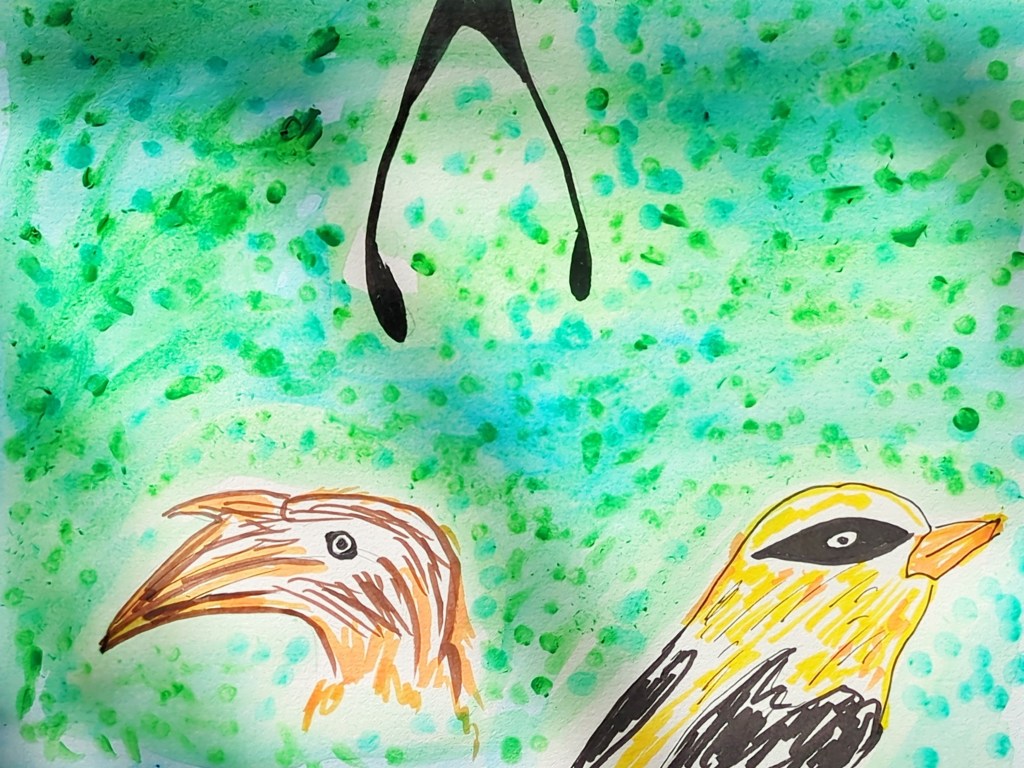
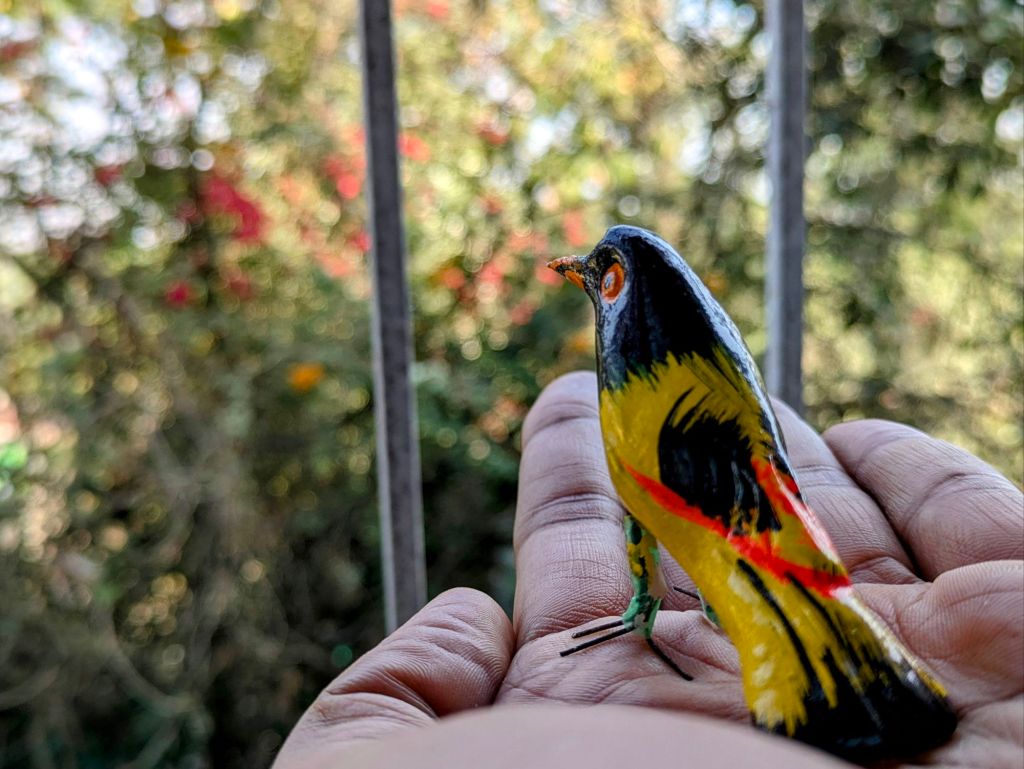
Looking back, I still remember the excitement of my early “discoveries”—the Greater Racket-tailed Drongo, the Golden Oriole, and the Hornbill. I didn’t had a camera at that time, and all these are the pure memories I still carry.
From the memories
From Library Books to Google Lens
Fast forward to today, We have phone camera’s with zoom which can challenge even a DSLR. Taking a picture, and then asking Google Search, Google Lens, and ChatGPT can do instant identification. You can get the bird’s name, its habitat, population details, and even similar species—all in a matter of seconds.
Projects like ebird.org are indeed a blessing for bird lovers. You can access a wealth of information. You can also contribute by adding your own sightings. This helps build a global bird watching community. It’s amazing how technology has transformed the way we connect with nature!
Bird Watching – At bird-eye level
At the bird’s level
I recently moved to a new place in Pune. What truly captivated me was the view of the trees and birds outside my large windows. As a child, I always dreamed of being at the level of the birds. However, that was something I could never quite experience.
In today’s digital age, where bird photos are available in plenty, why bother taking more with my basic camera? Apart from the probability of a “new discovery” (pun intended), what I truly enjoy is the chance to observe them up close. Through my lens, I can watch their every move—what they eat, how they interact, and whether they take a mid-afternoon nap.
I still find myself wondering about the simple mysteries of their lives: Where do they sleep at night? What do they communicate with each other? And why do they travel so far, even when they already know where the food is?Do they fight with other species ?
Next Generation
I wonder if today’s children still share the same curiosity about birds that we once did. Do they experience the same sense of wonder and joy that our generation had, or has the fast-paced digital world overshadowed the simple pleasures of observing nature up close?
This makes me appreciate the beauty of those childhood moments even more.
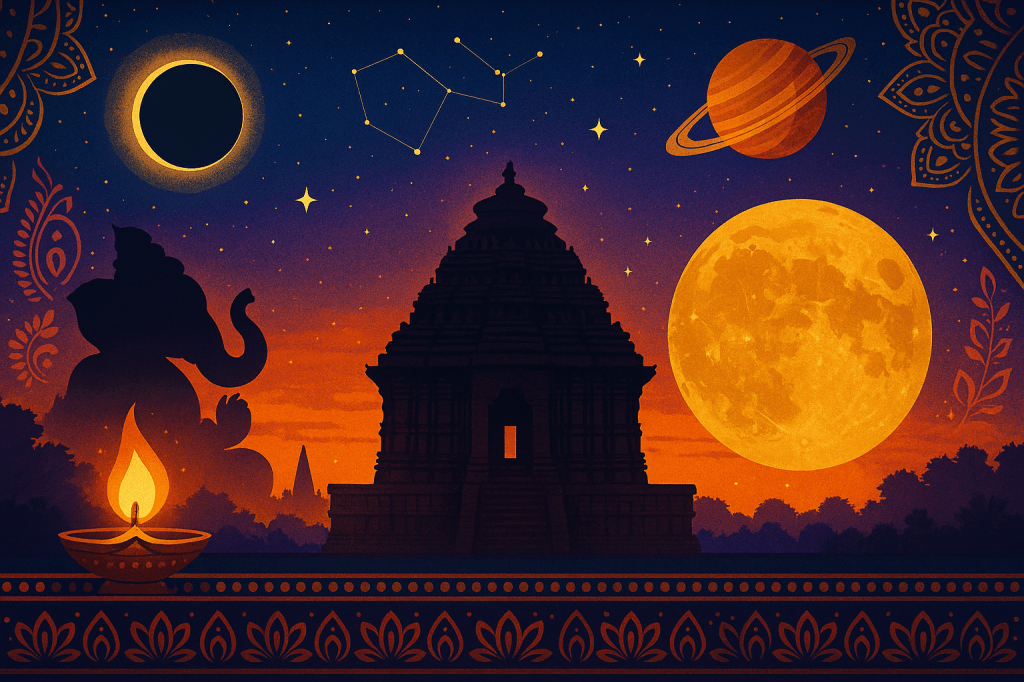
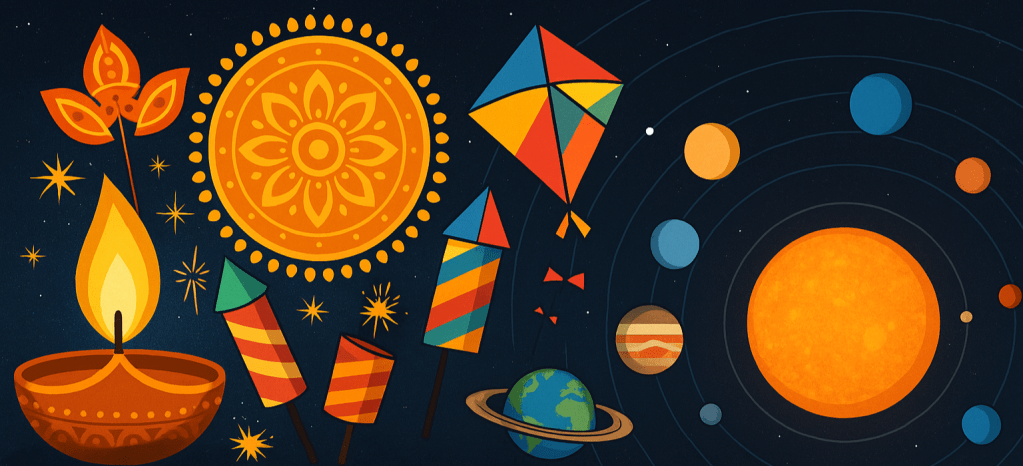
Beneath the colors, lights, and ceremonies, there’s often a deeper layer — one that looks up. Many of our festivals were originally aligned with astronomical cycles — the Sun entering a new zodiac sign, the full moon rising in a specific nakshatra, or the changing length of days. Our ancestors observed the skies carefully — and tied cosmic shifts to community moments.
But somewhere along the way, we began to remember the rituals more than the reasons. We continue to celebrate — which is beautiful in itself — but we rarely pause to ask why this day, this time, this season. This post is an attempt to look up again —to trace that quiet connection between festivals and the cosmos, between the calendar and the sky —and maybe… find meaning that goes beyond habit.
Today, Jan 14th 2025, its Makar Sankranti/ Uttarayan/Pongal. Why we celebrate that today itself ? And through this blog, lets explore the deep rooted connection with astronomy and many other celebrations.
The real reason :
Winter solstice. Beginning of the End of winter. And by Holi the official end of winter is marked.
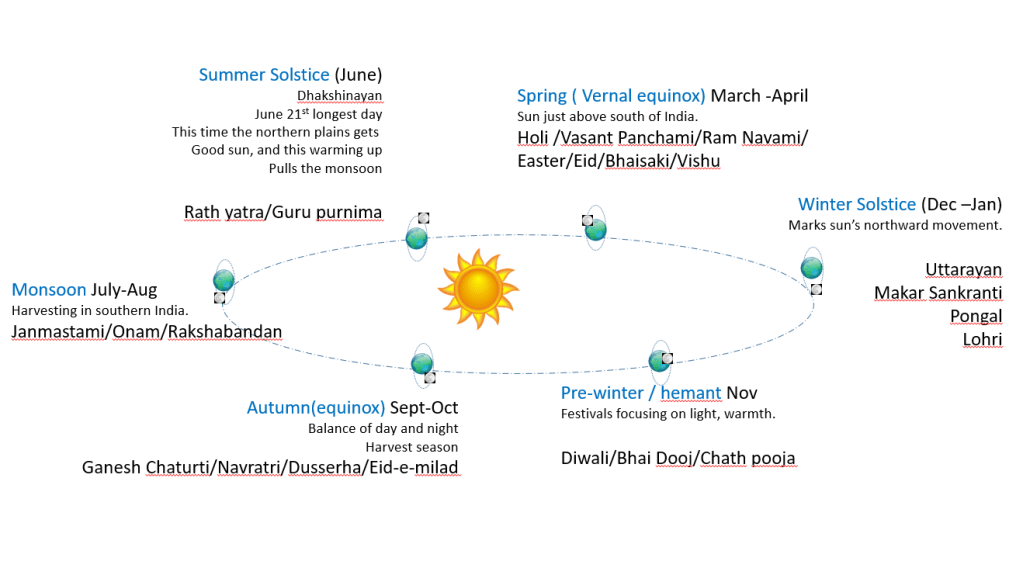
Solstice : Sun reaches its highest or lowest point in the sky compared to earth’s equator. This marks the longest or shortest day of the year.
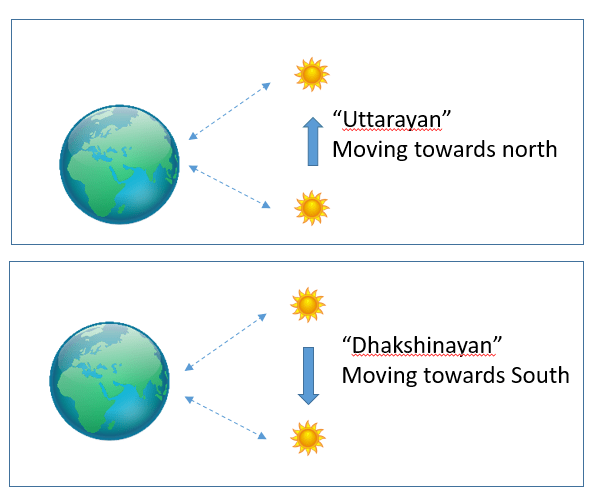
Uttar = North , Ayan = movement/path
Makar Sankranti is a major Indian festival to mark the Sun’s transition into Makara Rashi (Capricorn zodiac sign). It signifies the end of the winter solstice and the beginning of longer days as the Sun moves northward (Uttarayan).
The wind will be good during this phase. We can see colorful kites across the sky in most parts of India. Though known for kite flying, it coincides with the celebration of the agricultural harvest.
Pongal (Tamil nadu) , Lohri (Punjab), Magh Bihu (Assam)celebrates the new harvest of different crops in respective regions.
When we say Sun is moving north or south, its relative to our location. The further truth revolves around the revolution of earth around the sun. The tilt we have in the elliptical journey brings out the seasons. But the real point is our understanding of all these were good. Our calendars were precise.
The bigger planetary Cycles :
Its interesting to see how much time it takes for a full cycle for different astronomical entities.
Moon – 28-29 days
Sun ~ 365 days
mercury ~ 88 days
venus ~ 225 days
mars ~ 2 years
Jupiter ~ 12 years
Saturn ~ 30 years
Uranus ~ 84 years
Neptune ~ 165 years
Pluto ~ 248 years
Astrology is supposed to be a based on the influence of planets. And when we see the cycle of the planets, we can understand how small our lifespan is.
Most of us won’t last a full cycle of Uranus. Don’t even think about Neptune/Pluto !
Do planets or moon or stars have influence on us ? A debatable topic. But one thing is clear their cycles were studied and we had good command over it. Even if see the purans we can see the sync with the astronomical evidences.
And Today it also coincides with Maha Kumbh (144 (12×12) years cycle ). Normal Kumbh mela happens once in 12 years (same as a cycle of Jupiter).
The Seasons – solar cycles
The seasons are based on the solar cycles. And we have reasons to celebrate at each transitions! The food we eat , type of celebrations changes based on seasons.
Equinox : Equal (Day = night)
Solstice : Extreme (longest & shortest)
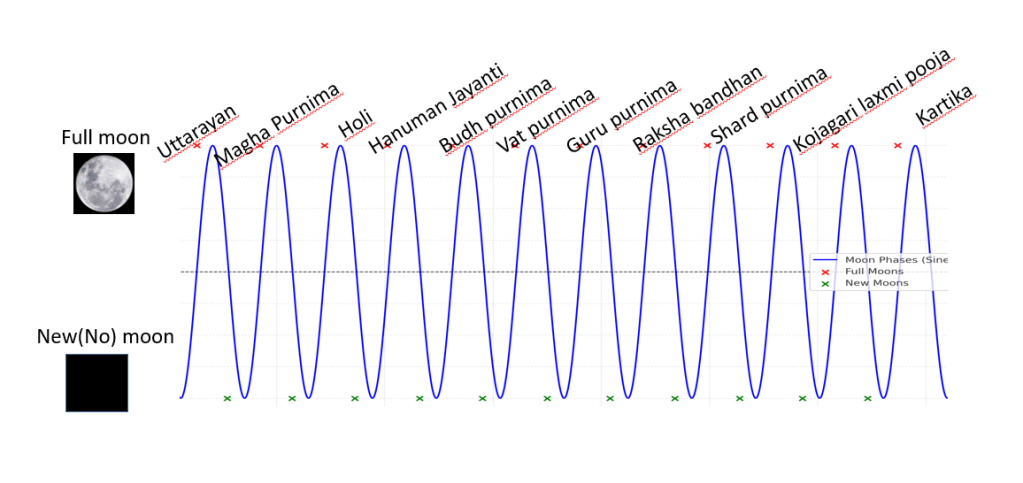
But the occasions are not just based on the sun’s position, moon plays a major role too.
The smaller moon cycles
All full moons (Purnima/Pournami) have some or the other celebrations. Also same with New moons (Amavasya).Many do fasting during this time.
Islam also follows the moon cycle. And their celebrations also based on moon cycle.
Its known that during full moon how tides are created. Same gravitational pull can have some impact on all the beings. And same with other planets & stars does it have something to do with us?
The smallest cycle – A day
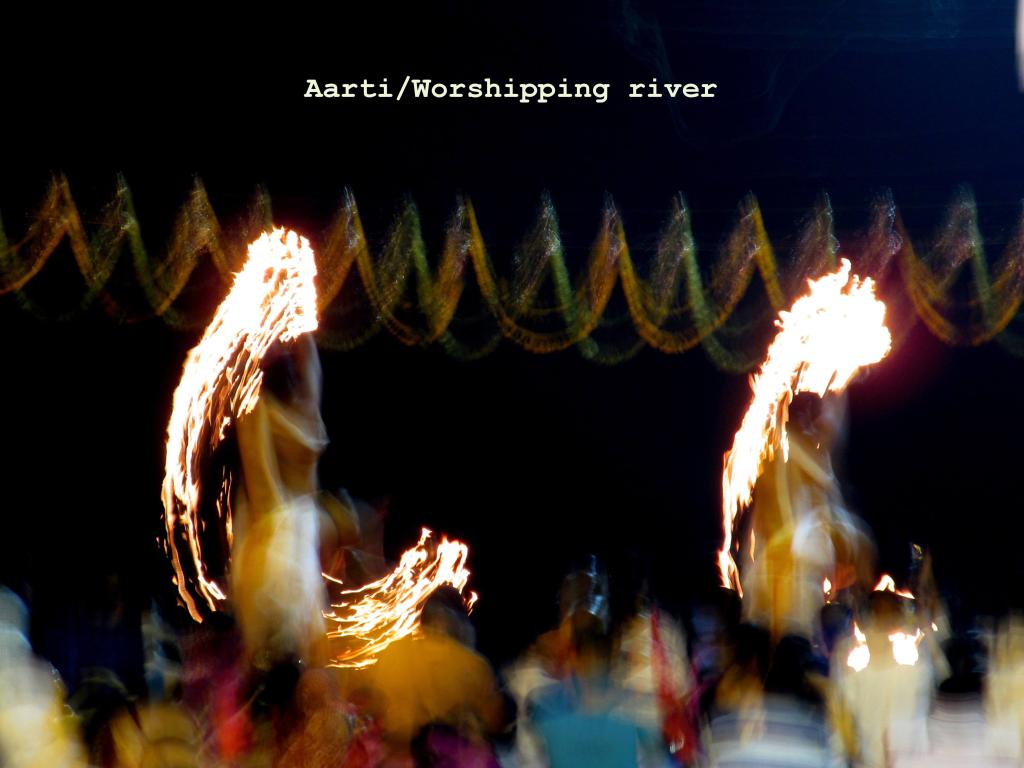
Across the region we worship/celebrate the sun rise & sun set.
Sun rise/set , we celebrate Full moon/ No moon , we celebrate Uttarayan/ Dhakshinayan , we celebrate Cycles of Sun , we celebrate Cycles of Planets, we celebrate Maybe we just wanted reasons to celebrate !
There was a time without internet. We had no mobile phones, no clocks. During this period, we were in sync with cosmos.
And still today these cycles are the only true way to keep in sync with the universe.
Conclusion
Indian festivals beautifully embody the harmony between culture and cosmic rhythms. They remind us of ancient wisdom, connecting humanity to the universe’s cycles. Celebrating these traditions fosters a timeless bond with nature and our place in the cosmos.
We are fortunate to have diverse geography, weather, culture, people, food.
India is a world in itself due to the diversity one can see & experience. We had worked out the astronomy / math well. Its clear we are good at predicting the patterns/cycles of the world around us. The understanding of sun, moon, planets, stars cycles and its connection to the seasons were really well established. And knowingly or unknowingly we still follow it.
Many of the ancient architectures or temples were in line with the knowledge of astronomy / sun / moon /stars.










 The art of Slowing Down