For about two years, a big window in Aundh, Pune, looked out at two trees by the Mula-Mutha riverbank. Close to 25 species of birds came to them: koels, hornbills, sunbirds, parrots and more. This is the story of my feathered neighbours, and what I learned by simply sitting and watching.
From Kerala village shrines to Aihole, Hampi and global ceremonial sites, this piece traces how temples evolved across regions and climates, aligned with the sun, rivers and hills. It explains temples as living bodies built on geometric grids, sustaining local economies and guiding travel across India, while acknowledging that their ultimate link to the universe is still a fascinating hypothesis, not settled fact.
The blog explores the author’s journey of questioning and understanding the significance of temples in India, especially through their childhood experiences in Kottayi, Palakkad. It delves into the origins and meanings behind the word “temple” and its various local interpretations. The author reflects on architectural elements, sensory experiences, and the potential evolutionary purpose of temples, asserting that they serve as both places of worship and gathering. The narrative raises profound questions about the design and alignment of these structures, suggesting they might be instruments of ancient knowledge that connect humans with the cosmos, emphasizing the need for deeper inquiry in future writings.
From my first 5 km to gruelling 50 km ultras, running has been my constant through shifting cities, terrains, and life’s highs and lows. In Part 3, I relive my toughest 48 hours — a brutal trail, a fall, a hackathon the next morning — and the quiet lessons they left. There are new friendships, a painful near-miss, and a four-year pause before a gritty comeback. This is more than running — it’s about finding your rhythm again.

 For about two years, a big window in Aundh, Pune, looked out at two trees by the Mula-Mutha riverbank. Close to 25 species of birds came to them: koels, hornbills, sunbirds, parrots and more. This is the story of my feathered neighbours, and what I learned by simply sitting and watching.
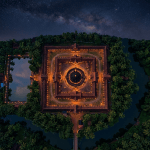 From Kerala village shrines to Aihole, Hampi and global ceremonial sites, this piece traces how temples evolved across regions and climates, aligned with the sun, rivers and hills. It explains temples as living bodies built on geometric grids, sustaining local economies and guiding travel across India, while acknowledging that their ultimate link to the universe is still a fascinating hypothesis, not settled fact.
 A reflection on a family of birds on my balcony and the lessons they reminded me about overcoming the fear of the unknown and the care of parents.
 The blog explores the author’s journey of questioning and understanding the significance of temples in India, especially through their childhood experiences in Kottayi, Palakkad. It delves into the origins and meanings behind the word “temple” and its various local interpretations. The author reflects on architectural elements, sensory experiences, and the potential evolutionary purpose of temples, asserting that they serve as both places of worship and gathering. The narrative raises profound questions about the design and alignment of these structures, suggesting they might be instruments of ancient knowledge that connect humans with the cosmos, emphasizing the need for deeper inquiry in future writings.
 From my first 5 km to gruelling 50 km ultras, running has been my constant through shifting cities, terrains, and life’s highs and lows. In Part 3, I relive my toughest 48 hours — a brutal trail, a fall, a hackathon the next morning — and the quiet lessons they left. There are new friendships, a painful near-miss, and a four-year pause before a gritty comeback. This is more than running — it’s about finding your rhythm again.

