Category: temples

  • What’s special about the Temples of India – part 2

    What’s special about the Temples of India – part 2

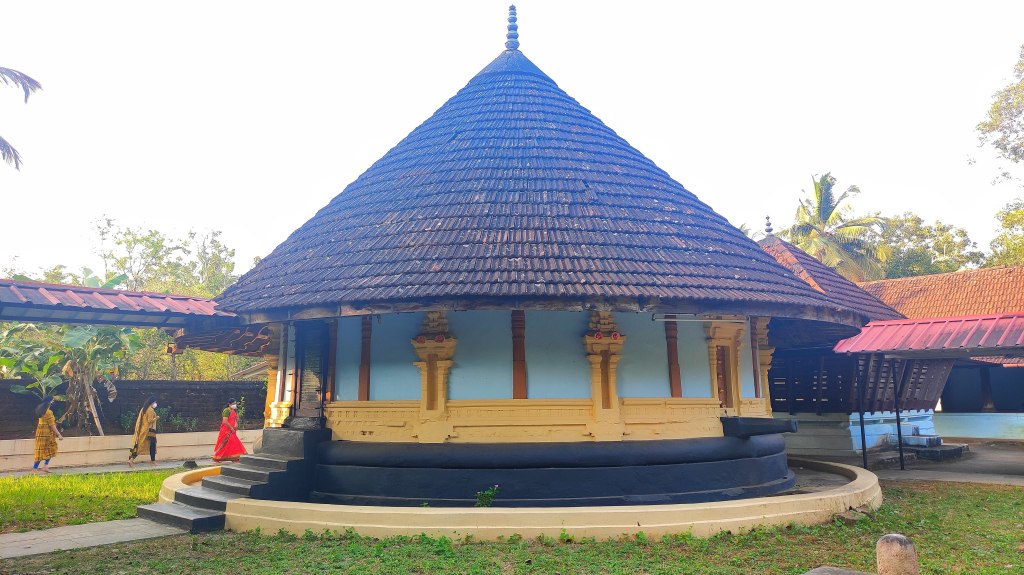
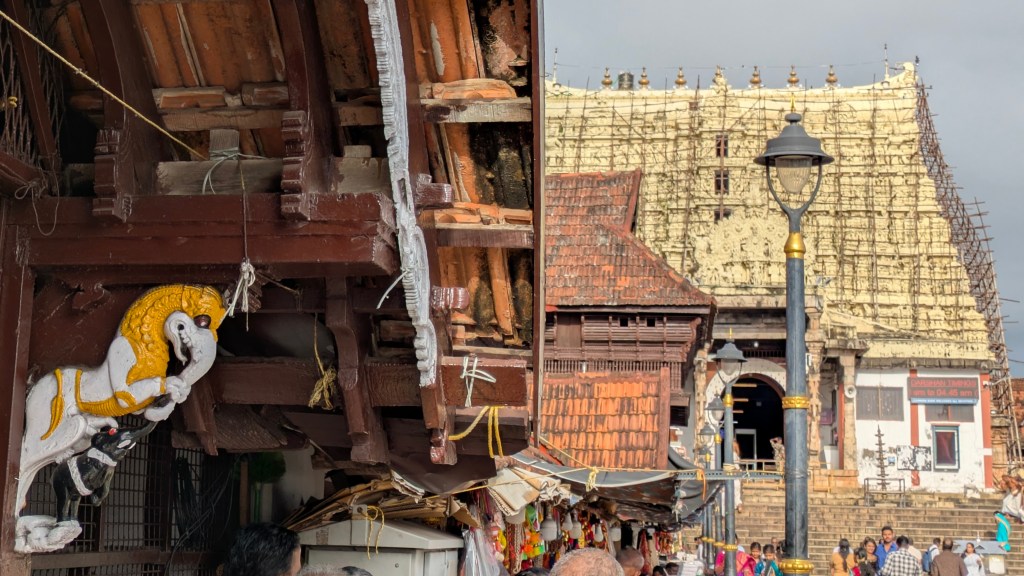
    A Kerala temple illuminated by soft morning light, surrounded by lush greenery.

    In the last blog (Part 1), I left with a trail of questions. Some of them I can answer now. Some I still can’t, and I am at peace with that.

    Is there a connection between living beings and the universe, and what if the temple is a medium for that ?

    The tuning fork analogy

    I want to start with the symbolism of a tuning fork. Here is the link: Tuning fork symbolism

    The video explains that there are two tuning forks with the same frequency. Hit one, and the second one is ringing. Nobody touched it. The sound travelled through the air and made it vibrate. That’s resonance.

    Now think about the sreekovil/Sanctum (the central part of a temple). It’s a small stone room with a deity figure made of a particular stone or a certain amalgamation of metals.

    Now mapping this as a metaphor, the temple is the box, the deity is one fork, and we are the other. Locally it’s said that be in the temple for some time, like doing a circle (Pradakshinam) around the sanctum or to sit there for a while. Is that to tune us in ? Does it shift the mind in to an alpha-wave state? I don’t see any proof or evidence for this but will be interesting to explore.

    Looking back

    Growing up in Kottayi, I noticed that the temples around me were similar, and yet different. The sanctums of the Shiva temples were circular, the Vishnu temples had tiers, and some were simply square. I always wondered why.
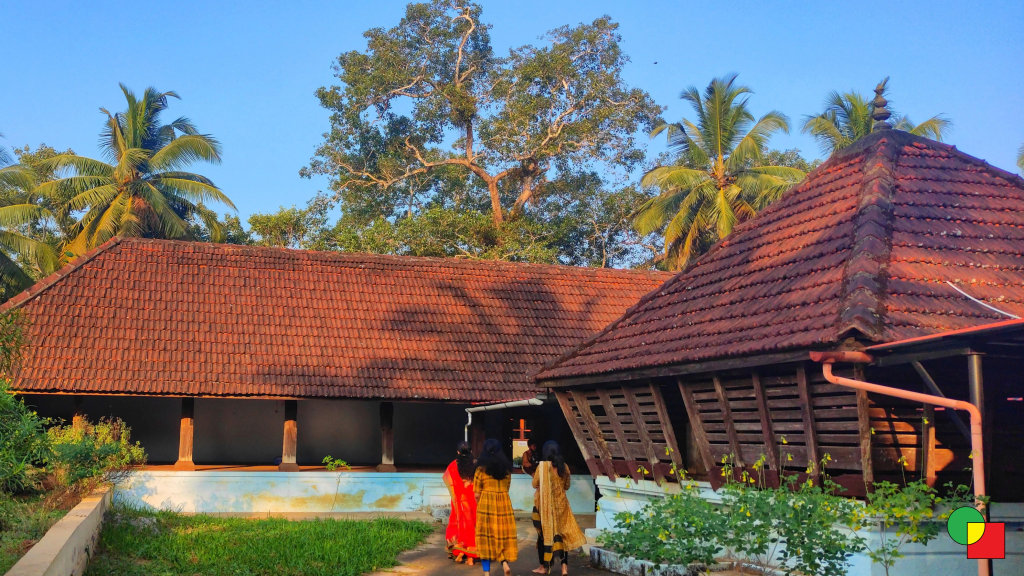
    A stone platform at the entrance of a Kerala temple, illuminated by soft morning light, with temple architecture visible in the background.
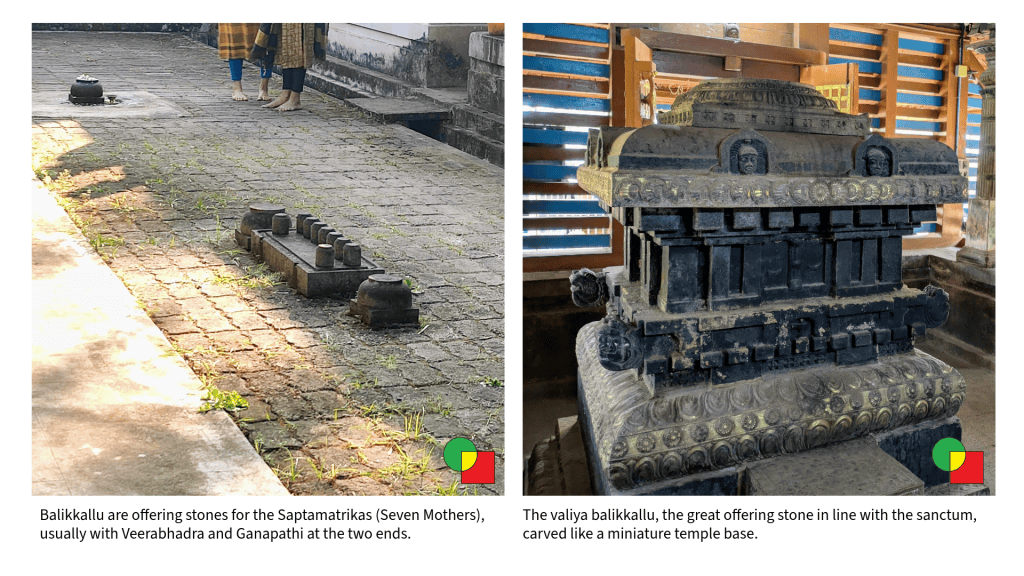
    Another curiosity : The reason for the existence of the Balikallu. It is said that the Balikallu is the filter of one’s ego. One is supposed to leave one’s desires and rage at this point before entering. And maybe it’s a low-pass/high-pass filter for the mind.

    Studies, work and travel took me across India, and the question kept growing: why were temples built so differently? Was there a scientific reason, or a divine one?

    I have always wondered how it’s tied to astronomy. At Padmanabhaswamy temple, on the days of the equinox, the setting sun passes through the gopuram’s windows one by one. And of course sun temples like Modhera (Gujarat), Konark (Odissa) are known for their alignment with Sun’s movement.

    Temples of the world

    Even though I didn’t get any opportunity to see the old temples of the world, I took the help of online resources to have a peek. And I realised that Indian temples are not the oldest, as per the scientific community! It came as a surprise.

    Even though the Ramayana and Mahabharata are believed to be much older, the accepted evidence is not there yet. The Indian scriptures indicate a cycle to the existence of the world/universe, and it gets destroyed and reborn again.
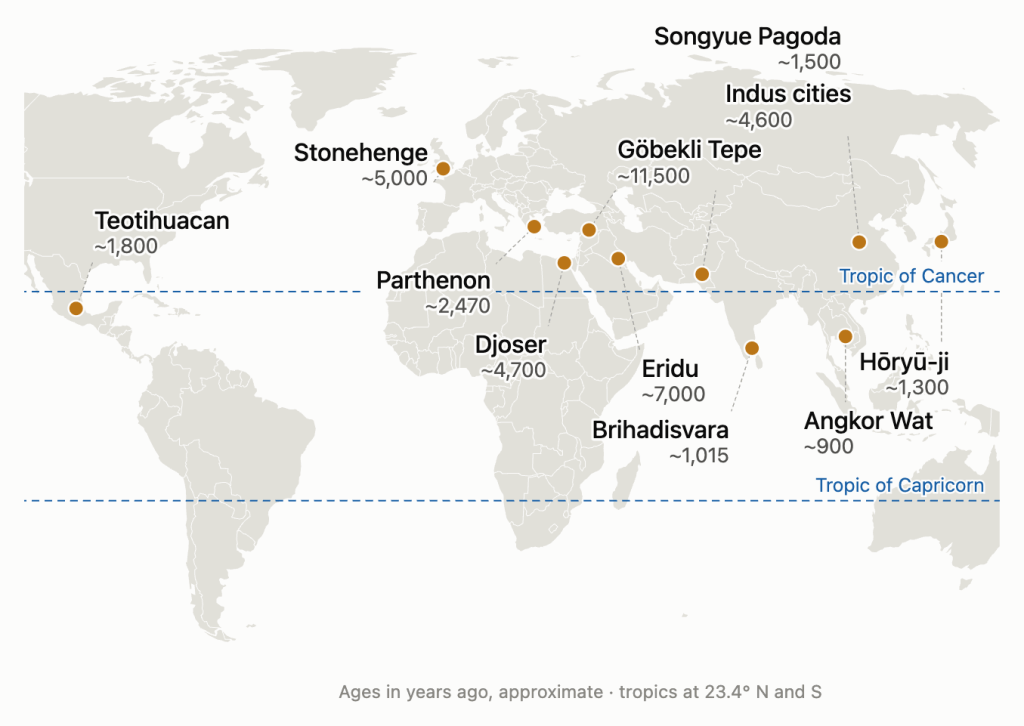
    World map showing the locations and approximate ages of major ancient temples and ceremonial sites, including Göbekli Tepe in Turkey, sites in the Middle East, and temples across Asia and other regions.
    World map showing the main ancient temples or ceremonial sites with their approx. age as of now.

    The earlier mud, brick or wooden elements of the earlier temples/ ceremonial places might have thinned out over the cycles of time. Stone survives best; brick survives as ruins; wood survives only rarely, by being rebuilt.

    What I can see is that Göbekli Tepe in Turkey stands out as the oldest surviving ceremonial place. And around the Middle East there is evidence of similar activities. Interestingly in the Indus Valley, there was no clear evidence of temples, but a well-built civilisation.

    Also it’s interesting to see the geographic location of the sites along a specific band of the Tropic of Cancer.
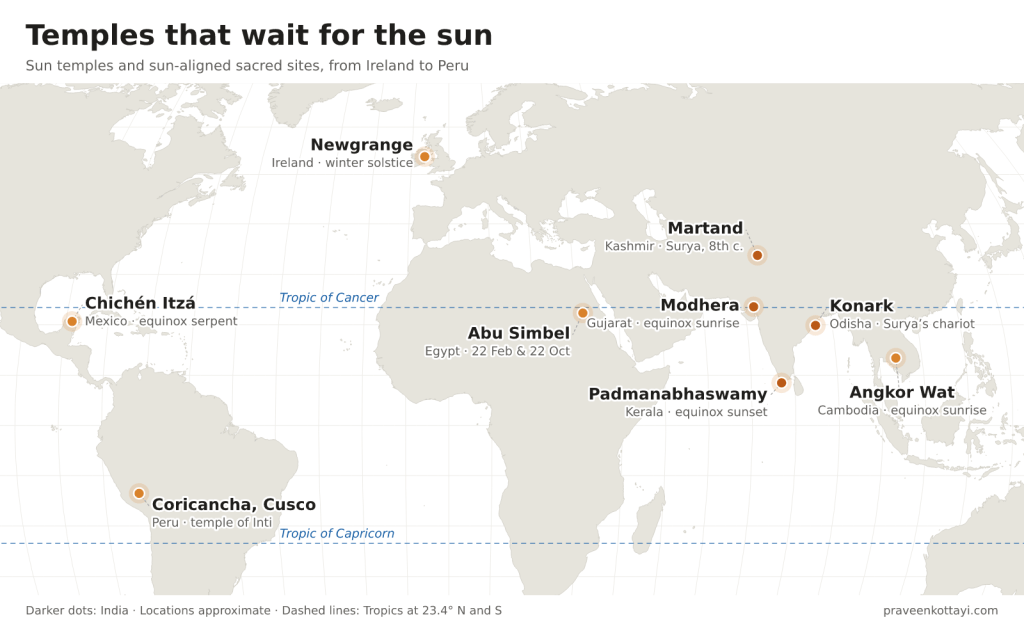
    Sun temples from around the world including Konark, Modhera, Abu Simbel, Angkor Wat, Chichén Itzá, and Cusco
    Sun temples and temples that catches sun

    The sun has been at the heart of temple-building everywhere. In India, Konark, Modhera and Martand in Kashmir were built for Surya (sun), and Modhera’s sanctum catches the first rays of the equinox sunrise. In Egypt, the rising sun lights the inner sanctuary of Abu Simbel twice a year, and in Cambodia it rises right over Angkor Wat’s central tower on the equinox. At Chichén Itzá in Mexico, equinox light forms a serpent on the pyramid’s steps, and the Inca built their holiest temple in Cusco for Inti, the sun god. Different lands, different gods, but the same intention.

    The temples of India – Timelines
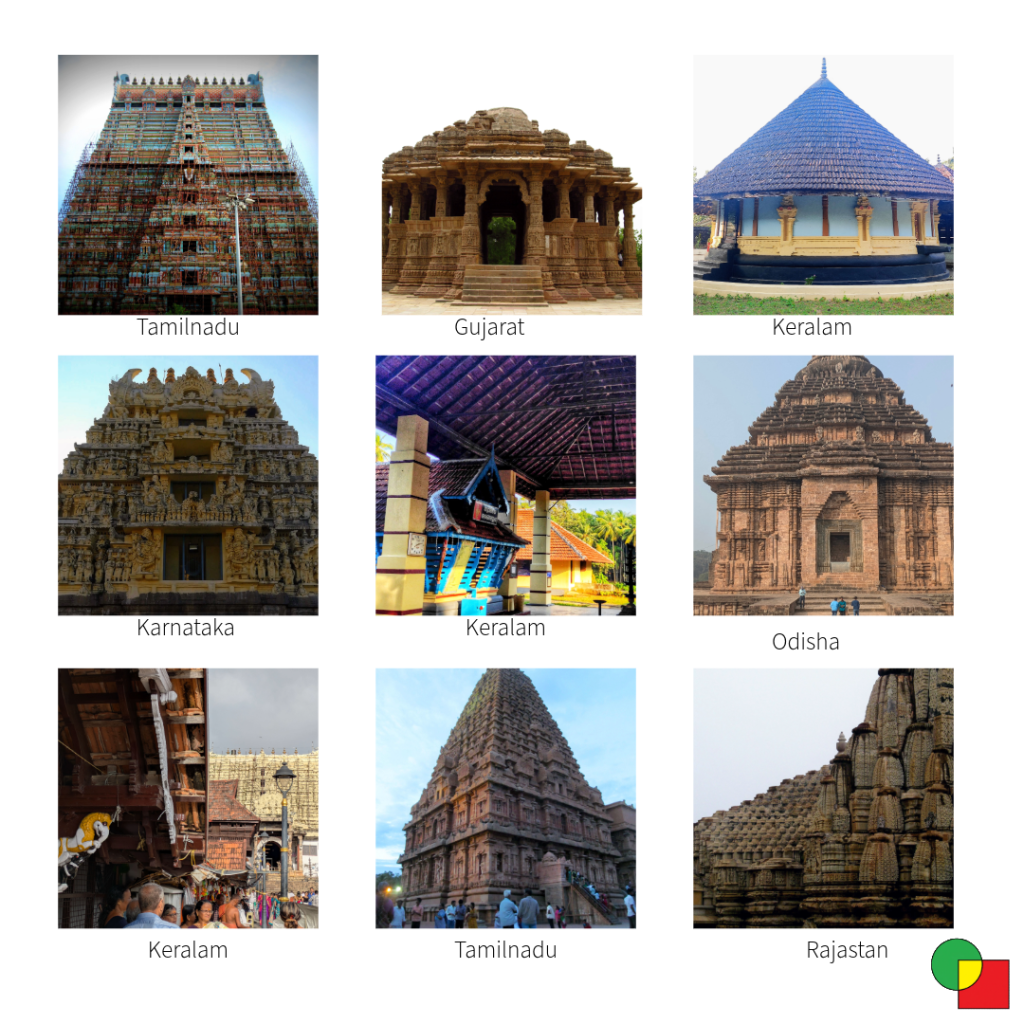
    Composite showing five distinct regional Indian temple architectural styles: Tamil Nadu gopuram with ornate tower, Kerala sloped-roof temple, Odissa curved spire, Gujarat angular structure, and Rajasthan tiered tower, each labeled with region and key design features.
    Highlights of few different styles of Temple architecture
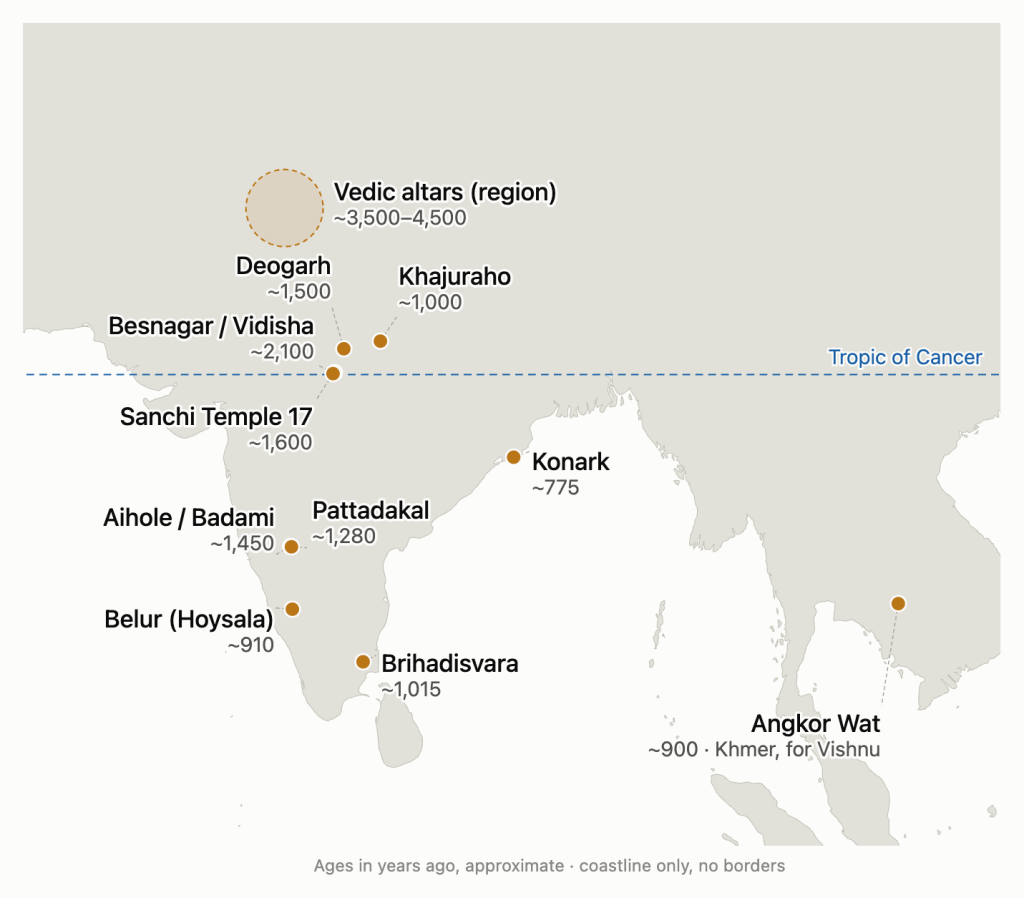
    Map of the Indian subcontinent marking major ancient temples and ceremonial sites with their approximate ages, including locations like Varanasi, Khajuraho, Ajanta, and southern temples across different regions.
    Indian subcontinent map showing the main ancient temples or ceremonial sites with their approx. age.

    And I assume the timeline indicates that the growing influence of Buddhist temples could be a political reason for the accelerated development of these temples.
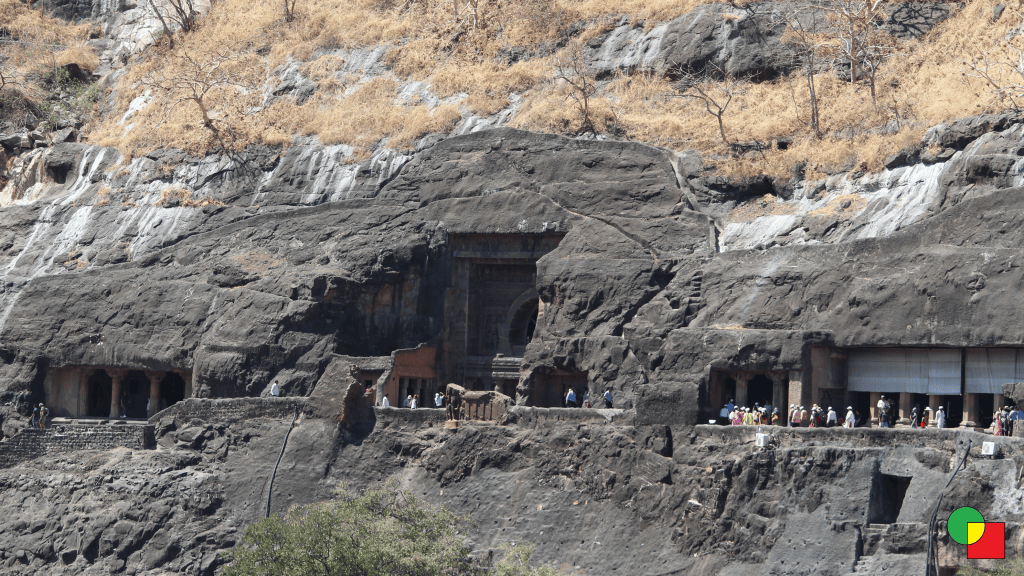
    Rows of rock-cut Buddhist caves carved into a curving basalt cliff above the Waghur river gorge at Ajanta, Maharashtra.
    Ajanta, Maharashtra: Buddhist caves carved into a horseshoe cliff. The oldest about 2,200 years ago and the painted ones about 1,550 years ago.

    The origin of today’s prominent Hindu temples points back about ~1500 years. The area of Aihole /Badami/Pattadakal carries the remains of the historical lab setup for Indian temples. But interestingly, at Aihole, Hindu, Jain and Buddhist temples stand side by side.
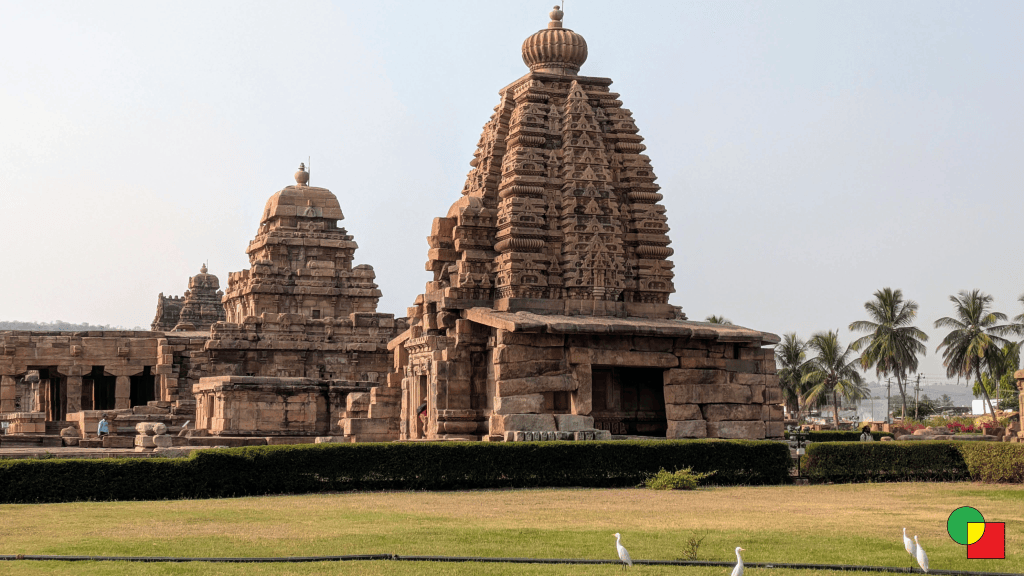
    Multiple temple structures at Pattadakal, Karnataka, showcasing distinct regional Indian architectural styles including varied roof designs and tower forms in a single compound.
    Pattadakal (Karnataka)- The Laboratory of current Indian temples, where we can see the different styles of temples in a single frame.

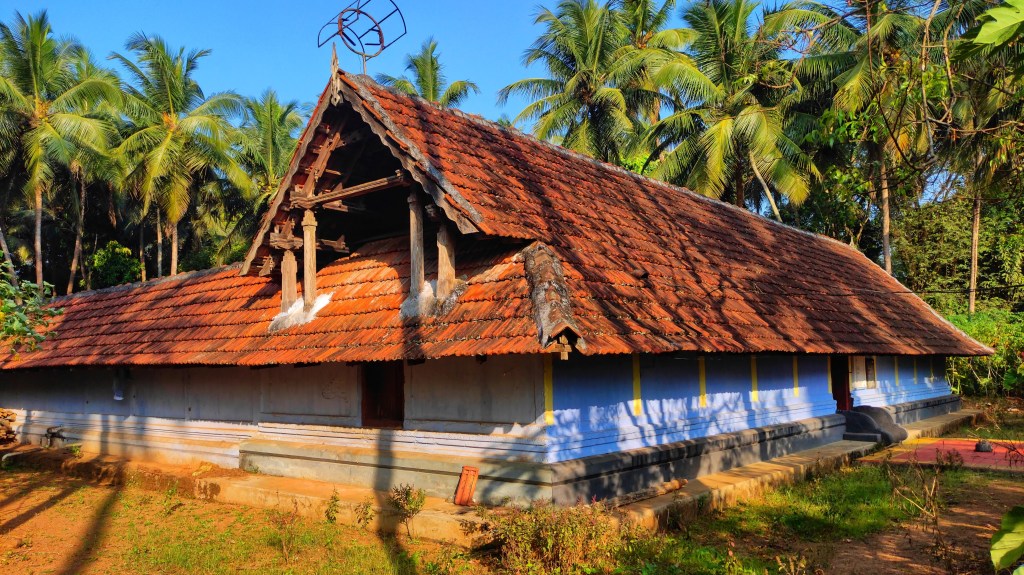
    The Kerala/coastal Karnataka temples seem to have a different origin. Even though the geometry of the complex is similar, the long spell of rainy seasons might have led to different kind of temples with sloped roofs. It looks very similar to the pagodas found in China, Thailand and Japan.

    Temple as an Art gallery

    Long before social media or exhibitions, the temple was where people saw art. The walls told the Ramayana and the Mahabharata in stone, the dancers were frozen mid-step, and gods and animals filled every pillar. For people who could not read, the temple may also have been a school, a gallery and a library at once.
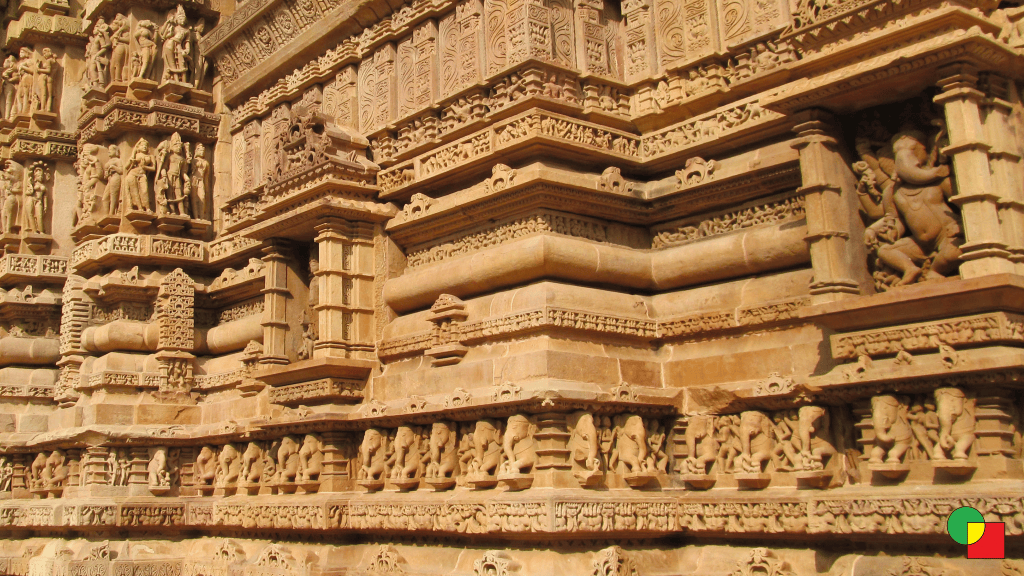
    The art exhibitions at Khajuraho temple walls
    Children’s version of art from Khajuraho, Madhyapradesh. As the height of the display goes up, the contents also tunes accordingly.

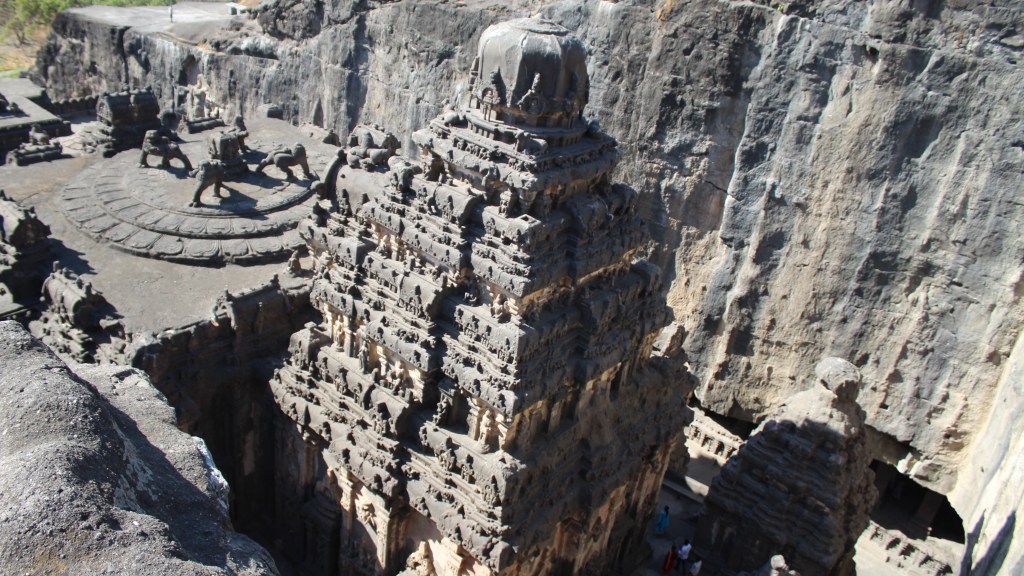
    I still wonder at the skill of the people who carved an entire temple out of a hill at Ellora, Maharashtra. The Kailasa temple was cut from the top down out of a single rock. There was no scaffolding to climb and no stone to add back if someone made a mistake.
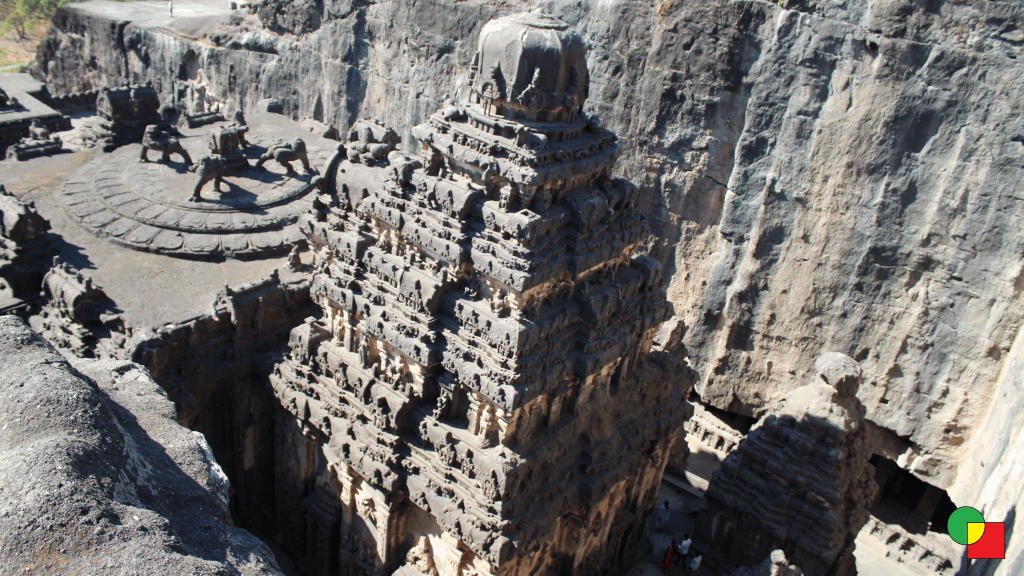
    The Kailasa temple at Ellora, a multi-storey stone temple carved out of a basalt hillside, with cliff walls rising around it.
    Kailasa temple, Ellora: a whole temple carved downward from a single rock. One could see how small are the people down below compared to the rock temple.

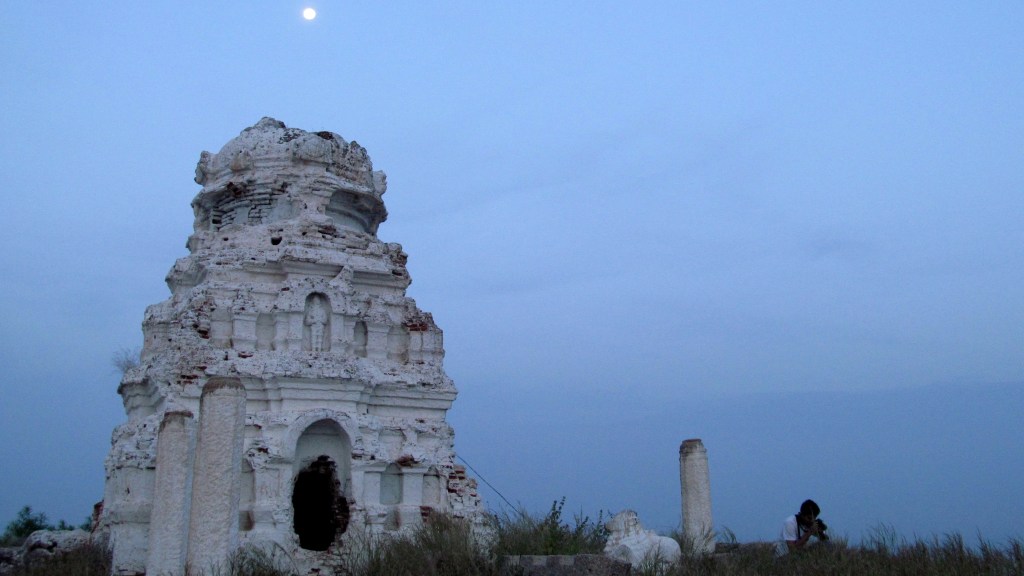
    This was no accident. Pallava carvers in Tamil Nadu had already cut whole temples from single granite rocks at Mamallapuram, about 1,350 years ago. The Virupaksha temple at Pattadakal followed about 1,280 years ago, and Ellora’s Kailasa, about 1,250 years old, seems to draw on it. Around the same time, the Pandyas began carving Vettuvan Koil at Kalugumalai downward from the top of a hill. They never finished it, so you can still see how the work went: top first.

    Temple as an economy

    Whether one is connected to the universe or not, a temple holds up a lot of lives. The flower seller, the coconut vendor, the prasadam counter, the lodge, the rickshaw at the gate, the bus, the travel agent, even the airline. A single festival can feed a whole town. Long before the word “tourism,” the temple was already an economy.

    Temple as a guide

    It was also a map. There are 51 Shakti Peeths, 12 Jyotirlingas and the 4 Dhams, spread from the Himalayas to the southern sea. To visit them, one had to cross the country. Rameshwaram, Puri and Dwaraka stand by the sea. Trimbakeshwar sits near the source of the Godavari. Hampi rests among boulders on the Tungabhadra. Old temples chose rivers, hilltops, forests and shores. And the sacred groves, the kavus, are temples that were never built at all, only protected.
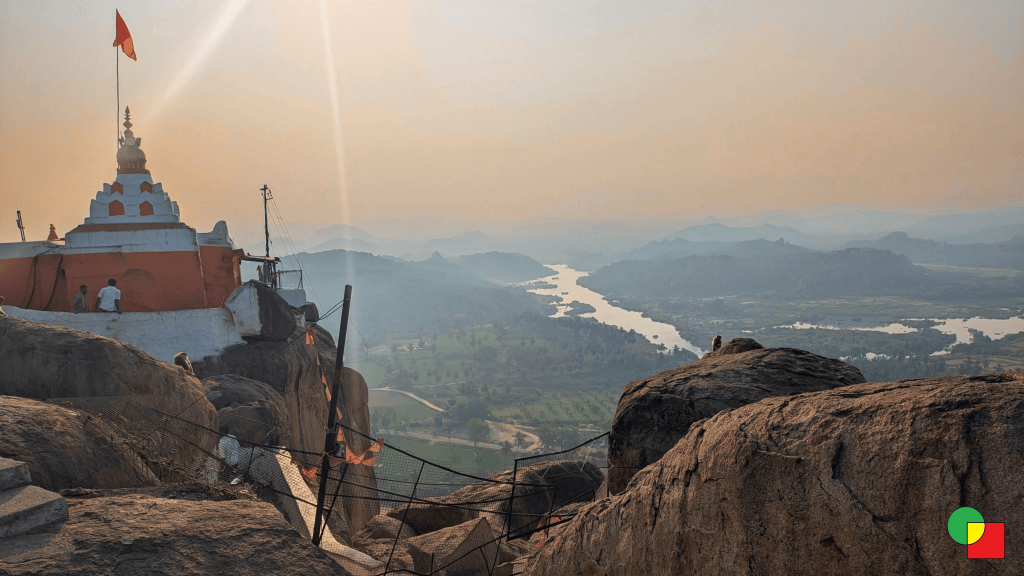
    View from the top of Anjanadri Hill in Hampi, looking across a series of rugged hills and the Tungabhadra River winding through the landscape.
    A Hanuman temple at Anjanadri, Hampi

    At Hampi, I saw a small Hanuman temple with nothing grand about it. No rules of temple-making made it special. It was the location and the view. Karnataka says it as the birthplace of Hanuman, and no wonder we can find a lot of monkeys in the region. The stories had a geographic sense.

    So for many of us, temples became a way of travelling India: to see its people, geography, history, rivers, sea and architecture. Perhaps that was part of the design too.
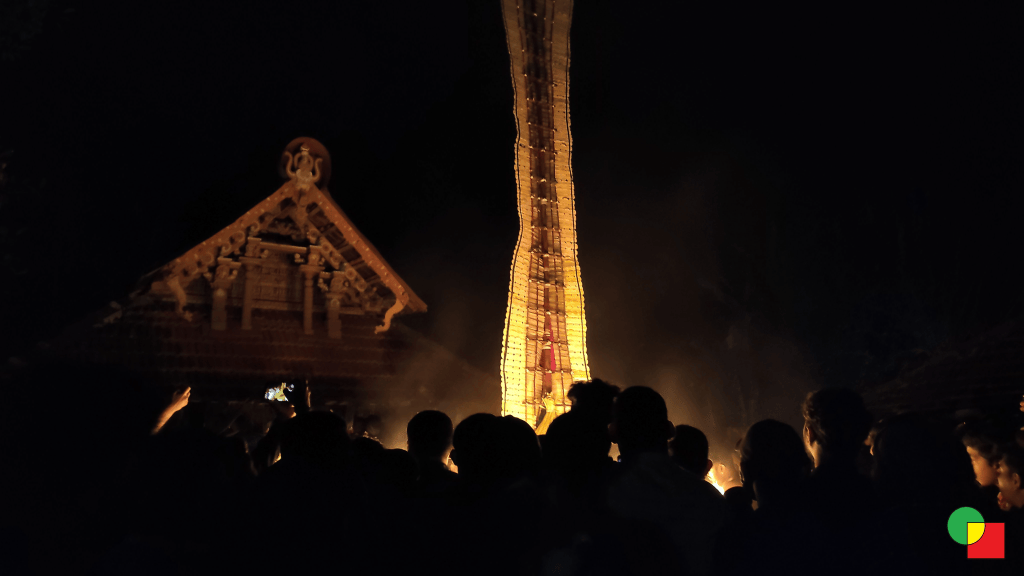
    A towering lit Theyyam headdress rising over a dark crowd beside the carved gable of a Kerala temple at night.
    A Theyyam rises above the crowd beside a temple at night, Kannur, Kerala .

    Some temples are not buildings at all. In the kavus of North Malabar, the god comes walking. In Theyyam, after hours of song and make-up, the headdress is placed on the performer, and he is no longer himself; he is the deity. For a night, people from communities once kept outside temple walls become gods, and everyone, bows before them. Across the border in Tulu Nadu, the same idea lives on as Bhoota Kola, the ritual many of us first saw in the movie Kantara. Here the temple is not stone or wood. It is a human being.

    The Temple as a Mirror

    Geometry of the self, temple and the universe

    A temple is not just a building but a living body mapped onto a geometric grid. The construction is said to resonate in harmony with the person inside.

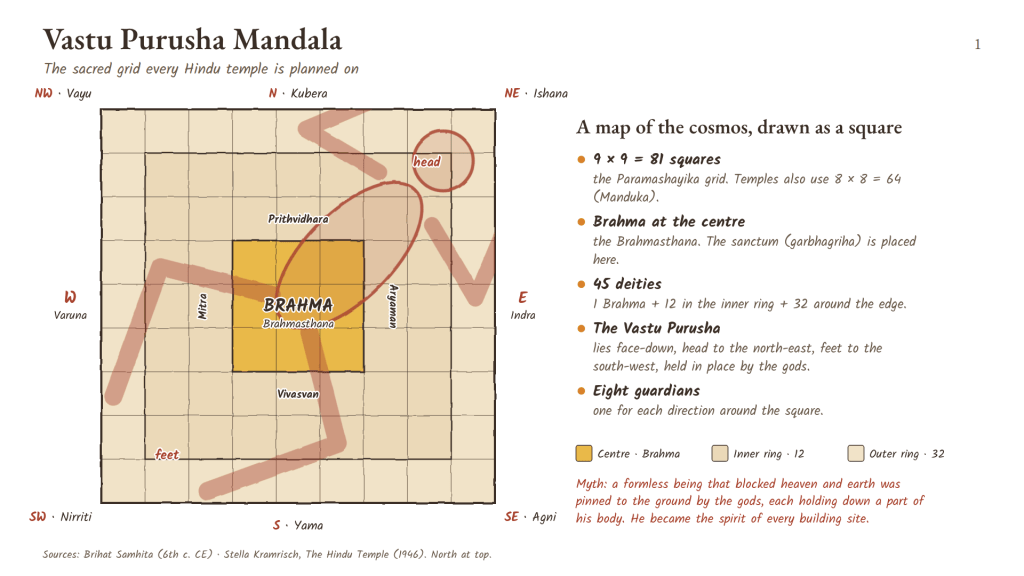
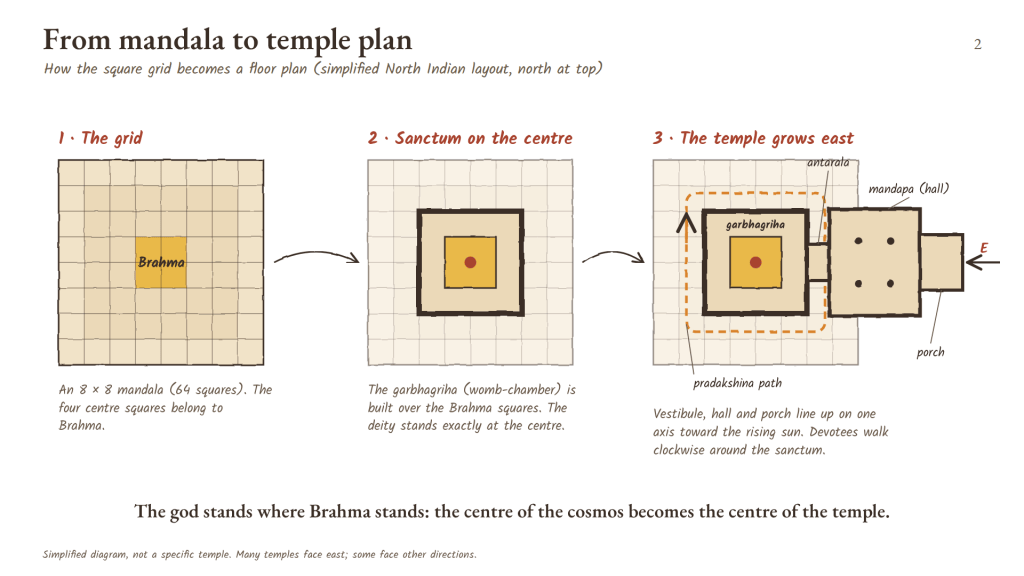
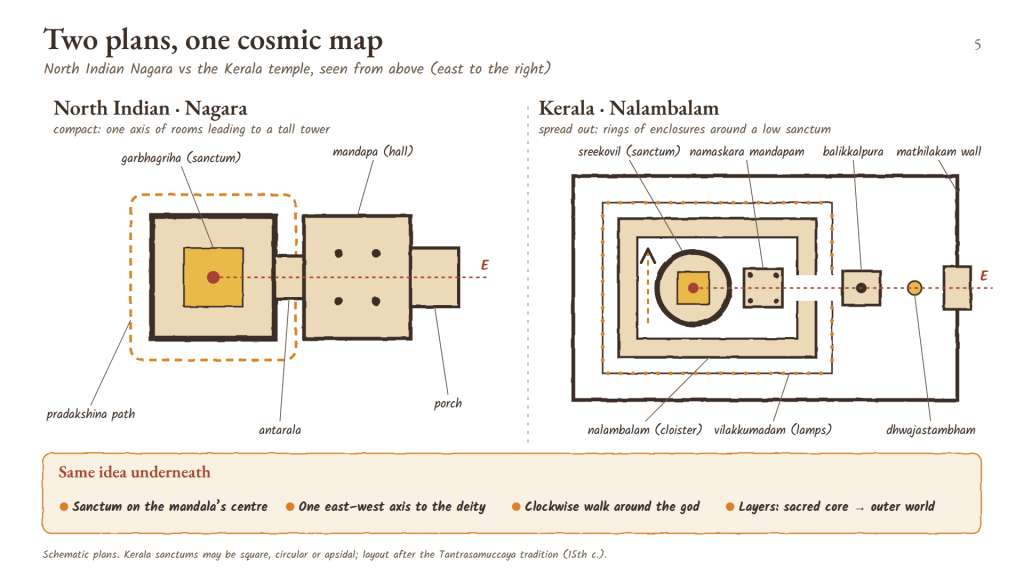
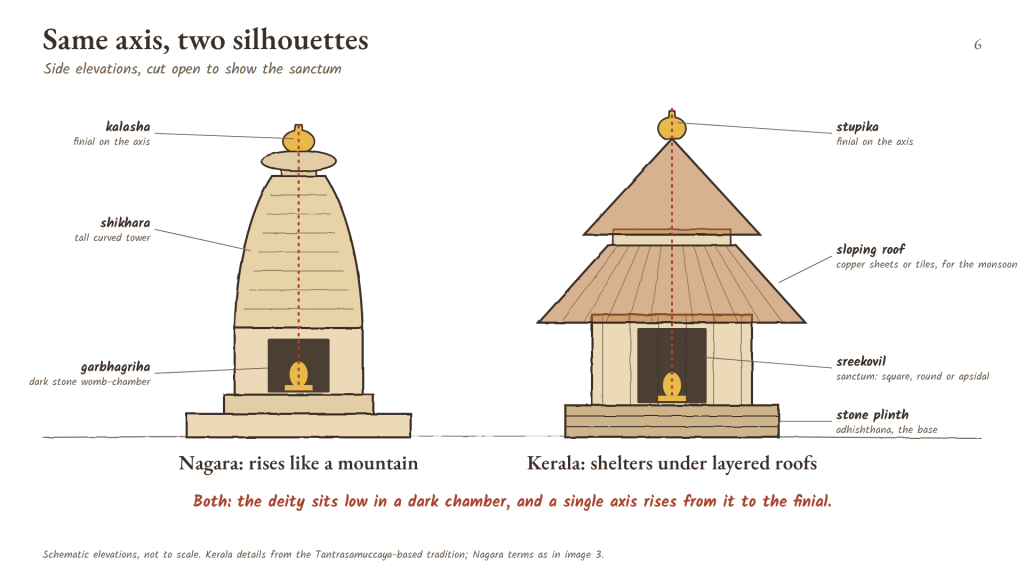
    Here is my hypothesis, in pictures. Worship began in the open, under the stars, the sun, fire, water and forest, and the temple slowly gathered all of them around one sanctum. The plan of that sanctum comes from an old square grid, the Vastu Purusha Mandala, where a cosmic being lies across the site and the deity sits at his centre. North or South, tall tower or sloping roof, the same idea holds: the deity at the centre, rings around it, one axis rising from the idol to the sky, and a path that asks you to walk around it and then sit still.

    If the universe, the temple and the self share one pattern, then the temple is not only the god’s house. It is a mirror, where one looks outward to turn inward. This is symbolism, not a physics claim.
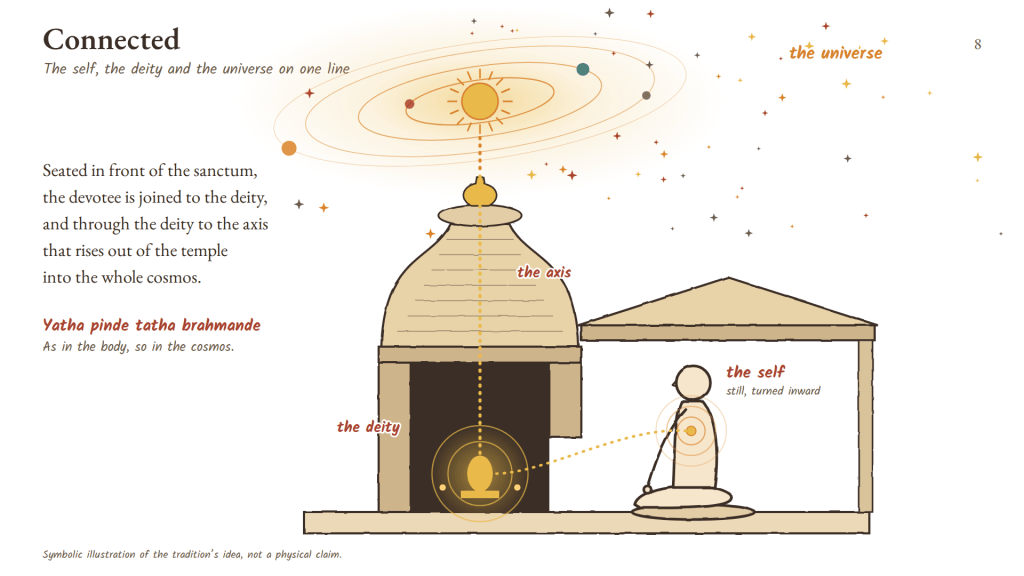
    Seated meditating figure linked by a dotted golden line to the deity, then up the temple axis to the sun, planets and stars.
    The connection hypothesis
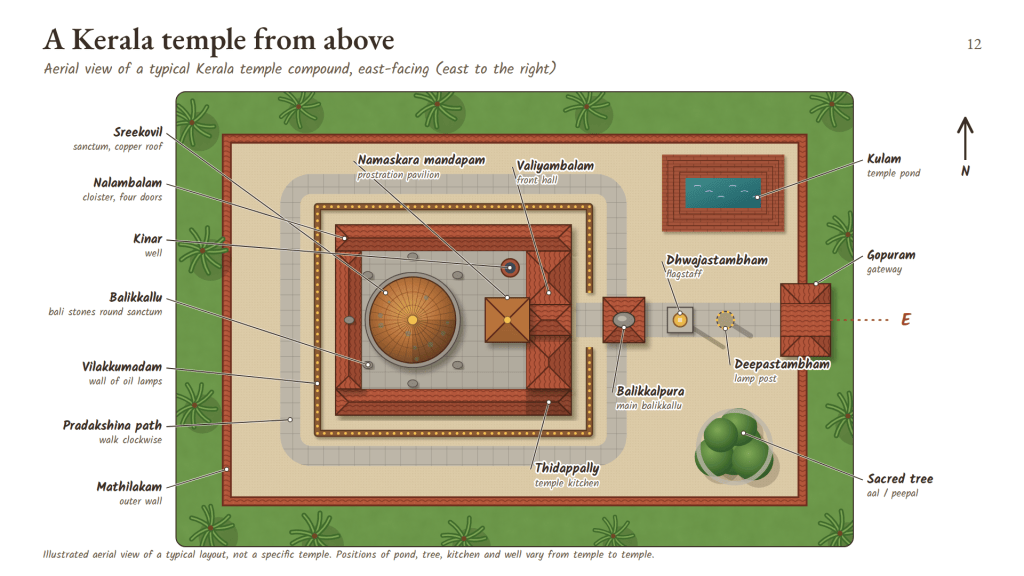
    Illustrated aerial, top-down diagram of a typical east-facing Kerala temple compound, with labeled features including the sanctum, temple buildings, courtyards, pond, gateway, lamp posts, sacred tree, and surrounding walls.
    A sample kerala style temple topview

    Here it also represents the human laid with feet at Gopuram and head at Sreekovil.

    TempleSelfUniverse
    Gopuram (gateway tower)Feet: the first step inThe physical world
    Balikallu (stone outside the sanctum)Ego, desire, anger, left behindWhat we let go of
    Sreekovil (shrine)Heart and chestLife
    Garbhagriham (inner sanctum)Consciousness, the “third eye”Union: where self and universe meet
    A 9×9 square grid with a figure lying diagonally, Brahma at the centre and deities around the edges.
    The Vastu Purusha Mandala representation
    Three steps: a square grid, the sanctum placed on the centre squares, and a full temple plan extending east.
    Temple placement from the mandala
    Side-by-side floor plans of a North Indian Nagara temple and a Kerala temple, with a strip listing shared features.
    Two style representation- showing the similarities from top
    Side-by-side elevation plans of a North Indian Nagara temple and a Kerala temple
    Side views of a tall Nagara tower and a Kerala temple with sloping roofs

    In Part 1, I asked whether the Meru and the Sri Chakra were a code linking the earth and the stars. I went looking for the Sri Chakra in the temple’s design, and found the Vastu grid instead. Temples are laid out on the mandala. The Sri Chakra is a separate diagram of worship, and the Meru is its three-dimensional form. Some temples keep one before the deity, but it is not the building’s blueprint. And some say it’s related to the Vastu grid where both the central points align.

    Temples of the future

    Today, we carry the whole world in our pocket. Notifications, news and noise follow us everywhere. Maybe that is why the temple still works, even for those who never ask why. The thick walls, a single lamp, the smell of camphor, the evening hour: together, they quiet the mind for a while.

    Many who go don’t bother whether there is science behind it. They simply come out calmer. I assume temples didn’t exist at the start; they evolved over centuries. If one needs to go inward, one may or may not need a temple. Temple is one medium to pray. But temples were here before us, and they will be here after us. I expected the Sri Chakra and the mandala to be a hidden science. But they turned out to be something more human: a way of making meaning visible.
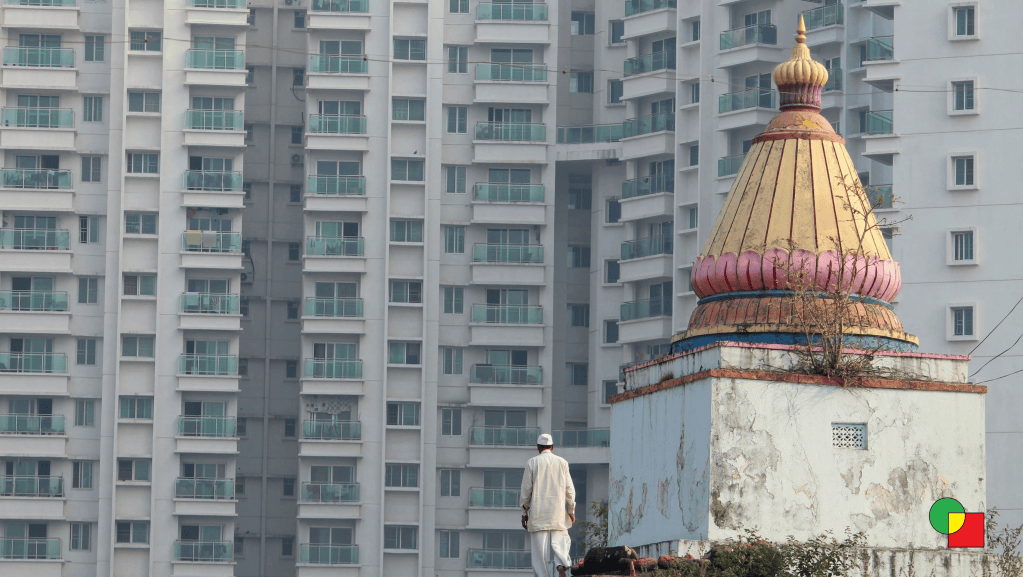
    An elderly Maharashtrian man in his traditional attire walks near a small temple in Hinjewadi, with modern high-rise apartment buildings visible in the background.
    An old gentleman near a small temple near Hinjewadi (Pune), you could see the high-rise flats in the background. Is he more peaceful than the people who reside in the background flats ?

    I still have unanswered questions about the temples and rituals. But for someone like my mom, there are no questions. She just believes, in every form, without a WHY in between.

    Tat Tvam Asi…

    I would be happy to know, if any of the information was new to you. And let me know, if you want to research more on any specific part. This blog was meant to go through my curiosity and thoughts, rather than academic research, but it took me months to put forward what it is today.

    And thanks to my friends and family who HAD to visit with me to these places. :D

    More reading (If you can take more) :
    1. UNESCO sites India
    2. Padmanabhaswamy Temple equinox
    3. sreenivasaraos.com – blog – temple architecture

  • What’s special about the Temples of India ?

    What’s special about the Temples of India ?

    This blog isn’t a complete answer to that question. Instead, consider it an attempt to unravel the small questions, the wonders, and the curiosities I’ve carried with me for a long time. So this is not a conclusion, but rather a trail of questions and some answers from my perspective.

    Before I dive into the big topic of India’s diverse temples, it wouldn’t feel right to start without the ones I frequented while growing up.

    Kottayi: Where my questions began

    Many of our core thoughts originate in childhood. I spent most of mine in Kottayi, Palakkad, and since my mom is an avid believer, I saw these temples, rituals, and beliefs through her eyes.

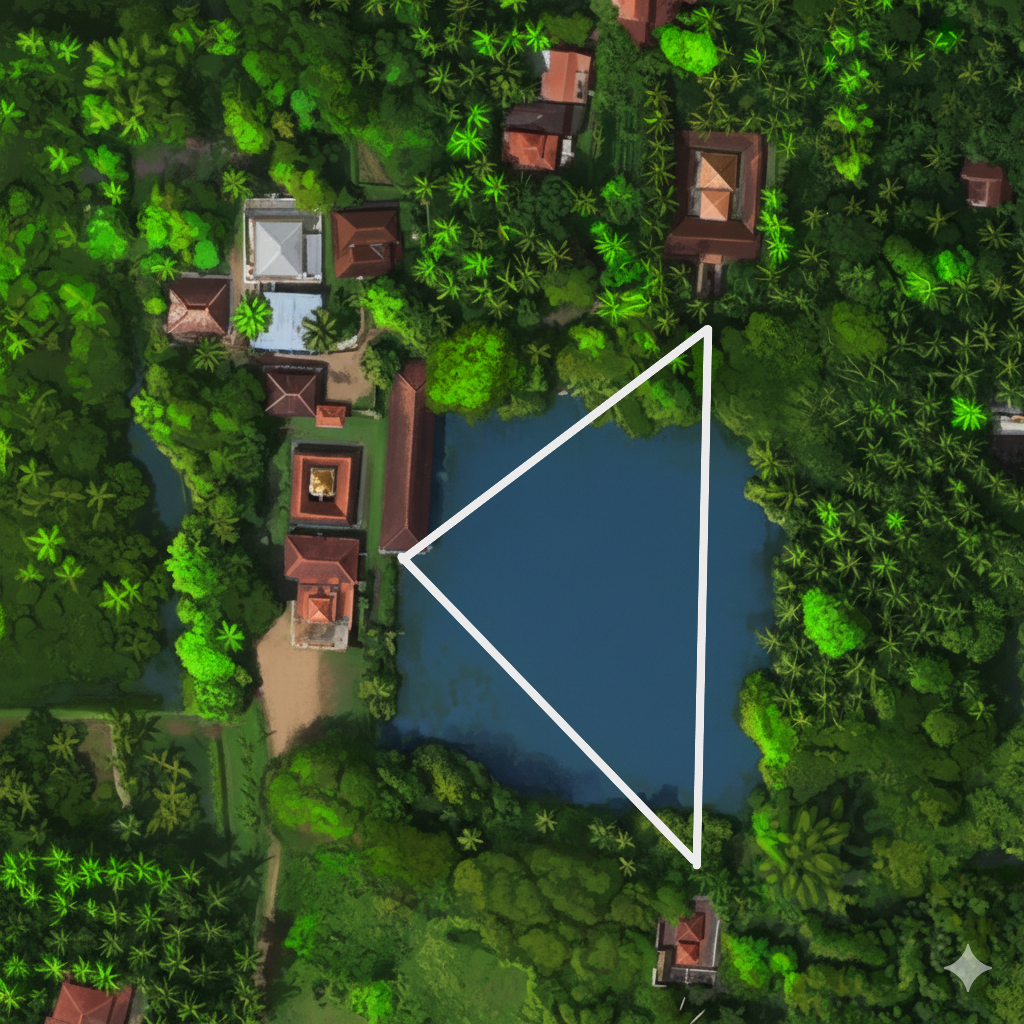
    I wonder about the origin, structures, what’s inside the pond (Chembrakulam) and temples. Even now I wonder, Is there a fourth Temple? Why do some temples are having rectangle or circle as base structure? Why there is a big structure outside of some temples with varying heights.

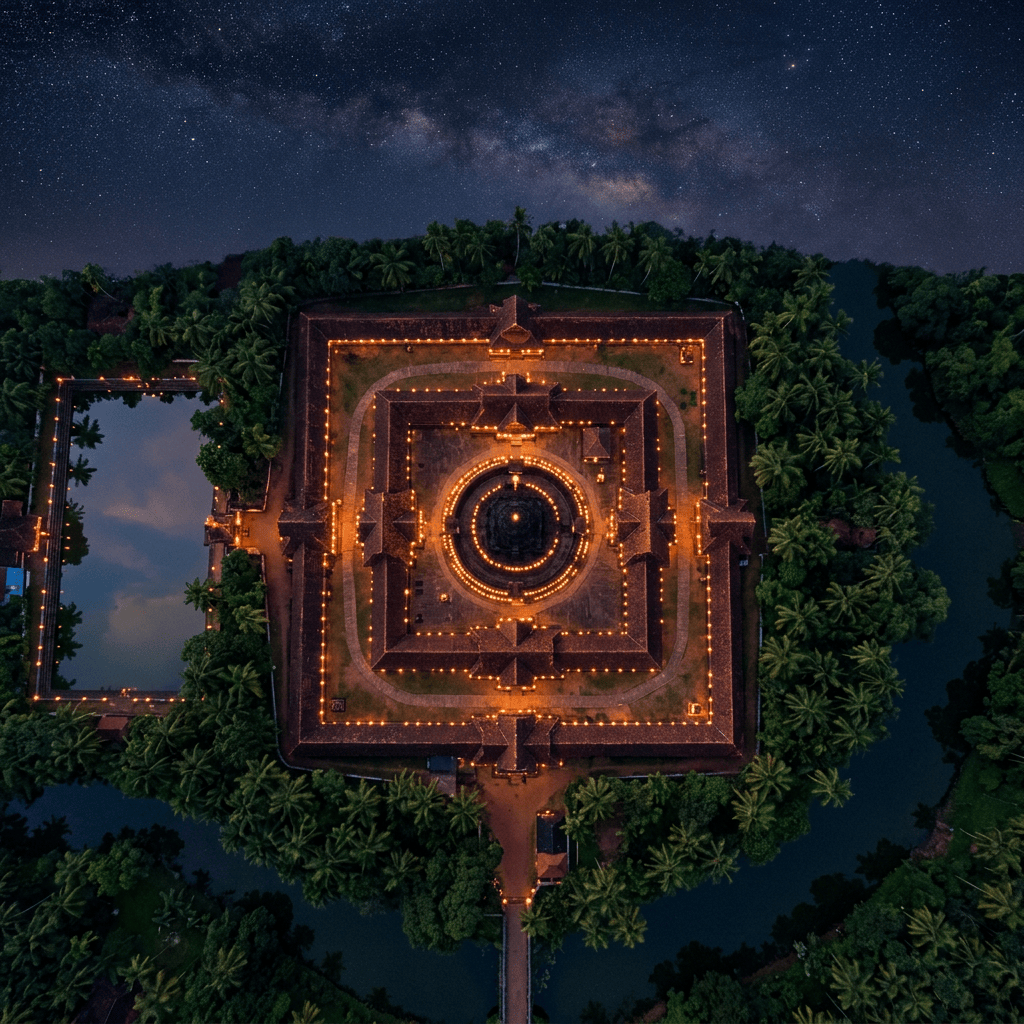
    a view from above of the trio temple complex
    The Kottayi core, The Trio Temples (Ayyapan kavu, Shiva Temple, Krishna temple) around a big temple pond.
    The interior view of Ayyappan Kavu,
    Ayyapan Kavu , inside view. “Kavu” primarily refers to sacred groves in Kerala, which are rich in biodiversity and associated with local deities, representing a deep cultural and ecological connection to nature, especially serpent gods (Naga).
    The architecture of the Krishna Temple and the Narasimha Murthy shrine in the Kottayi complex.
    Krishna Temple, Narasimha Murthy
    The exterior of the Shiva temple located a short distance from the primary temple pond.
    Shiva temple, not part of this trio. But just a km from there.
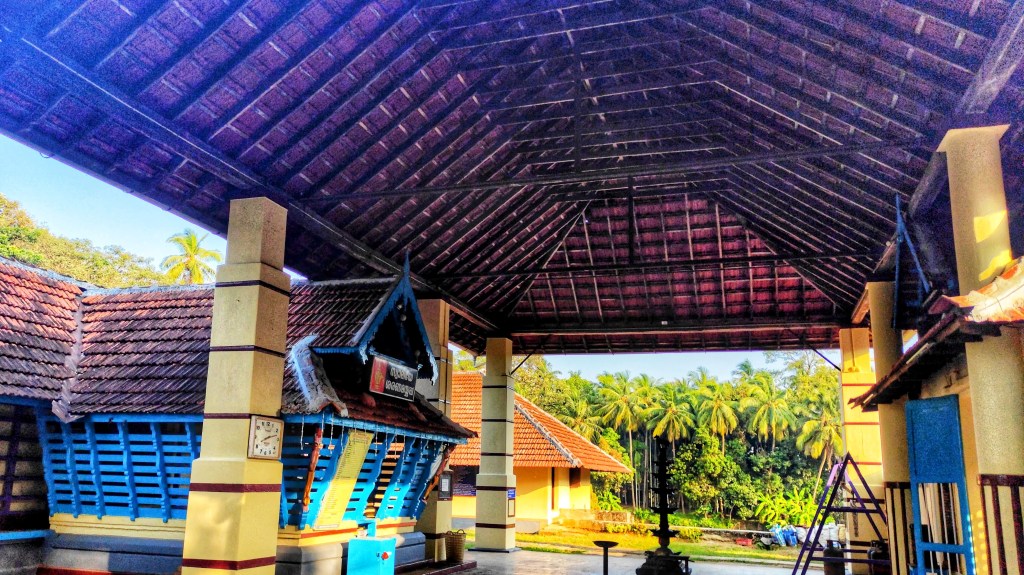
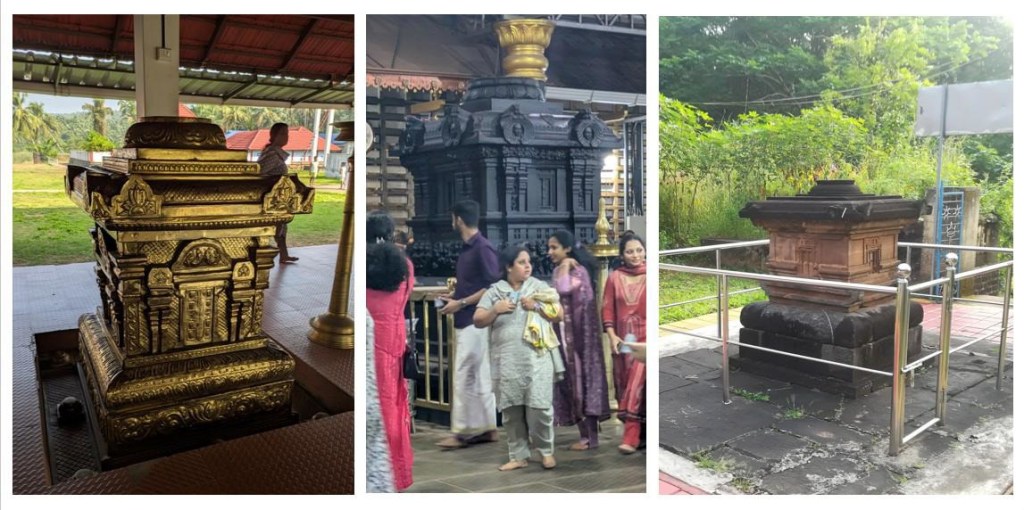
    The Valiya Belikkallu, a large sacrificial stone structure found in the outer courtyards of Kerala temples.
    These structures are from Tirur, Kannur, Palakkad. This structure in front of the temple deities, are called Valliya Ballikallu.
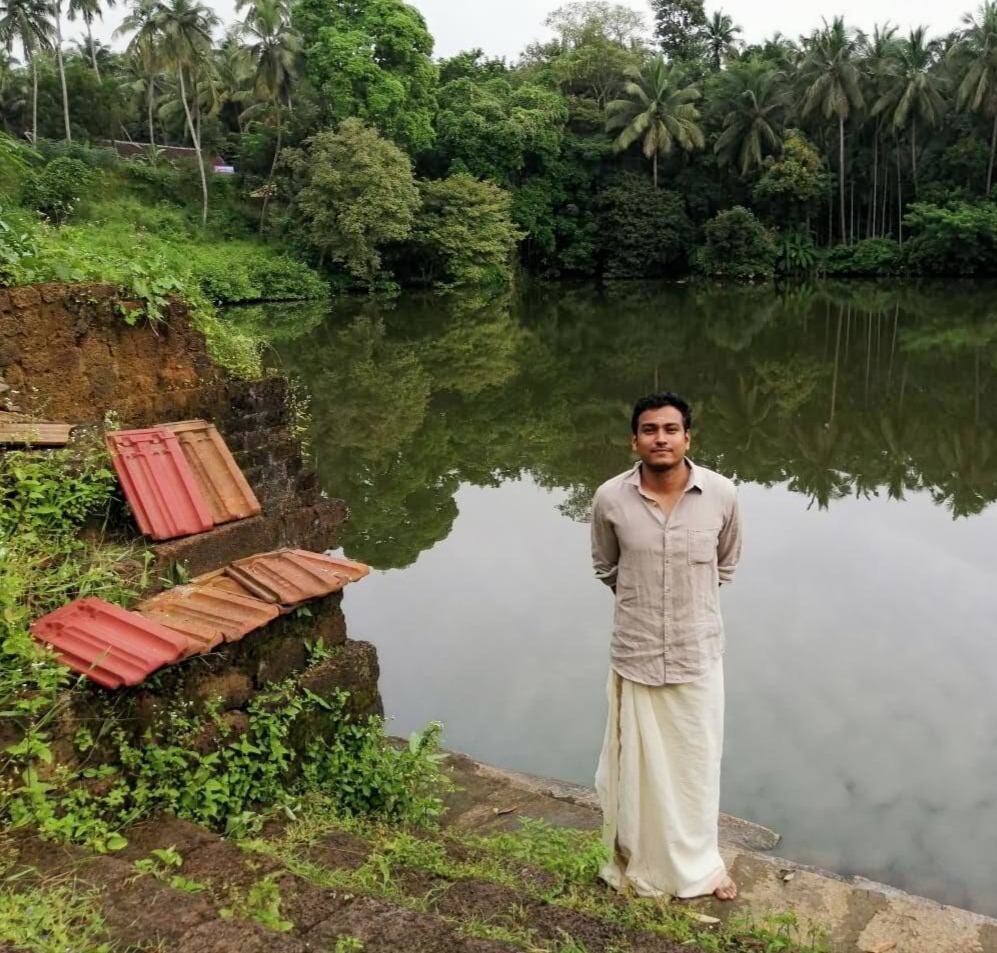
    A wide view of the Chembrakulam temple pond in Kottayi, Palakkad, showing its calm waters and surrounding greenery.
    The Temple Pond and the greenery around. And me just blocking the view.

    Etymology – What we really mean when we say “Temple”

    To truly understand these structures, I explored the names we give them. Today, we use “Temple” as an umbrella word, but the word itself has a curious history. It originates from the Latin templum, referring to a consecrated, cleared space for worship.

    I’m sure in India “temples ” were here even before Latin Language existed.

    But as I looked at our local languages, I found layers of meaning that feel much more intimate and connected:

    • Ambalam (Malayalam/Tamil): While it means an open field or courtyard, a deeper meaning suggests a “stage of consciousness” – a wide-open space where the mind meets the divine.
    • Mandir (Sanskrit/Hindi): Derived from Mand (to be happy or celebrate) and Ira (earth or place). It is literally a place on earth to celebrate the joy of existence.
    • Kovil or Koil (Tamil): A combination of Ko (King or Divine) and il (Home). It treats the deity as the living, breathing ruler of the village, and the temple as their home.
    • Prasada: We often think of this as the food we receive, but in architecture, the entire temple structure is the Prasada. It means “Clarity” – the building itself is a tool designed to settle and clear the mind.
    • Kavu: The ancient “Sacred Grove.” Rooted in the idea of “protection”, it is the temple that wasn’t built, but preserved – a sanctuary where nature and the elements remain untouched.

    And if you have visited them, you will understand why the name is spot-on.

    Why we need a Temple?

    In India, across every state and spanning millennia, there are temples. The public, Kings and the wealthy spent huge sums willingly (or perhaps unwillingly) to build them. I’m not interested in the specific customs, rituals that are been followed at present. I doubt If we have missed something over the generations – about the actual purpose of a temple.

    Dogs, cats, birds, and fish don’t need temples; they simply live and die. Is it because humans—with our memory and intelligence—want to pass something down to the next generation? If these buildings might be a form of science, a way to transmit information across time. But did we actually receive the message?

    When I asked people around me why they visit, one thing was clear: they go for peace of mind. They seek a calm state. Irrespective of religion or region, this seems to be the universal purpose.

    What I am fascinated is its architecture. The mathematical precision, geometry, energy, geography, hidden messages .

    Sensory Design: How the mind experiences

    How one experiences a temple is deeply personal.

    I’ve realized that old temples are almost always located in geographically significant places: near rivers, atop mountains, deep in jungles, or by the sea. Some say these are “energy zones,” though I am still unqualified to experience that at present.

    We usually go to the temple in the morning or evening (sandhya), at that time the beauty of nature, people, temples are magnified.

    A temple during Sandhya (evening), showcasing the play of light and shadow.
    A temple at Kannur, Kerala at evening

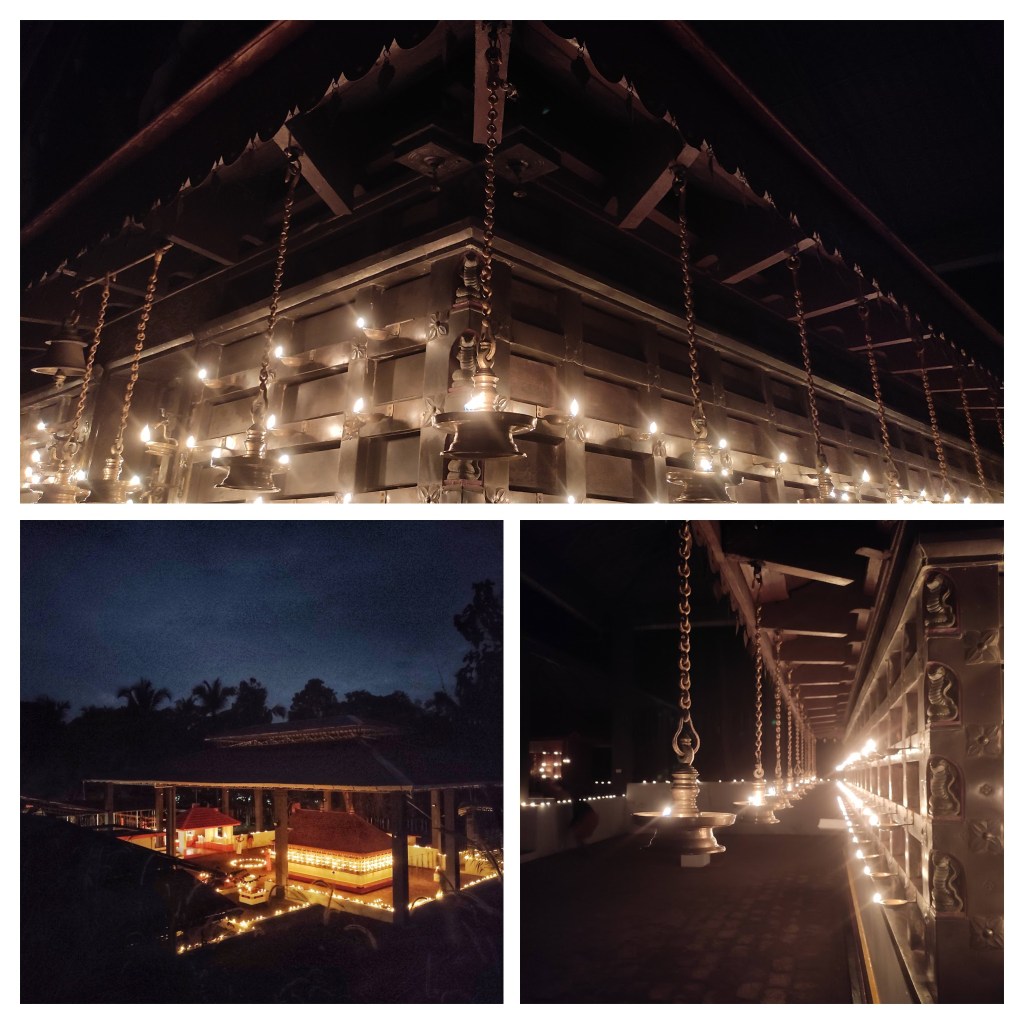
    In the temples of Kerala, I’ve observed a specific “conditioning” of the mind. The massive walls block out external noise. In the darkness of the sanctum, your senses are narrowed down to a few things: the flickering light, the scent of chandanam (sandalwood), tulsi, and flowers, the resonance of the bells. Outside, smell of camphor, nallenna (sesame/gingelly oil), ghee when the lamps are lit up. The visual beauty of the chutambalam(Outer enclosure) , when the array of thousands of lamps (Vilakku) are lit can’t be described, one has to experience it.

    Amidst all these, the sound of stillness.

    In the Temples of North or Western or Eastern India, based on what I have seen, the experience is more “democratic“. People can go right up to the idols and perform their own offerings. Here they sing bhajans together in a different, more vocal version of that same conditioning.

    You can be alone or in a crowd, both are meditative, we lose identity of the self..

    Evolution assumptions – The Shift: From nature worship

    I wonder when the first version of temple existed- Is it when the human evolution reached a stage where it moved beyond the animal wisdom and started to settle at one place, started agriculture and stopped the nomadic way of life. Was a temple originally a place for worship, or was it a community hub to share art, craft, and information?

    What could be the first form of worship – The pancha bhoothas – Fire, Air, Earth, Water, Space. I guess there was no need for a temple or architecture, they were happy with formless nature around, which they feared and valued.

    Maybe much later the human-formed deities/idols came into existence. Before that the previous generation worshiped Forest, Trees, Rivers, Beaches, Mountains, Sun, Moon, Planets, stars.

    Then there are as avatars, as vehicles of Gods : Fish, Monkeys, Elephant, Boar, Bull, Cow, Lion, Tiger, Cats, Rat, Crocodile-Makara , Birds ( Eagle, Peacock, Swan, Owl) and of course Snakes.

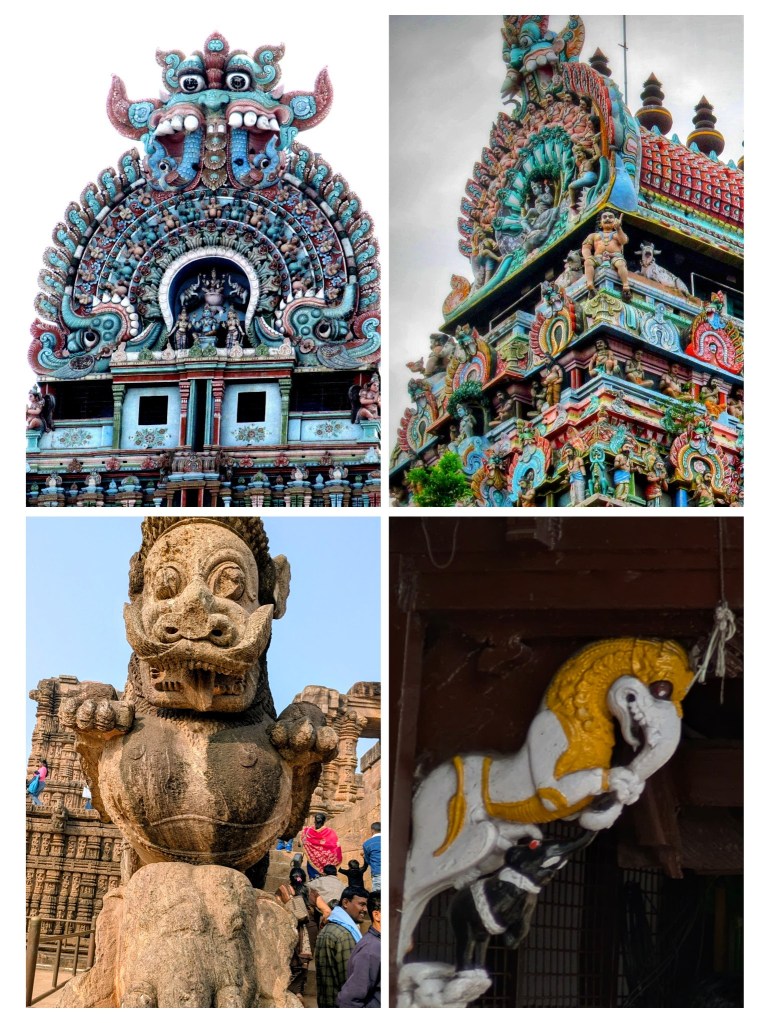
    Then there are hybrid animals depicted in the temple stone/wooden carvings like Vyali, Bhairavan, Gaja-Simha, Naga-yakshi. But they act as protectors around the temple.

    Hybrid animal carvings like Vyali and Bhairavan that act as protectors around temple walls.
    The top 2 images are from Tamilnadu Temples, The bottom left from Odissa, and the bottom right from the Padmanabha swamy temple compound.

    This is where my questions become uncomfortable – even for me. A thought came , a what-if moment. Is it like when someone in power took what was once simple nature worship and turned it into a complex system of rituals and ‘science.’ By doing this, they effectively locked the common person/tribals out of the inner circle. Or indeed there was a science behind all these ?

    “Nobody listened to Buddha; that is why there is Buddhism.”

    – J. Krishnamurti

    Back to Kottayi for a moment

    I tried to search for the history of my childhood region, Kottayi and the Ayyappan Kavu. The information was minimal, only going back a few centuries. But the elders speak of at least 3-4 Pambin Kavus (Snake Groves) in the area. I remember visiting them as a child; I was horrified to go there even in broad daylight.

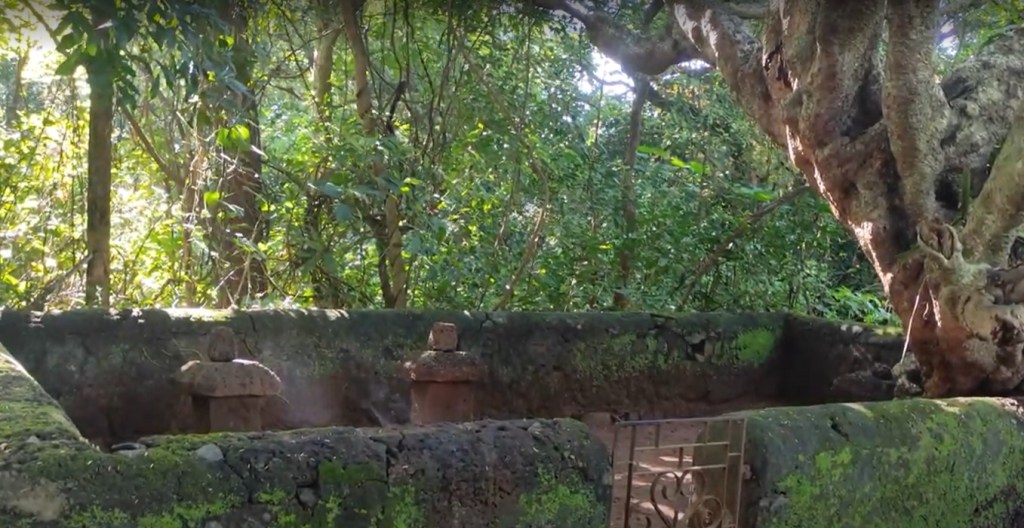
    Existing remains of a Pambin Kavu (snake grove), illustrating how wild forests were historically preserved within human settlements.
    A Pambin kavu, with a cleared area for worship. This is the new version, quite less scary than the old times.

    The local legend says someone found a stone from a Pambin Puttu (snake mound) and began worshiping it, eventually building a temple. Perhaps this is just a way of saying that what was once a dense, wild forest was slowly converted into a human settlement. I often wonder what that land looked like five centuries ago.

    A Southward Journey Through Temples

    These images weren’t taken on a single journey. They come from years of travel, scattered across time. I’ve placed them here deliberately from north to south to let geography, material, and mood reveal themselves.

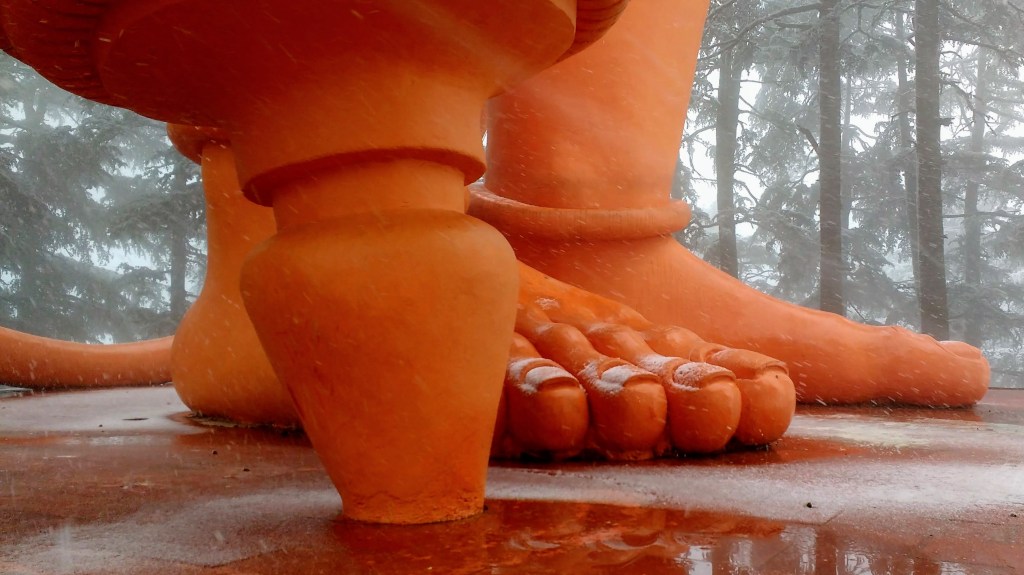
    foot of the giant hanuman statue covered in snow from temple in Shimla, Himachal Pradesh.
    Shimla (Himachal Pradesh)
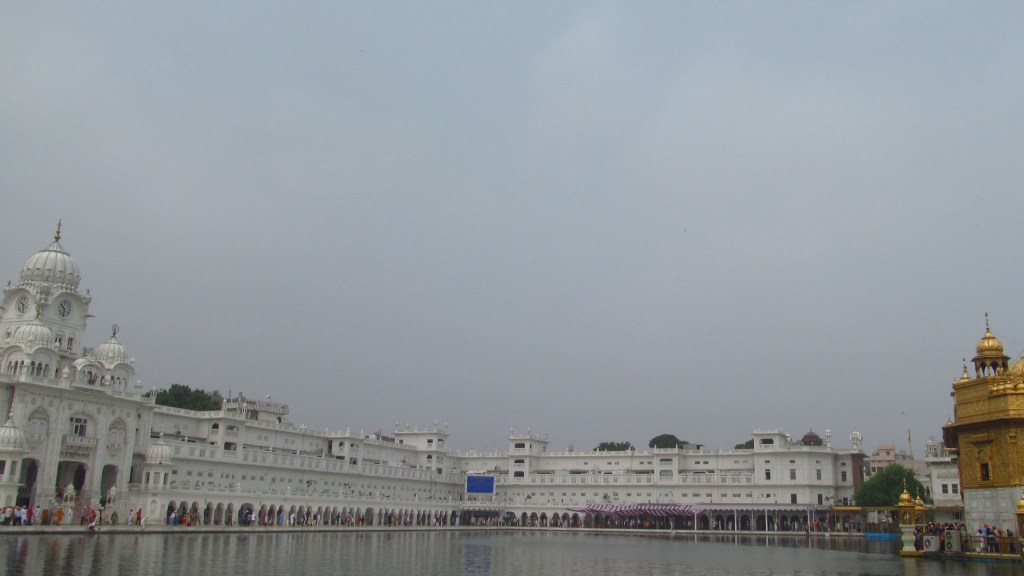
    The marble and gold architecture of the Golden Temple, reflecting communal worship.
    Amritsar (Punjab)
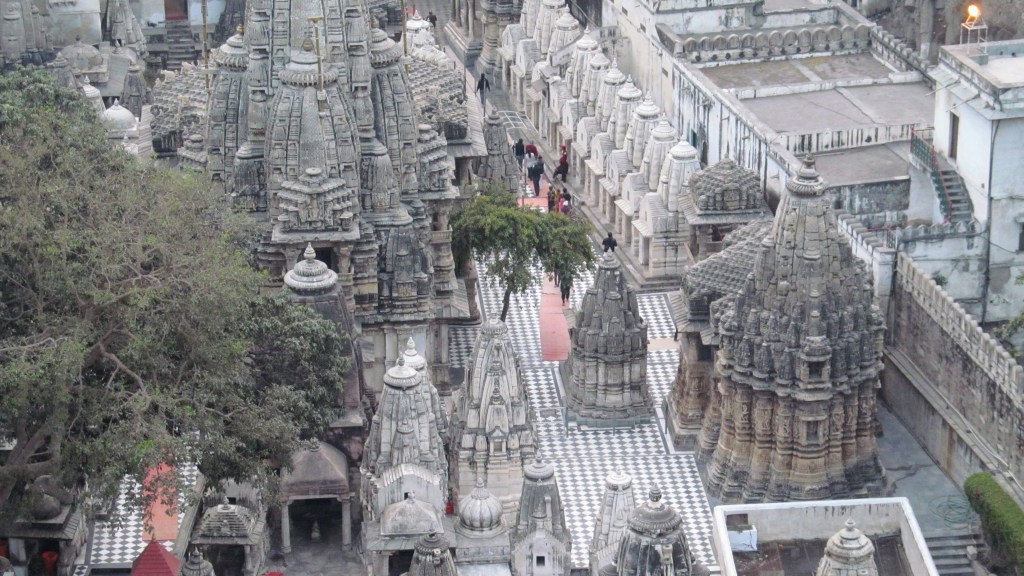
    The complex spire and stone carvings of the Eklingji Temple in Rajasthan.
    Eklingji (Rajasthan)
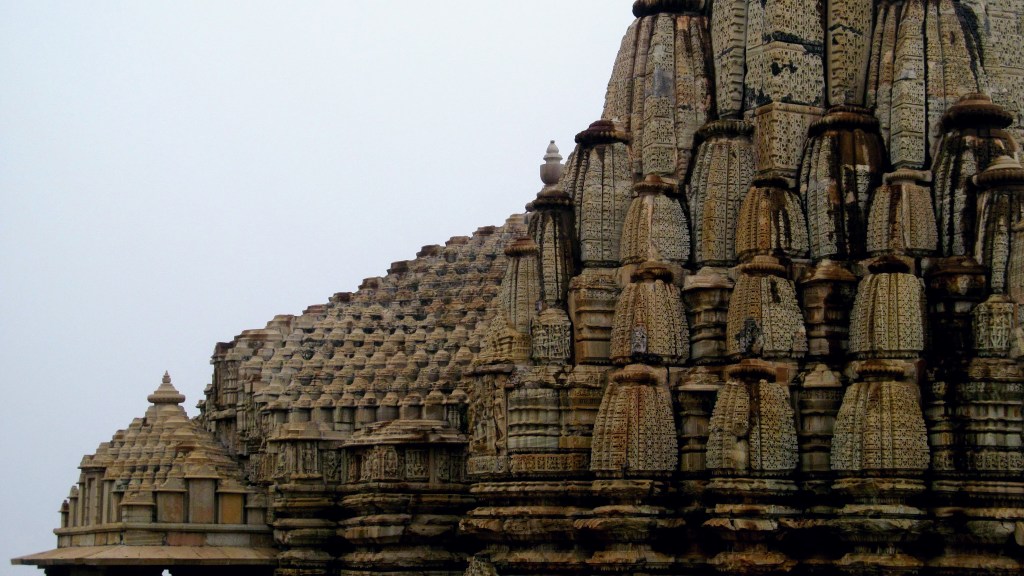
    The complex spire and stone carvings of the Eklingji Temple in Rajasthan.
    Eklingji (Rajasthan)
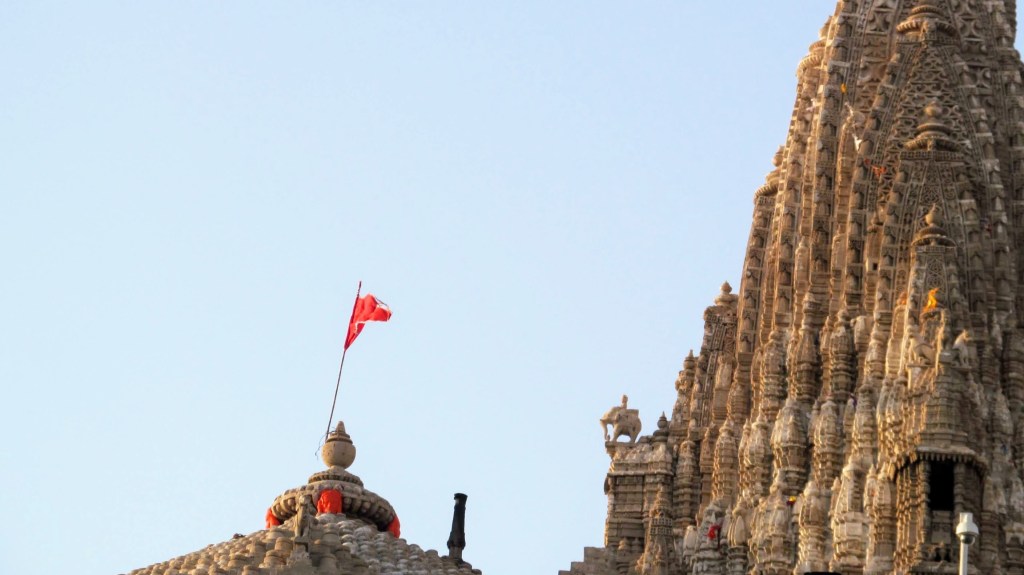
    The towering flag and limestone structure of the Dwarkadhish temple by the sea.
    Dwarka (Gujarat)
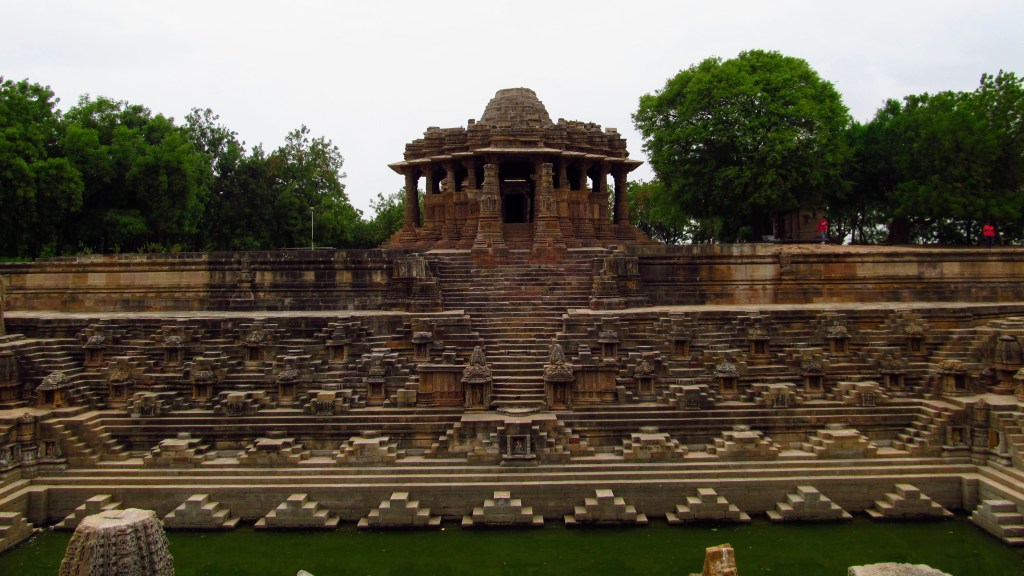
    The geometric steps (Kund) and precision stone carvings of the Modhera Sun Temple.
    Modhera Sun Temple (Gujarat)
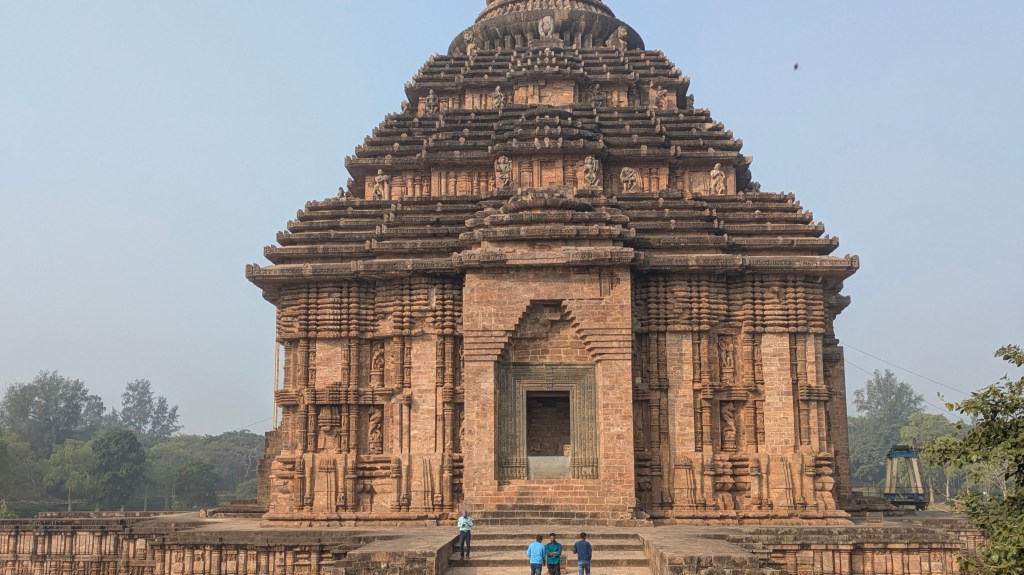
    Konark sun temple, an architectural tool for tracking solar time
    Konark Sun Temple (Odisha)
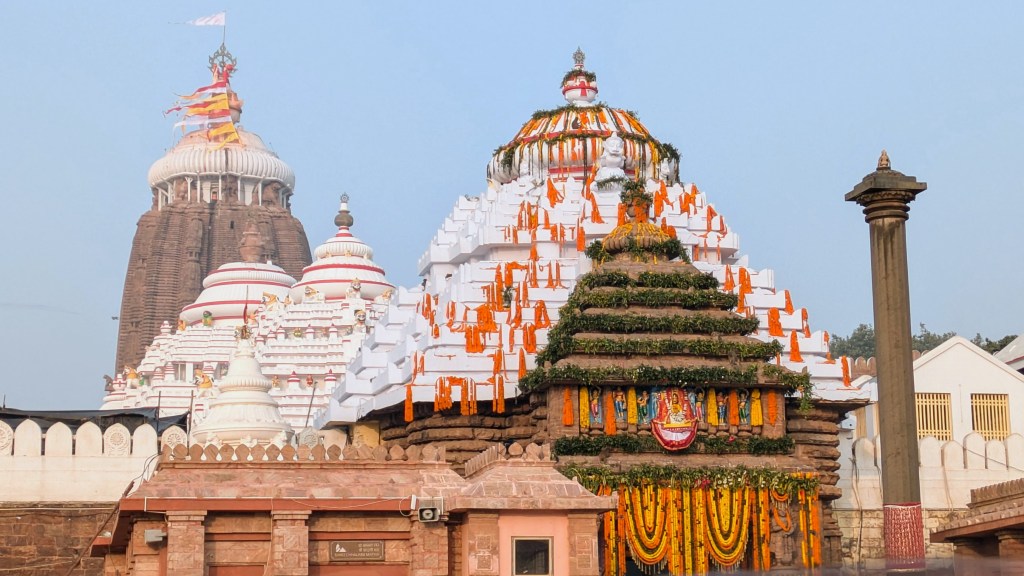
    The massive scale and height of the Jagannath Temple structure in Puri, Odisha.
    Puri (Odisha)
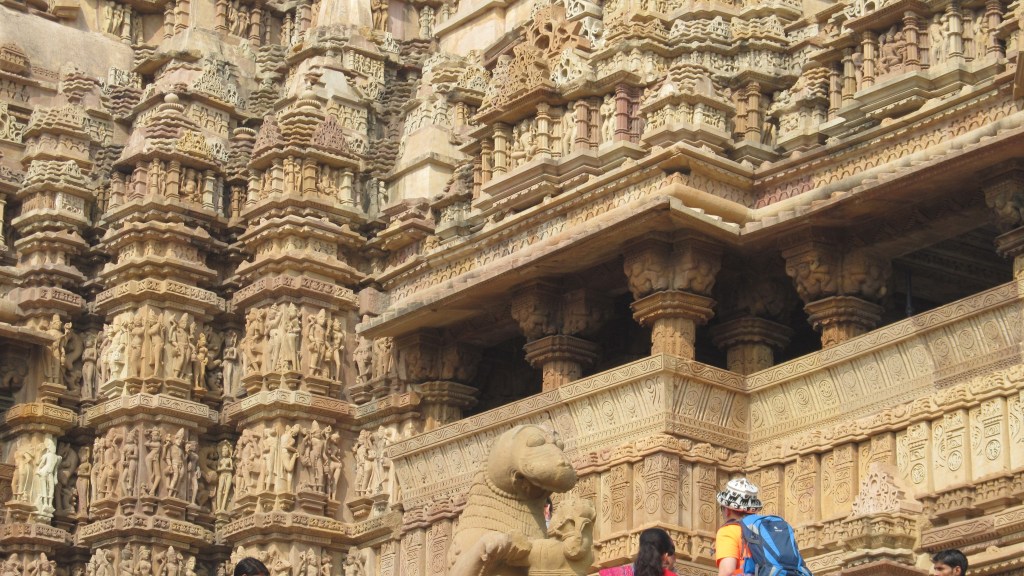
    Intricate sandstone carvings on the outer walls of the temples at Khajuraho.
    Khajuraho (Madhya Pradesh)
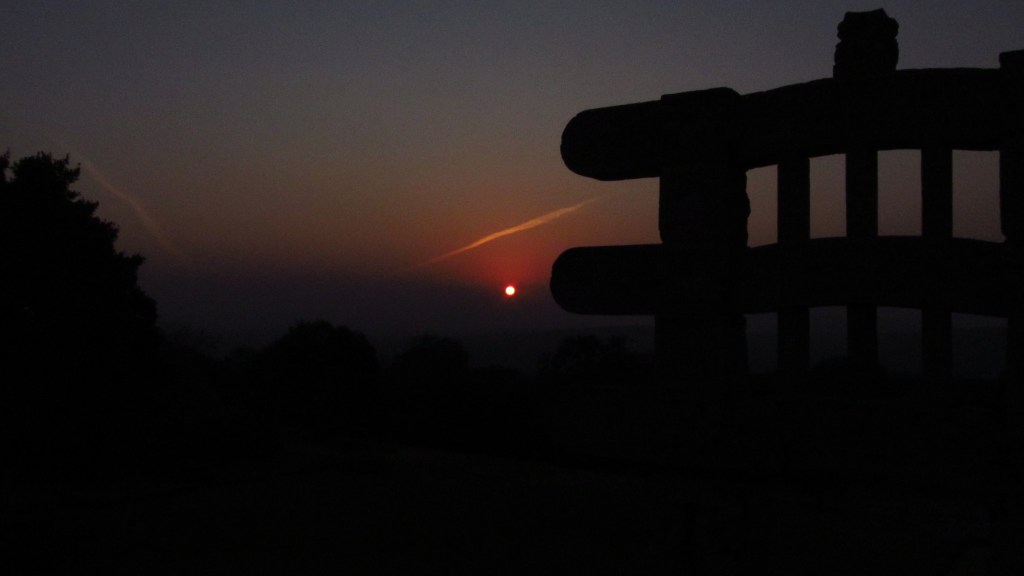
    a sunset from Sanchi
    Sanchi (Madhya Pradesh)
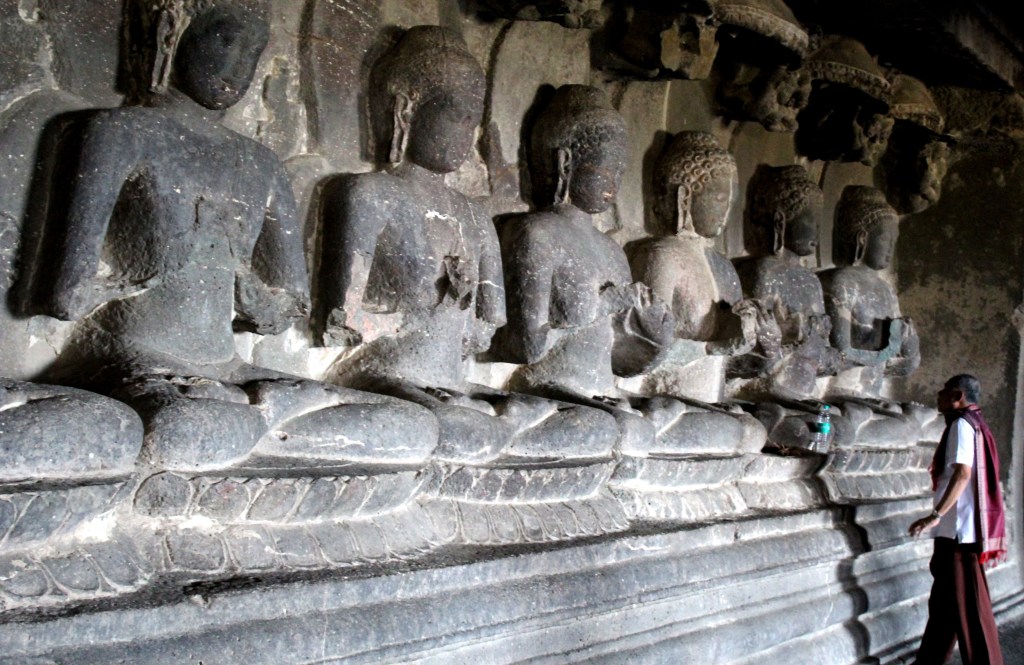
    reflecting on the Buddha philosophy
    Ajanta (Maharashtra)
    The monolithic Kailasa temple at Ellora, carved vertically out of a single rock face.
    Ellora (Maharashtra)
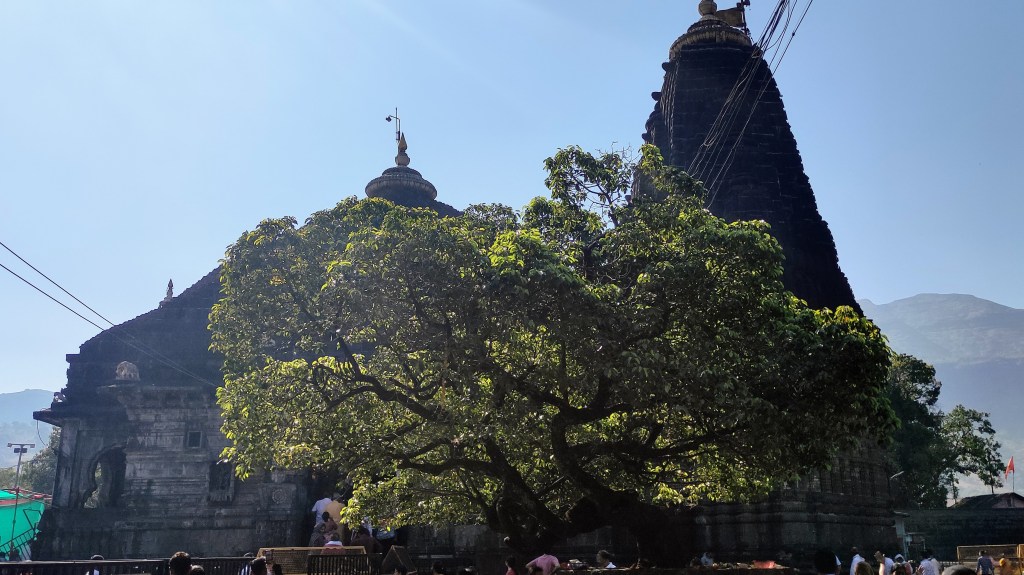
    The dark stone architecture of Trimbakeshwar Jyotirlinga in Maharashtra.
    Trimbakeshwar (Maharashtra)
    A hill top ruins of the temple complex in Hampi, Karnataka.
    Hampi (Karnataka)
    A peaceful temple setting in Coorg
    Coorg (Karnataka)
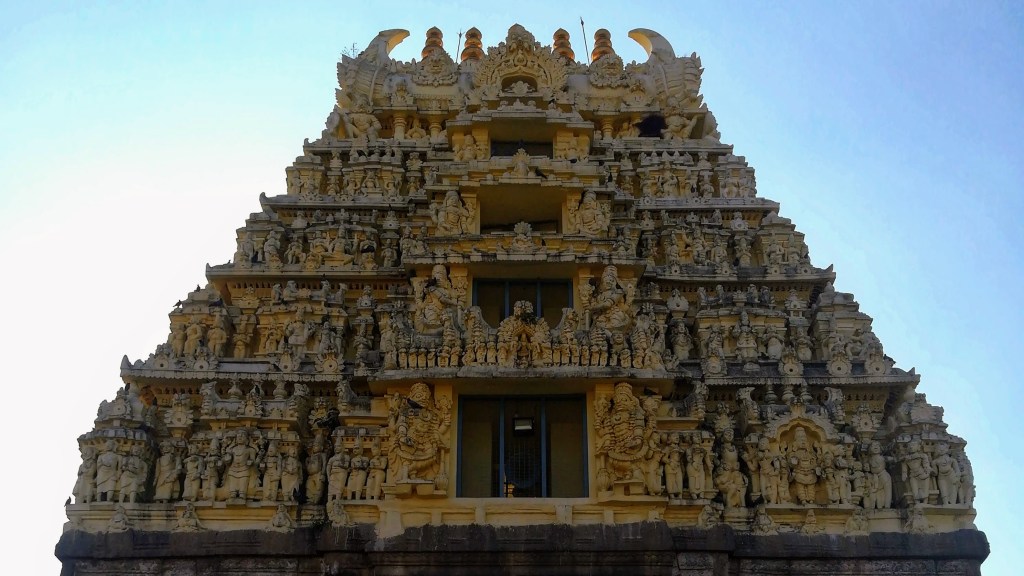
    Karnataka style architecture, belur
    Belur (Karnataka)
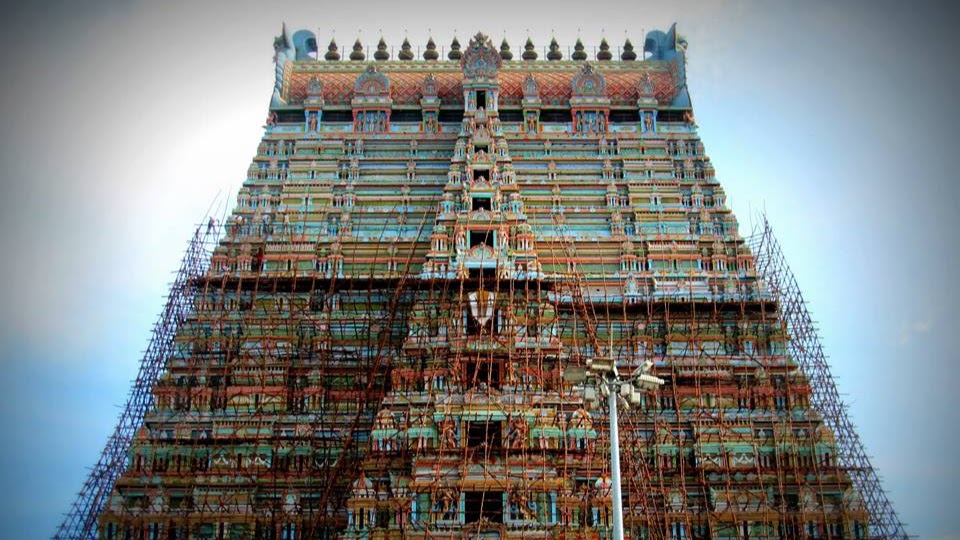
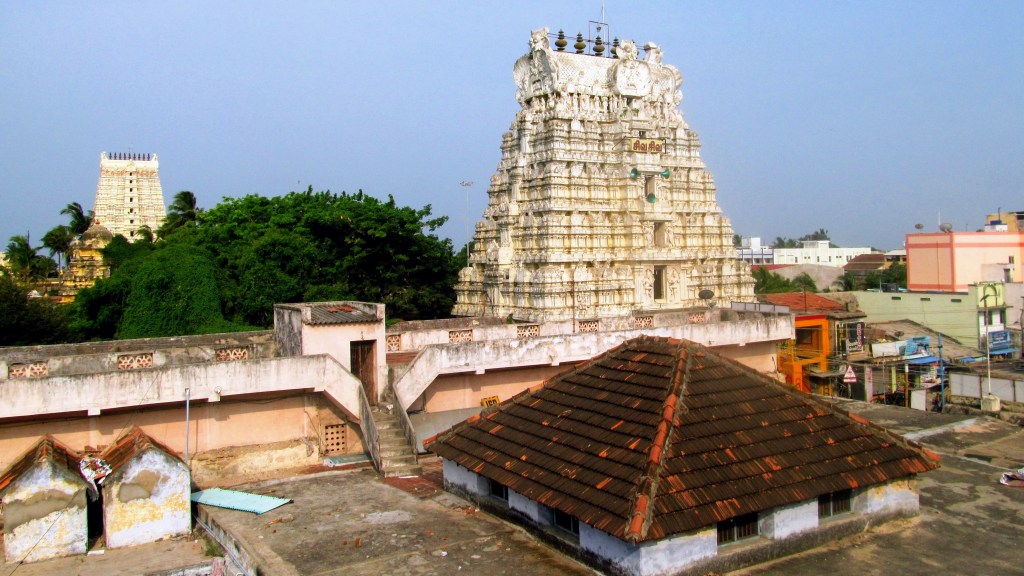
    The towering, colorful Gopurams of the Ranganathaswamy Temple in Srirangam.
    Srirangam (Tamil Nadu)
    The sprawling temple complex and golden roof of the Nataraja temple in Chidambaram.
    Chidambaram (Tamil Nadu)
    rameshwaram temple from top of near by building
    Rameshwaram (Tamil Nadu)
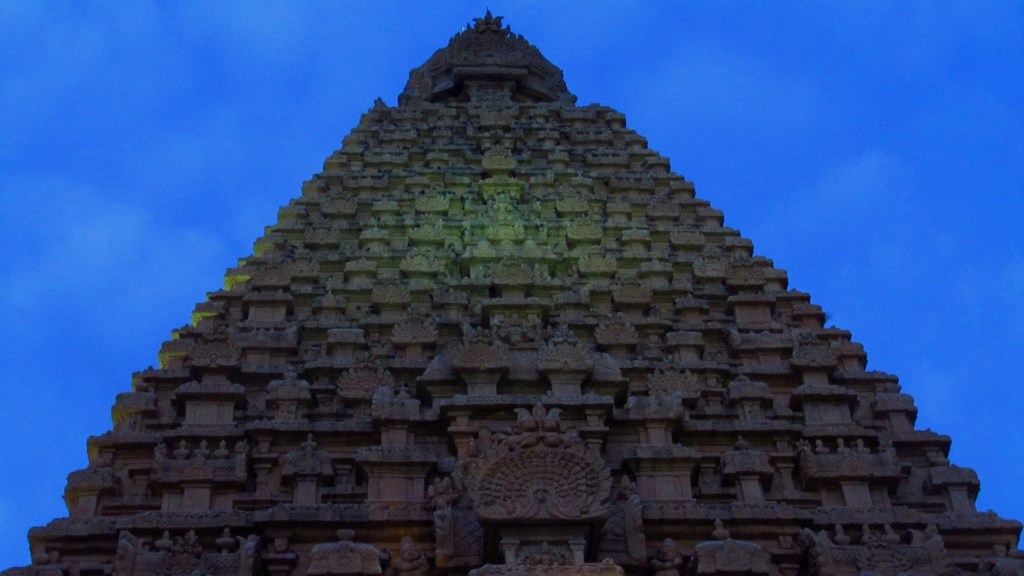
    The massive granite Vimana of the Brihadisvara Temple, showcasing Dravidian scale.
    Tanjavur (Tamil Nadu)
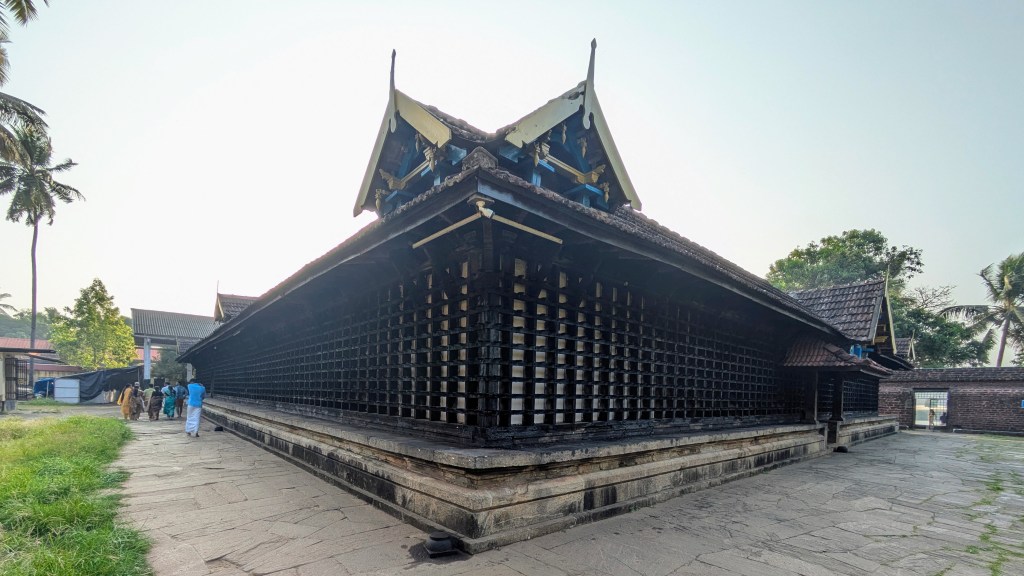
    The classic Kerala-style sloping roofs of the Navamukunda temple on the Bharatapuzha banks.
    Tirunavaya (Kerala)
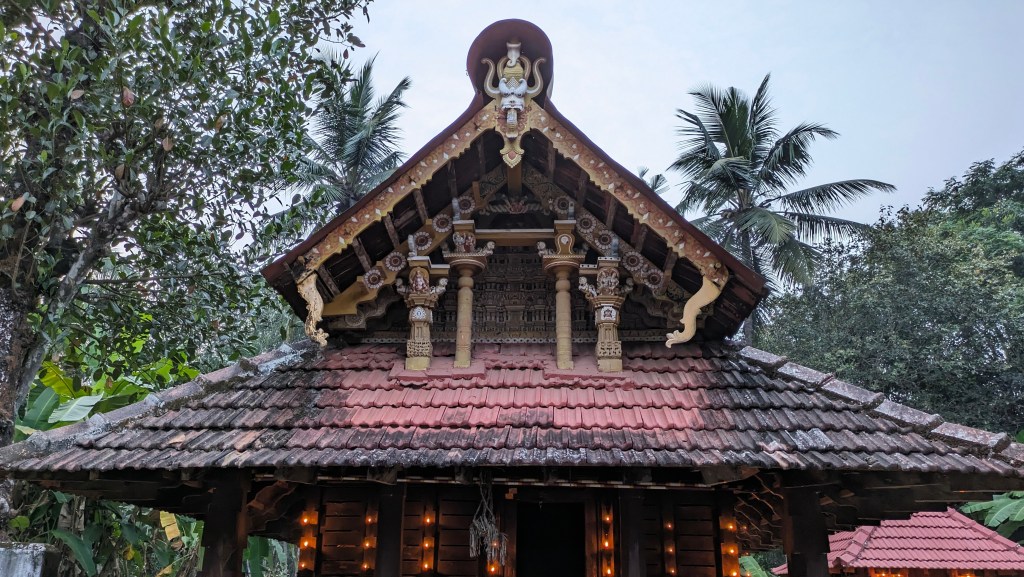
    A simple temple in Kannur during Sandhya (evening) having simple Wood work.
    Kannur (Kerala)
    A picture to show kerala wooden art and tamil nadu style stone art in a frame, from the padmanabhaswami temple, trivandrum
    Trivandrum (Kerala)

    A Trail of Curiosity & What Remains constant?

    After arranging these temples by geography—from the North down to the South—the sheer variation in material, scale, and state is striking. Some are active centers of ritual; others are silent, non-operational monuments. We see different stones and weights, with some structures emphasizing openness and others shifting toward heavy enclosure. Looking at them together, I’m left with a question: beyond their current use or state of repair, was there a shared intent in their design? Could the way they manipulate space, light, and geometry be a deliberate attempt to alter a human’s state of mind?

    Is it possible that these temples are not merely monuments to a deity, but a form of ancient ‘technology’ we’ve forgotten how to operate? I wonder if they were designed to be more than just buildings, perhaps they are instruments tuned to a frequency we no longer hear.

    What if the stillness one feel isn’t just a product of own mind, but something engineered into the very structure? And looking further, I have to ask: why do so many of these structures seem to watch the sky? Is it a coincidence that their alignments often mirror the movements of the sun, the moon, and the stars, or were they built as synchronization tools—linking our small human systems to the vast rhythm of the cosmos?

    If the ancient statement Tat Tvam Asi—that what you seek is what you already are—is the true destination, then could the temple be a mirror? Not a place to reach outward, but a device designed to turn our attention inward, until the boundary between the individual, the architecture, and the universal energy begins to blur?

    In next blog, I want to explore these next questions: Do the Meru pyramid and the Sri Chakra act as a code for this connection between the earth and the stars? Is there a link between the geometry of the stone and the geometry of the self.” And is there a similarity between all the temples of India?

    Read part 2 – Conclusion here : Temple Series PART 2