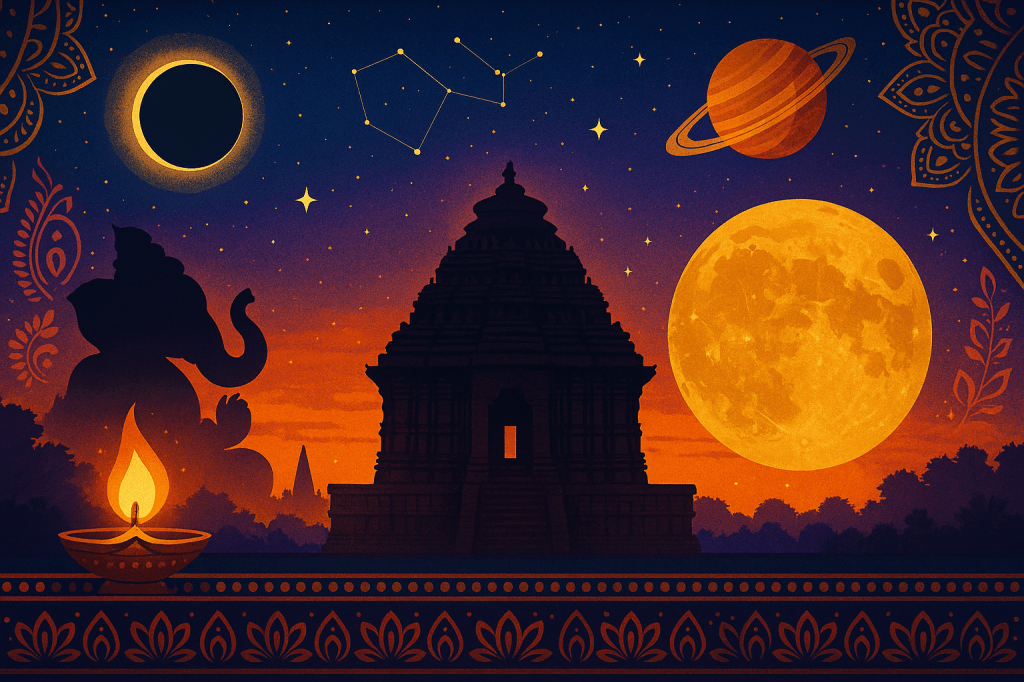
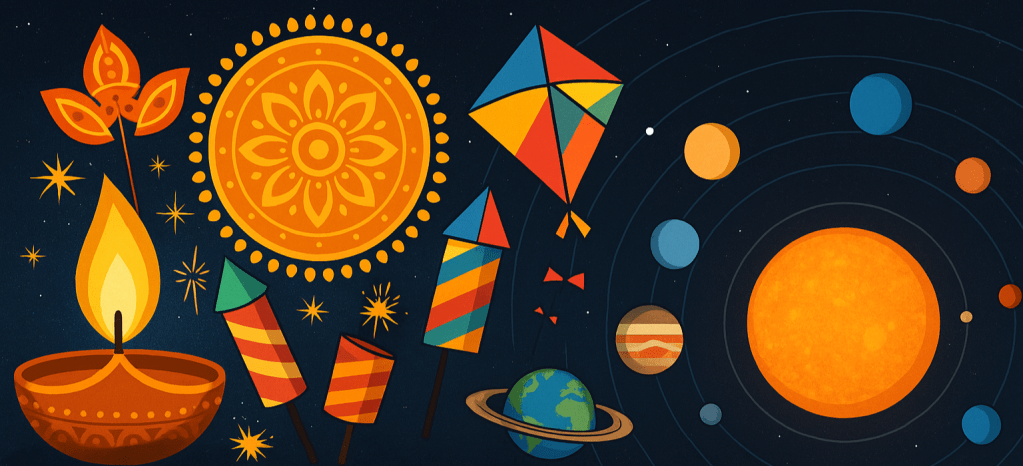
Beneath the colors, lights, and ceremonies, there’s often a deeper layer — one that looks up. Many of our festivals were originally aligned with astronomical cycles — the Sun entering a new zodiac sign, the full moon rising in a specific nakshatra, or the changing length of days. Our ancestors observed the skies carefully — and tied cosmic shifts to community moments.
But somewhere along the way, we began to remember the rituals more than the reasons. We continue to celebrate — which is beautiful in itself — but we rarely pause to ask why this day, this time, this season. This post is an attempt to look up again —to trace that quiet connection between festivals and the cosmos, between the calendar and the sky —and maybe… find meaning that goes beyond habit.
Today, Jan 14th 2025, its Makar Sankranti/ Uttarayan/Pongal. Why we celebrate that today itself ? And through this blog, lets explore the deep rooted connection with astronomy and many other celebrations.
The real reason :
Winter solstice. Beginning of the End of winter. And by Holi the official end of winter is marked.
Solstice : Sun reaches its highest or lowest point in the sky compared to earth’s equator. This marks the longest or shortest day of the year.
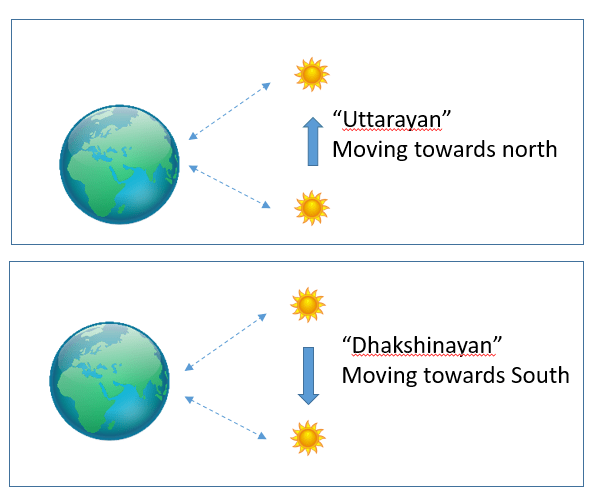
Uttar = North , Ayan = movement/path
Makar Sankranti is a major Indian festival to mark the Sun’s transition into Makara Rashi (Capricorn zodiac sign). It signifies the end of the winter solstice and the beginning of longer days as the Sun moves northward (Uttarayan).
The wind will be good during this phase. We can see colorful kites across the sky in most parts of India. Though known for kite flying, it coincides with the celebration of the agricultural harvest.
Pongal (Tamil nadu) , Lohri (Punjab), Magh Bihu (Assam) celebrates the new harvest of different crops in respective regions.

When we say Sun is moving north or south, its relative to our location. The further truth revolves around the revolution of earth around the sun. The tilt we have in the elliptical journey brings out the seasons. But the real point is our understanding of all these were good. Our calendars were precise.
The bigger planetary Cycles :
Its interesting to see how much time it takes for a full cycle for different astronomical entities.
Moon – 28-29 days
Sun ~ 365 days
mercury ~ 88 days
venus ~ 225 days
mars ~ 2 years
Jupiter ~ 12 years
Saturn ~ 30 years
Uranus ~ 84 years
Neptune ~ 165 years
Pluto ~ 248 years
Astrology is supposed to be a based on the influence of planets. And when we see the cycle of the planets, we can understand how small our lifespan is.
Most of us won’t last a full cycle of Uranus. Don’t even think about Neptune/Pluto !
Do planets or moon or stars have influence on us ? A debatable topic. But one thing is clear their cycles were studied and we had good command over it. Even if see the purans we can see the sync with the astronomical evidences.
And Today it also coincides with Maha Kumbh (144 (12×12) years cycle ). Normal Kumbh mela happens once in 12 years (same as a cycle of Jupiter).
The Seasons – solar cycles
The seasons are based on the solar cycles. And we have reasons to celebrate at each transitions! The food we eat , type of celebrations changes based on seasons.
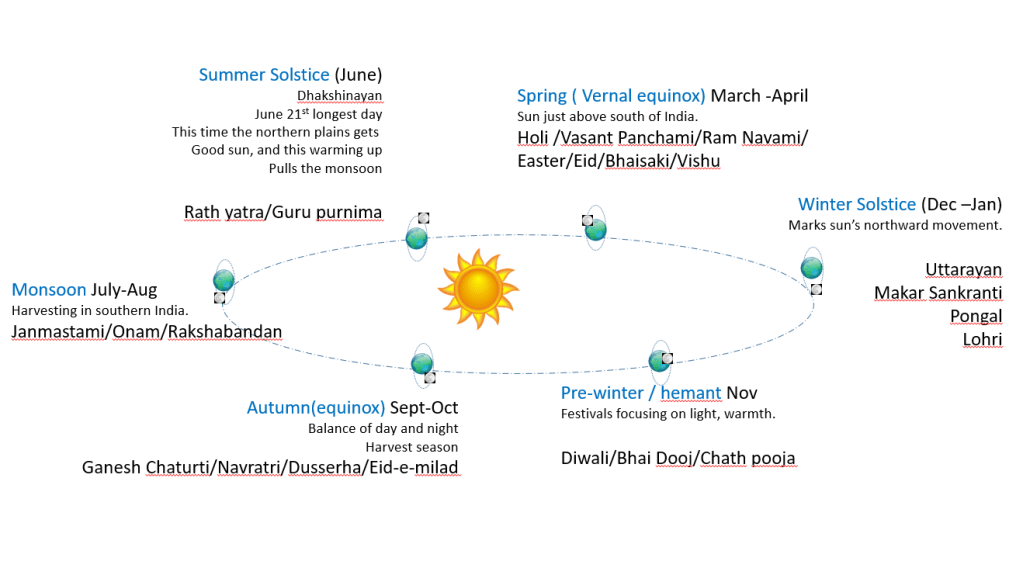
Equinox : Equal (Day = night)
Solstice : Extreme (longest & shortest)
But the occasions are not just based on the sun’s position, moon plays a major role too.
The smaller moon cycles
All full moons (Purnima/Pournami) have some or the other celebrations. Also same with New moons (Amavasya).Many do fasting during this time.
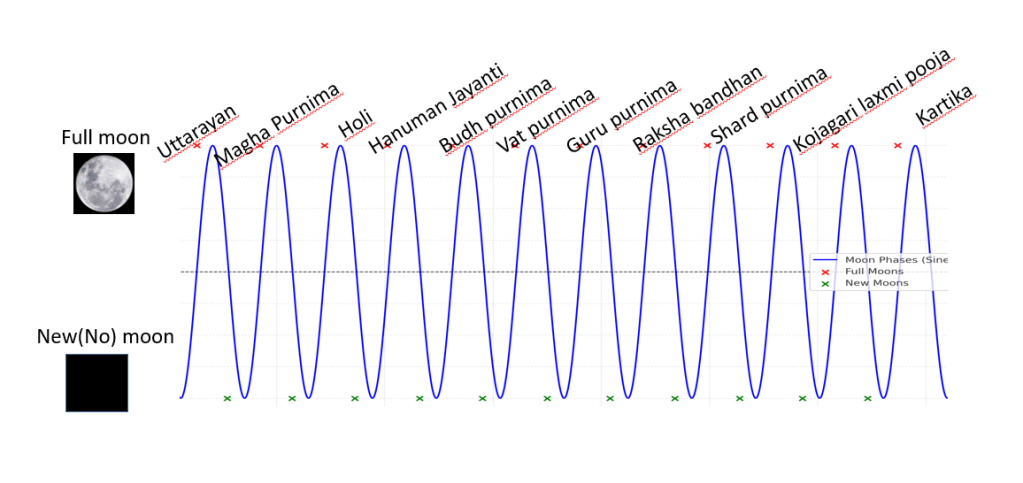
Islam also follows the moon cycle. And their celebrations also based on moon cycle.
Its known that during full moon how tides are created. Same gravitational pull can have some impact on all the beings. And same with other planets & stars does it have something to do with us?
The smallest cycle – A day
Across the region we worship/celebrate the sun rise & sun set.
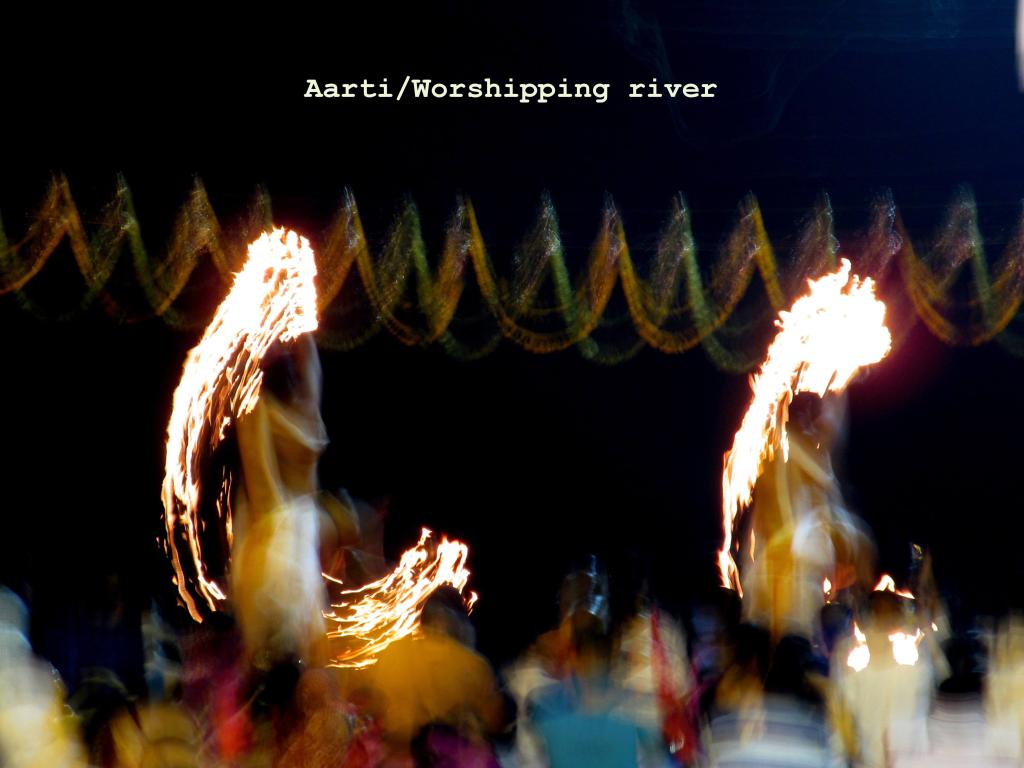
Sun rise/set , we celebrate
Full moon/ No moon , we celebrate
Uttarayan/ Dhakshinayan , we celebrate
Cycles of Sun , we celebrate
Cycles of Planets, we celebrate
Maybe we just wanted reasons to celebrate !
There was a time without internet. We had no mobile phones, no clocks. During this period, we were in sync with cosmos.
And still today these cycles are the only true way to keep in sync with the universe.
Conclusion
Indian festivals beautifully embody the harmony between culture and cosmic rhythms. They remind us of ancient wisdom, connecting humanity to the universe’s cycles. Celebrating these traditions fosters a timeless bond with nature and our place in the cosmos.
We are fortunate to have diverse geography, weather, culture, people, food.
India is a world in itself due to the diversity one can see & experience. We had worked out the astronomy / math well. Its clear we are good at predicting the patterns/cycles of the world around us. The understanding of sun, moon, planets, stars cycles and its connection to the seasons were really well established. And knowingly or unknowingly we still follow it.
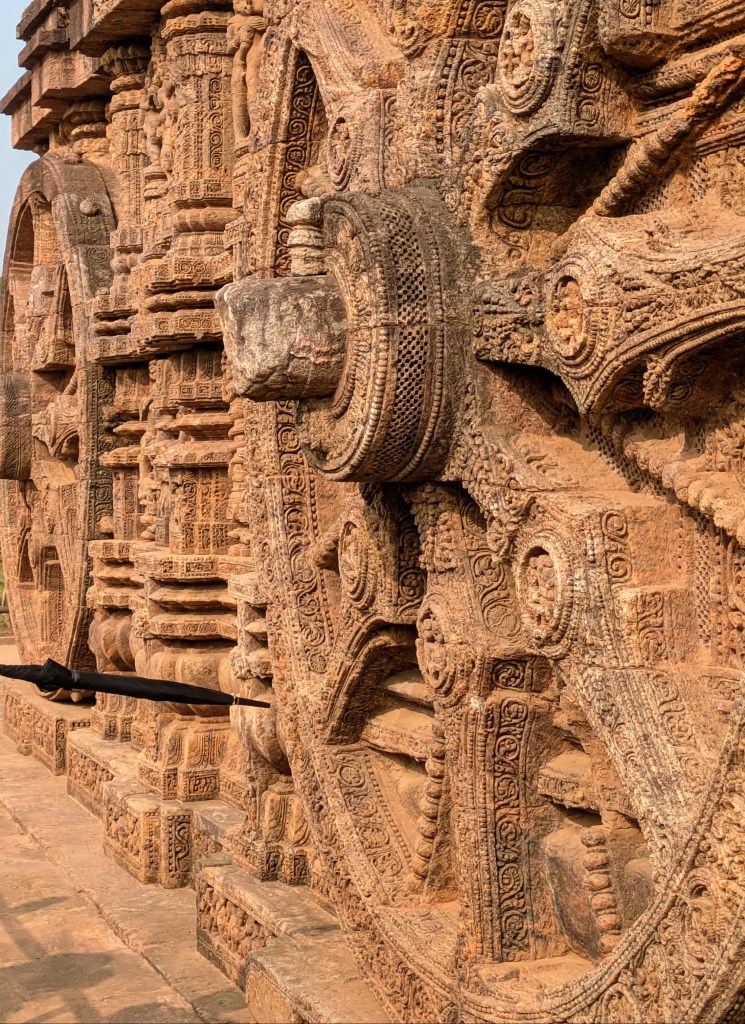
Many of the ancient architectures or temples were in line with the knowledge of astronomy / sun / moon /stars.


 The art of Slowing Down
Leave a reply to Damodaran Cancel reply